Every month we pull together tools, research, and ideas for journalists wearing… many hats.
This column started as a newsletter on iMEdD’s LinkedIn.
You can subscribe and find all past issues here.
Media Hat: The clarity edition
Every month we pull together tools, research, and ideas for journalists wearing… many hats.
This edition is a bit different. It’s closer to a letter than a list. Something to read without rushing, and without feeling like you need to catch up on anything. The order is mixed up on purpose, and we’re starting with the community, simply because it felt like the right place to begin.
If you’re (one of the many people who are) new here, hello!
Each month, we round up tools, ideas, and behind-the-scenes insights to help journalists who wear many “hats” — reporters, editors, producers, creators, and everything in between.
Community Spotlight
A lot of interesting work right now sits somewhere between experimentation and patience.
One example is a new sprint from the News Product Alliance, supported by the Google News Initiative. Twelve U.S. newsrooms are spending eight months researching younger audiences, prototyping ideas, and testing responsible uses of AI. There’s no rush for flashy results here. The focus is on learning what actually works and building capacity that lasts.
👉 Find out more
Not everything needs to move fast, though. Some things benefit from slowing the conversation down.
Mark Simon and The Journalism Salute podcast does exactly that. It’s a series of calm, thoughtful conversations with working journalists about their paths, their daily realities, and the moments that shaped them. No hot takes. Just space to understand the profession a little better.
👉 Listen here, or wherever you get your podcasts
New beginnings showed up closer to home too. WIRED Greece is launching in Spring 2026, bringing its long-standing focus on technology, science, and culture into a local context. The plan spans print, digital reporting, investigations, explainers, and events — looking at how technology shapes life in Greece and beyond.
👉 Follow the launch
Behind the scenes
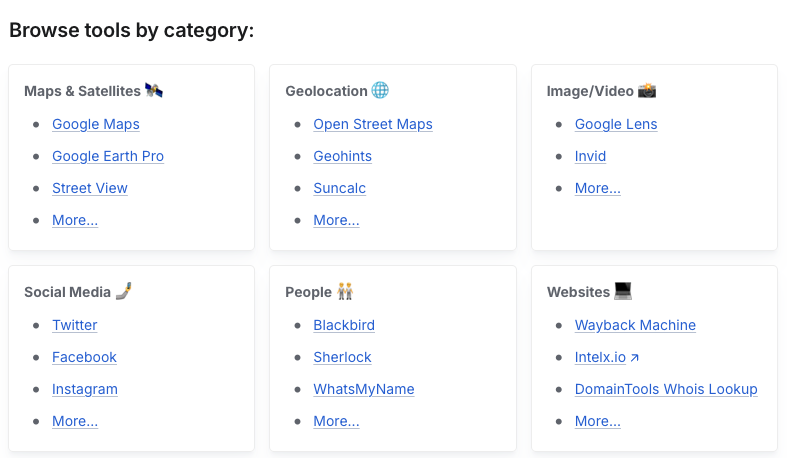
Johanna Wild‘s reflection on building Bellingcat ’s Online Investigation Toolkit stayed for a reason. As more journalists turn to open-source methods — from social media analysis to satellite imagery — the tools meant to help can quickly become overwhelming. Her takeaway is simple and practical: investigative tools are most useful when they’re clear, well-documented, and shaped by the people who actually use them.
👉 Read the full piece
Infrastructure doesn’t always look serious, though. Sometimes it looks like a crossword.
At The New Yorker, puzzles have become one of the publication’s strongest engagement drivers, with players spending an average of 25 minutes per session. A recent breakdown by Lindsay Ederheimer explains how the team redesigned its games paywall by keeping recent puzzles free while placing the archive behind a subscription.
👉 Read the full piece
Up your sleeve
If you work with data, Ada Homolova (aka Data Frosch) has a clear explainer on choosing colour palettes for data visualisation. The main idea is refreshingly simple: lightness matters more than hue when it comes to readability. It’s one of those pieces that quietly fixes a lot of small problems.
👉 Check it out
📌 Good for: data journalists, designers, newsroom graphics teams
For another visual inspiration, Infoviz.design is an early prototype that experiments with semantic search to surface examples of visual journalism. It doesn’t always return what you expect, which is part of the point — it’s useful when you’re browsing for ideas rather than hunting for one specific thing.
👉 Bookmark it
📌 Good for: data journalists, designers, visual storytellers
And for open-source researchers, Social Links brings together data from social media, messengers, blockchains, and parts of the open web, including platforms many tools struggle to cover, like LinkedIn and YouTube. One common use is comparing names and profile photos across networks as part of background research.
👉 Check it out
📌 Good for: open-source researchers, investigative journalists
That’s it for this edition.
Let’s chat!
If something here stayed with you, we ’d love to hear it. Media Hat is meant to be an easy read, something you can scroll through and follow whatever catches your interest.
And if you pass this along to someone who might enjoy a slower, end-of-year edition, thank you. That’s how this community grows.
See you next year!