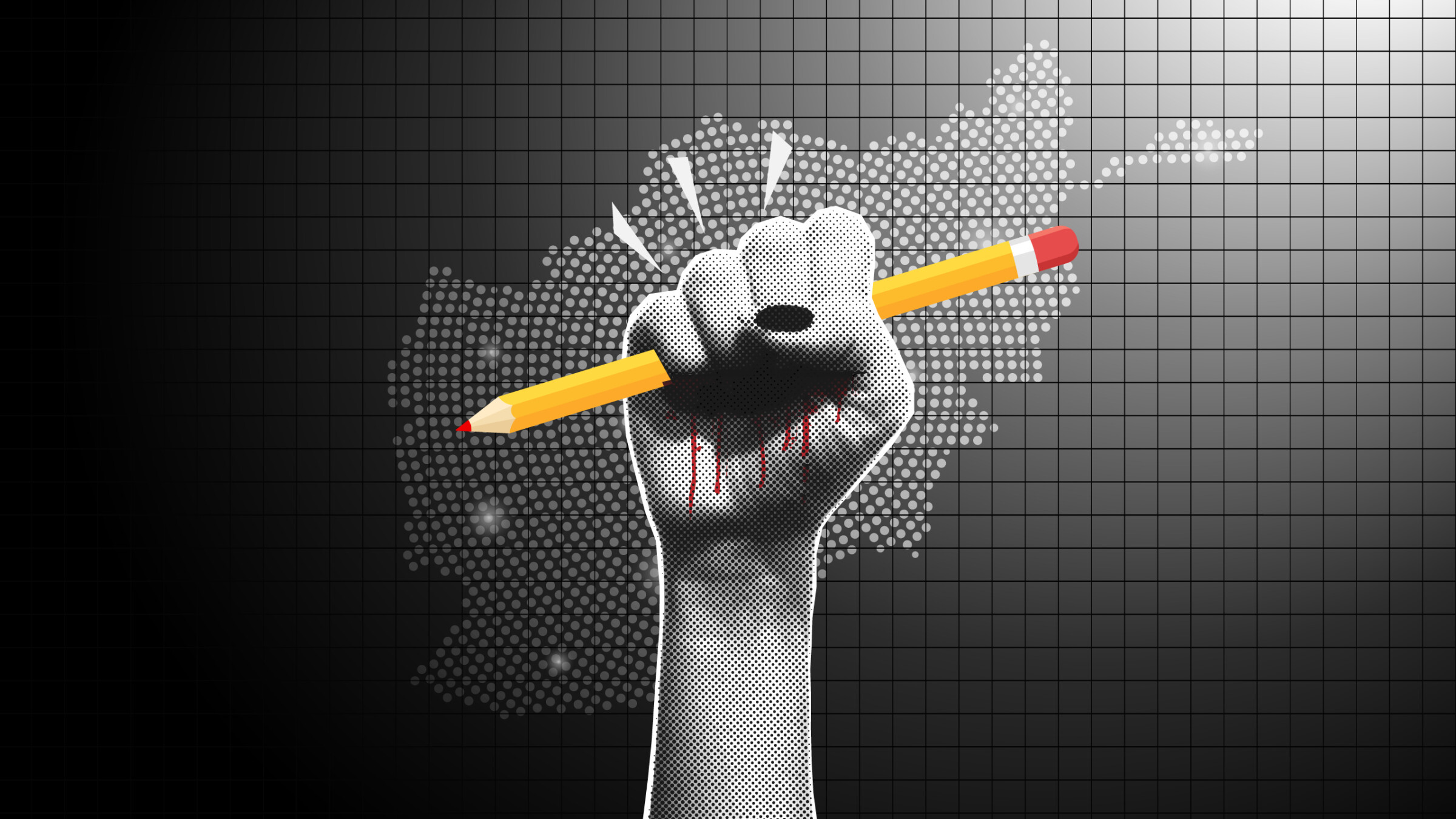
A few months before marking five years since the Taliban’s takeover of power in Afghanistan, iMEdD spoke with three women who founded and run Afghan newsrooms. The editors-in-chief of Zan Times, Rukhshana Media and Nimrokh Media explain the challenges of practicing journalism under Taliban rule, managing editorial work remotely, and the ongoing struggle to keep their outlets operating.
Featured image: Evgenios Kalofolias
Three Syrian Journalists in Exile
After the fall of the Assad regime in December 2024, journalists found the opportunity to rebuild a free press, but the risks continue.
A woman stands on the top of a mountain in a province in central Afghanistan. The exact region cannot be disclosed for safety reasons. It takes her more than an hour to get there on foot, often with her baby in her arms. Yet this is the only place where she can get a signal. She takes out her phone and sends a video to Zahra Joya, editor-in-chief and founder of Rukhshana Media, asking her to publish it. In the footage, she, along with other women from her rural village, are inside a house, writing slogans against the Taliban, a form of indoor protest they organize every one or two months.
In a country where women are often not even allowed to leave their home without a “mahram” – a male guardian – accompanying them, indoor protests are one of the very few forms of resistance still available to Afghan women. Getting word of these protests to independent Afghan newsrooms covering women’s issues, like UK-based Rukhshana Media, is often the only way the world learns of Afghan women’s struggles and defiance. Under such constraints, how do these outlets manage to tell Afghan women’s stories?
The next generation will judge us
After the Taliban recaptured Kabul on August 15, 2021, the human rights situation in Afghanistan deteriorated rapidly, with UN Human Rights chief, Volker Türk, describing the country as a “graveyard for human rights.” Afghan women and girls are denied access to secondary and higher education and have been banned from working in a series of sectors, ranging from civil service to NGOs and beauty salons. According to the Taliban’s new penal code, which came into effect in January 2026, a husband who beats his wife with “obscene force”–defined as causing broken bones, wounds or visible bruises– faces 15 days of prison. Meanwhile, harming animals, through organizing animal fights for example, carries a sentence of five months’ imprisonment.
The fall of Kabul found Zahra Nader, founder and editor-in-chief of Zan Times in Canada. Nader, who started her journalism career in Afghanistan in 2011 and joined the New York Times bureau in Kabul in 2016, moved to Canada in 2017 due to the city’s challenging security situation at the time, she tells iMEdD. By August 2021 she was in the second year of pursuing her PhD on women’s political history in Afghanistan and had found herself questioning earlier generations of Afghan women, wondering whether they had done enough during the previous Taliban rule between 1996 and 2001.
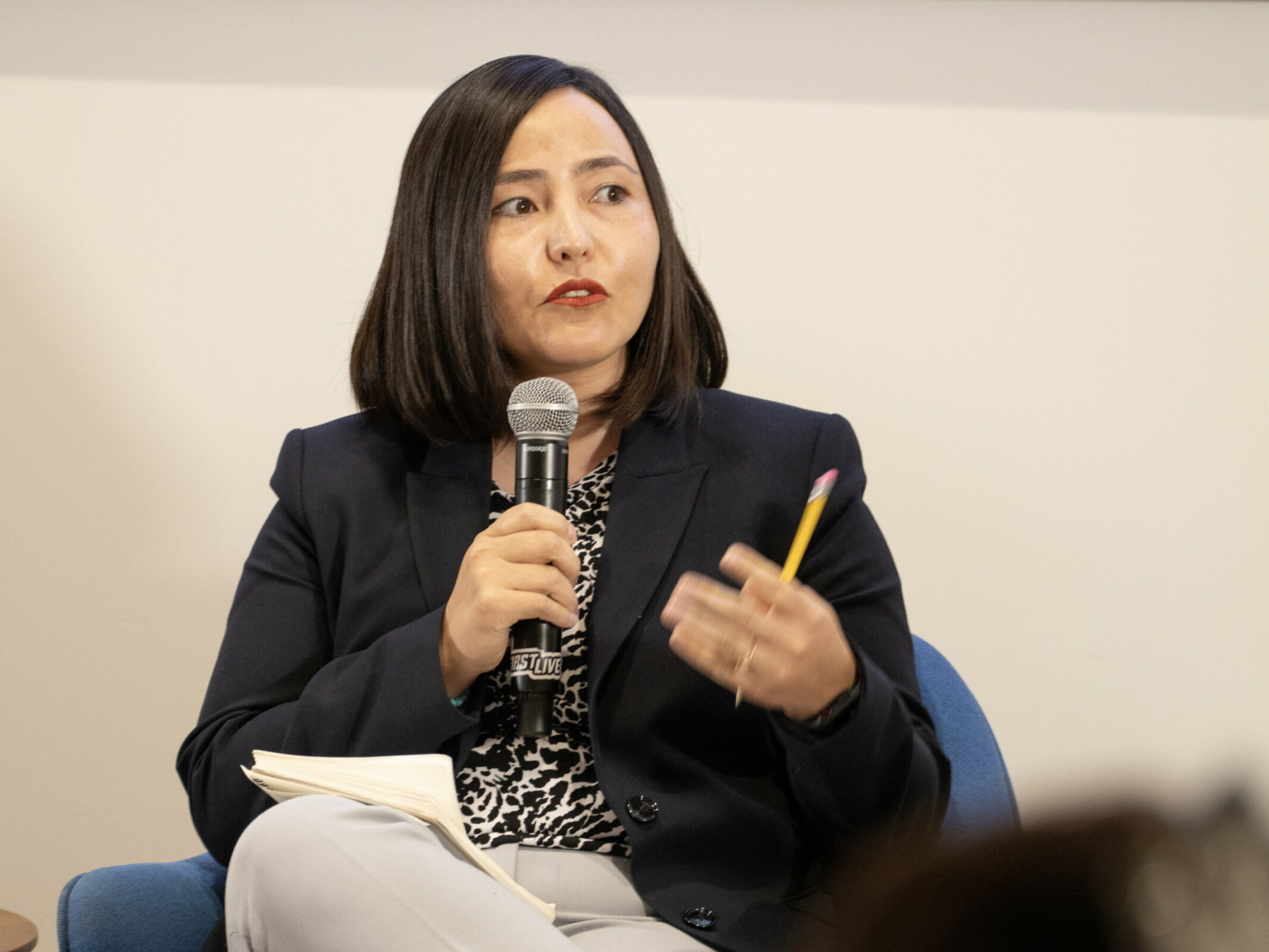
“Then suddenly I find myself in the shoes of the same women, and I said, okay, the next generation is going to judge me the way I judged the previous generation. And how can I ensure that they judge fairly?,” Nader recalls. So, when, in May 2022, the Taliban issued a decree forcing women to cover themselves from head to toe, Nader took the decision to create Zan Times to “tell the world what’s happening and to create opportunities for Afghan women journalists.” In Farsi, “zan” means “women.”
Reporting under the Taliban: pseudonyms, cover stories and emergency contacts
Within three months of the Taliban’s return to power, 43% of Afghan media were shut down and, today, remaining outlets are heavily censored as broadcasting political and economic programs is banned and journalists are facing arbitrary detention and torture. While Afghan law technically does not prohibit women from working as journalists, almost 80% of Afghan female journalists have been forced to quit their profession since the Taliban came to power. Hearing women’s voices in public is prohibited, as is the broadcasting of “living beings”, effectively banning TV stations. The implementation of those laws does not apply everywhere, though – in certain provinces women are still working in radio stations and TV channels are still running in places like Kabul, Nader tells us.
While Afghan law technically does not prohibit women from working as journalists, almost 80% of Afghan female journalists have been forced to quit their profession since the Taliban came to power. Hearing women’s voices in public is prohibited.
Under such circumstances, ensuring the safety of their female journalists has emerged as a top priority for all the newsrooms iMEdD spoke to. According to Rukhshana Media’s security guidelines, all its journalists inside Afghanistan use pseudonyms, and they do not know each other so that “if one of them has been arrested, hopefully the rest will be safe,” Joya explains. While most of Rukhshana’s reporters are female, in some parts of the country where women face too many restrictions, male journalists are also employed. Kandahar, the city where Hibatullah Akhundzada, the Taliban supreme leader, is based, serves as a typical example.
All [our] journalists inside Afghanistan use pseudonyms, and they do not know each other so that if one of them has been arrested, hopefully the rest will be safe.
Zahra Joya, founder and editor-in-chief of Rukhshana Media
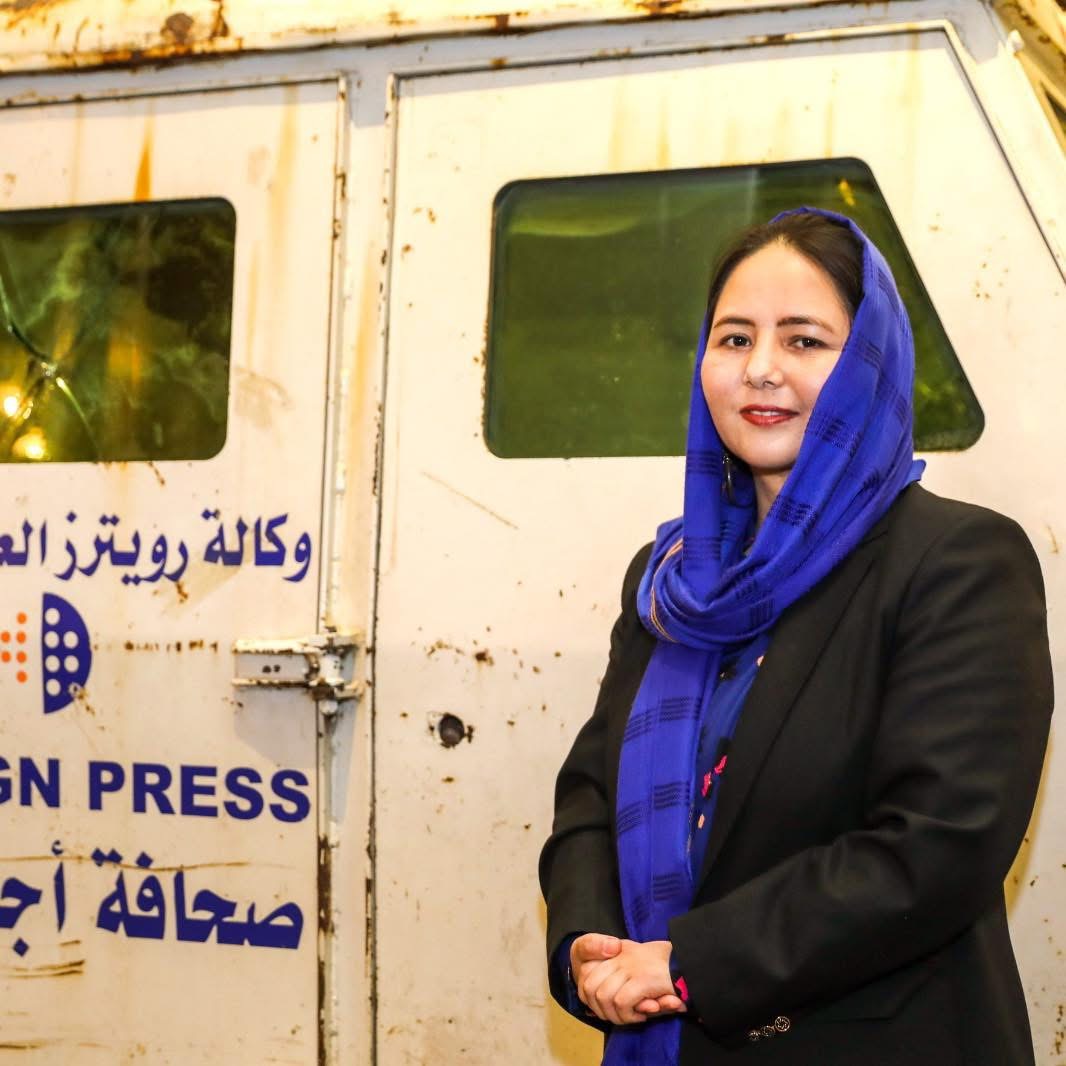
Pseudonyms are also used by Zan Times, whose reporters inside the country have two “emergency contacts” – two people close to them who know about their work. “If something happens to them, we want those people to be able to call us and inform us about what has happened,” Nader explains.
Although women journalists in places like Kabul and Herat are still able to travel within the city by themselves, in other provinces, which Nader cannot name due to security concerns, reporters need a mahram accompanying them. As they often come across Taliban checkpoints, “cover stories” – fabricated stories explaining why they are outside their homes – are essential, Nader highlights.
As they often come across Taliban checkpoints, “cover stories” – fabricated stories explaining why women journalists are outside their homes – are essential.
To ensure the safety of their communications, Nader says she and her colleagues use encrypted apps like Signal and WhatsApp and, sometimes, they create new email addresses under pseudonyms. Even paying her colleagues inside Afghanistan through official methods, like banks, is dangerous, Nader notes, as it could allow the Taliban to track them. Instead, one of the payment methods Zan Times uses is the “hawala” system, an informal way of transferring money, which, although safer, is often a “red flag” for donors, she explains, as this system is often associated with money laundering practices.
An editor’s burden: Navigating arrests and harassment
Facing this level of pressure has affected Nader’s mental health, who initially had to deal with panic attacks and insomnia. What helps her, she explains, is holding truthful discussions with her colleagues on the ground regarding the risks they are facing and the extent of Zan Times’ ability to protect them.
Despite her best efforts, however, some things remain beyond her control. On April 21, three weeks after we first spoke with her, Nader woke up at four in the morning to find her phone filled with messages from Zan Times’ managing editor, Khadija Haidary, who was then living in exile in Pakistan. Haidary had been arrested, along with her husband and son, after the police raided the place they were staying at, and, as Nader tells iMEdD, they were transferred to a pre-deportation camp.
Her arrest was part of a broader crackdown on Afghan refugees by Pakistani authorities, which has been exacerbated following the recent tensions between the two countries, Nader explains. Afghan journalists have been caught in the crossfire, with Reporters Without Borders (RSF) reporting that nine reporters have been forcibly returned to the country since the beginning of this year. Nader’s biggest fear was that Pakistani authorities would also force her colleague to return to Afghanistan, the country she fled in 2024 to escape the dangers she was facing as a vocal female journalist living under the Taliban. Haidary was arrested a day after trying to leave Pakistan for the third time this year, having been accepted by a country granting visas to Afghans.
Nader, who was navigating this situation for the first time, worked tirelessly with any available contacts, from international media support organizations, including the Committee to Protect Journalists (CPJ), RSF and Free Press Unlimited, to UN Special Rapporteur on Afghanistan, Richard Bennett, in order to ensure Haidary’s safe release. Their efforts paid off: on April 24 Haidary and her family managed to get on a flight to Tanzania.
On the harassment front, the editor of Rukhshana Media, Joya, who is now based in the UK after fleeing Afghanistan in late August 2021, has repeatedly faced threats due to her work. In 2024 she received sexual threats online, while a recent attack against her on social media in March 2026 involved harassment relating to her Hazara ethnic background, she tells iMEdD.
Women in investigative journalism: fighting the challenges
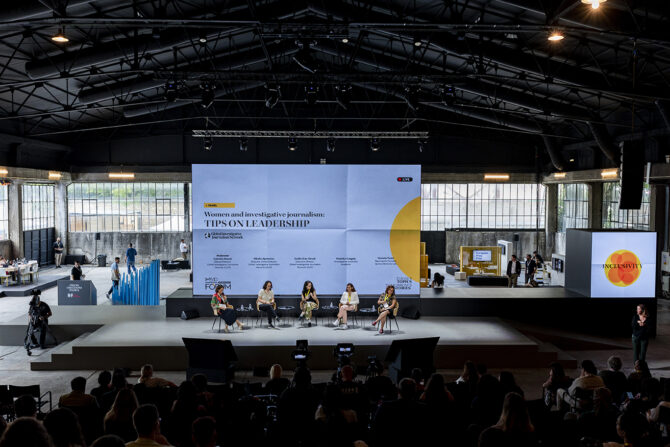
Three esteemed female investigative journalists talk about the challenges they face while engaging in male-dominated fields and offer valuable advice to aspiring young reporters.
The constant battle for funding
Sustaining an independent newsroom in exile also comes with another type of challenge, as Nader quickly came to realize: “I was so naive to believe that when you create a newsroom and do good journalism, you will get the money,” she says. Zan Times has since managed to secure funding through organizations, like Internews, but that was much easier before last year’s cuts in USAID, Nader tells us: On January 27, 2025, she recounts, “overnight we lost half of our budget for the entire year.”
On January 27, 2025, overnight we lost half of our budget for the entire year.
Zahra Nader, editor-in-chief of Zan Times, on USAID cuts
In an effort to support themselves following the aid cuts, Zan Times decided to ask the public for help. Through organizing a successful GoFundMe campaign, they managed to raise more than $116,000 CAD. After 3.5 years of operations “we survived and we are thriving,” Nader highlights. Zan Times has even launched a 10-month paid fellowship, which will provide training and mentorship for 12 women journalists inside Afghanistan.
Nader’s funding-related concerns were echoed by Zahra Joya, Rukhshana’s editor-in-chief, who also saw a decrease in funding this year. For Rukhshana Media, which relies on support from organizations and public donations, securing funding is very difficult. Lack of support from the international community further aggravates the situation: “They do not care about the women of Afghanistan anymore,” Joya tells us. “The women of Afghanistan are fighting for their own rights, for their own values, it’s a very unequal war that the Taliban have waged against women and unfortunately we are alone,” she continues.
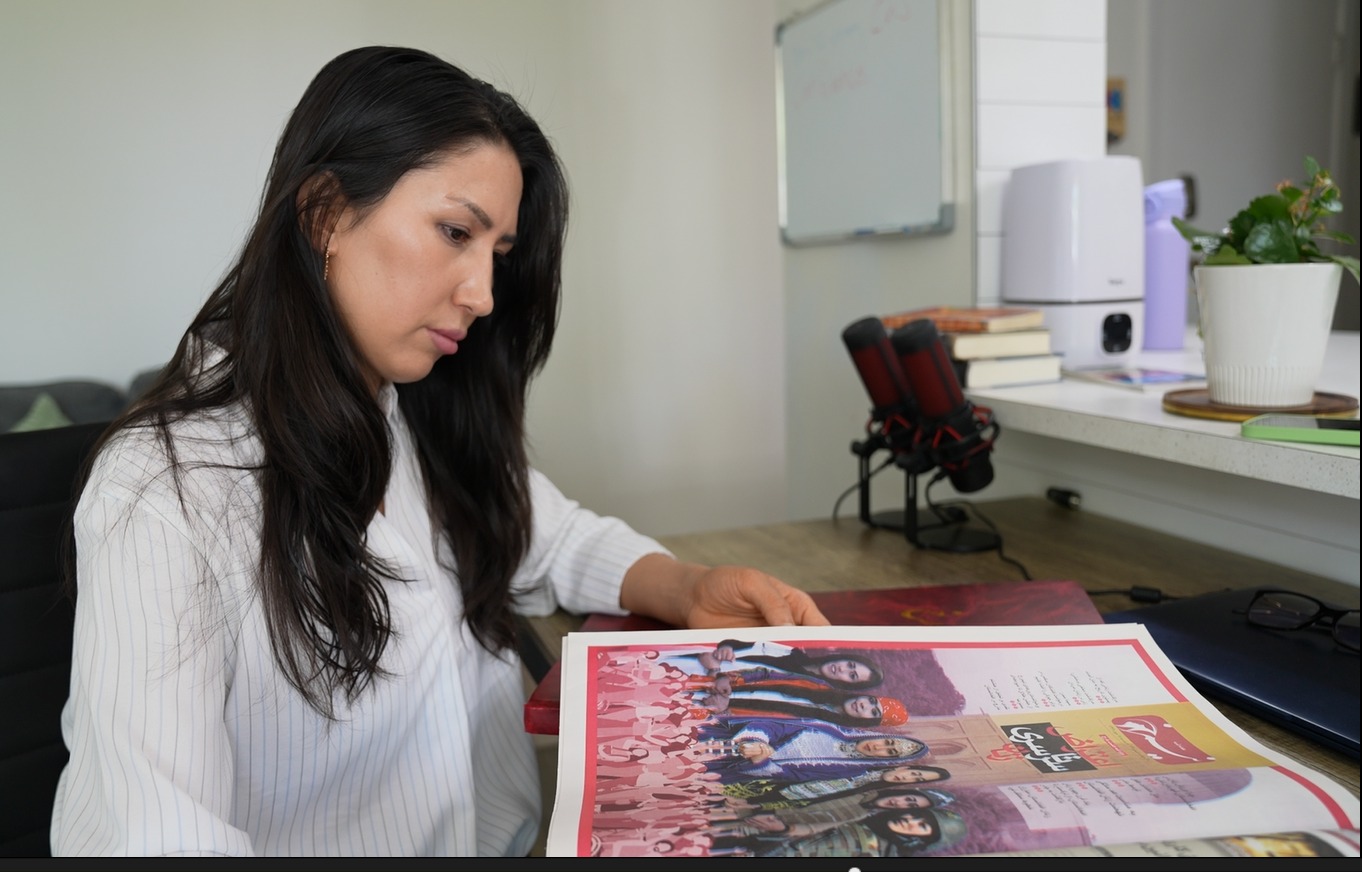
For Canada-based Nimrokh Media funding has been a constant struggle, says Fatima Roshanian, the newsroom’s founder and editor-in-chief. Forced to leave Afghanistan after the fall of Kabul, Roshanian first fled to Albania in October 2021 before eventually relocating to Canada in April 2022. Nimrokh, which had initially been launched in 2017 as a printed weekly newspaper, turned into a digital only publication following the Taliban’s return to power. Since then, financial difficulties have forced the newsroom to halt operations four times, most recently in November 2025, Roshanian tells iMEdD.
Despite the publication’s suspension, Afghan women continued to view Nimrokh as a trusted platform. Just before March 8, 2026, the International Women’s Day, Nimrokh received seven articles from women inside Afghanistan wanting to share their stories. This is what pushed Roshanian to restart publishing a few weeks later, on March 28. A fundraising campaign was also recently launched in an effort to cover the newsroom’s expenses and, as of today, Nimrokh is working with two journalists, Roshanian adds.
An enduring pattern of discrimination
The challenges faced by Afghan women and female journalists predates the Taliban’s return to power. Although women’s access to education and work improved after the fall of the Taliban in 2001, things remained far from ideal. Roshanian, who travelled in more than 20 Afghan provinces between 2010 and 2015 researching the life conditions of Afghan women, witnessed firsthand their lack of access to basic healthcare and education, especially in rural areas of the country. During her travels, she recalls visiting a village, whose elder refused to talk to her on account of her gender. Only after her male driver talked with the man, did the elder allow Roshanian and her team to work in that village.
It was these experiences that led her to found Nimrokh Media, back in August 2017, envisioning a space where women can share their own stories, from menstruation to pregnancies, subjects long considered taboo in Afghan society, as she explains. “Nimrokh”, meaning “half face” in Persian was chosen to reflect these hidden parts of Afghan women’s lives.
Her work came at a cost, however. Roshanian recounts the social media backlash she received after Nimrokh published an article asserting women’s right to choose whether to have children within marriage. In 2018 she even had to relocate her office, after receiving death threats from a man who viewed Nimrokh’s work as being against Islam, she tells iMEdD.
According to Nader, who worked as a journalist inside Afghanistan between 2011 and 2017, many women were employed in Afghan newsrooms, but this was largely performative, as demonstrating gender equality helped outlets secure funding, with aid being a major source of revenue after 2001.
Women were not given the chance to obtain higher-level positions within newsrooms and travelling for conferences outside Afghanistan was rare, Joya says, adding that her salary used to be lower than that of her male colleagues.
Faced with this level of discrimination, Joya decided to create Rukhshana Media in November 2020 to allow Afghan female journalists to demonstrate their capabilities and tell the stories of ordinary Afghan women, stories largely ignored by both local and international media. She named the newsroom in memory of one such ordinary Afghan woman: Rukhshana, a 19-year-old girl stoned to death in Afghanistan’s Ghor province in 2015, after attempting to elope with her lover, having been forced to marry another.
Refusing to be silenced
Even within such a constrained media environment, these women-led newsrooms continue to bring forward the stories of Afghan women that would have otherwise remained in the dark. From the rising rate of female suicides following the Taliban’s takeover, to forced marriages and this year’s International Women’s Day protests inside Afghanistan, Zan Times, Nimrokh and Rukhshana Μedia play a crucial role in documenting the struggles and hopes of Afghanistan’s women. In Roshanian’s words, “We want to say we are alive, we are human, we have a dream, and we deserve freedom.”
In its efforts to share those stories, Zan Times has collaborated with international media, including the Guardian and Lighthouse Reports. Rukhshana Μedia, which also maintains a partnership with the Guardian, was the first women-led Afghan newsroom to collaborate with international media. As Joya tells iMEdD, Rukhshana welcomes such collaborations and would be happy to provide assistance to media organizations interested in covering Afghanistan. Roshanian emphasizes that, when it comes to reporting on Afghanistan, access to resources and journalists inside the country, along with a deep understanding of Afghan culture are essential, both of which Nimrokh media would be glad to offer.
What happens in Afghanistan for women determines the rights of women everywhere in the world because it brings the bar low of what could be denied to women without any consequences.
Zahra Nader, editor-in-chief of Zan Times
Reporting on Afghanistan’s women is not and should not be an Afghan-only concern. It is part of a broader global struggle for women’s rights. As Nader puts it, “what happens in Afghanistan for women determines the rights of women everywhere in the world because it brings the bar low of what could be denied to women without any consequences.”