Every month we pull together tools, research, and ideas for journalists wearing… many hats.
This column started as a newsletter on iMEdD’s LinkedIn.
You can subscribe and find all past issues here.
Media Hat: Signals, systems, and digital investigations

Η μηνιαία στήλη του iMEdD με εργαλεία, πηγές και ιδέες που ανταποκρίνονται στις ανάγκες των δημοσιογράφων.
Somewhere between saving our fifth link about recommendation algorithms and our third tool for running AI locally, we noticed a pattern. This month kept pulling us toward the layer beneath the story: how satellite imagery becomes evidence, how a scraper fleet becomes a source, how a browser game could perhaps explain a spyware scandal better than a 3,000-word piece. The tools and ideas here aren’t just useful. Perhaps they point to something shifting in how journalism reaches people, and how people reach back.
And if you’re one of the many people who are new here, welcome!
Each month, we round up tools, ideas, and behind-the-scenes insights to help journalists who wear many “hats”: reporters, editors, producers, creators, and everything in between.
Up your sleeve
Tools and tricks you can put to work right away
Local-first AI for journalists
Okay, this one we genuinely liked. If you’ve ever hit a rate limit mid-task or had IT block yet another AI tool, Mycroft might be what you’re looking for. Developed by journalism trainer, investigative reporter and computer programmer Ben Welsh through Buried Signals, it lets you run AI straight from your own device — no logins, no subscriptions, and nothing leaving your machine. Your notes, sources, and findings stay exactly where you put them. 👉 Explore the project
📌 Good for: investigative reporters, OSINT researchers, newsroom trainers
Searching the planet in minutes
The Pulitzer Center and Earth Genome hosted a free webinar on June 24 introducing Earth Index — an AI-powered satellite imagery tool that lets you search for specific landscape features anywhere on Earth without writing a single line of code. Label a few examples of what you’re looking for, and it scans the entire planet in minutes. The session also demoed Deep Search, a new large-scale detection feature, with a real-world journalism case study included. 👉 Check it out
📌 Good for: environmental reporters, data journalists, investigative reporters, OSINT researchers
Using AI to build scraper fleets
If you’ve ever thought “I wish I could monitor 200 websites at once” — this is for you. Scraper Factory, developed by the Tow Center for Digital Journalism, uses AI to write first-draft Python scrapers from a list of URLs. Once set up, the scripts run on their own. No need to keep an AI in the loop after that. 👉 Have a look
📌 Good for: data journalists, investigative reporters, OSINT researchers, newsroom developers
AI skills built for journalism
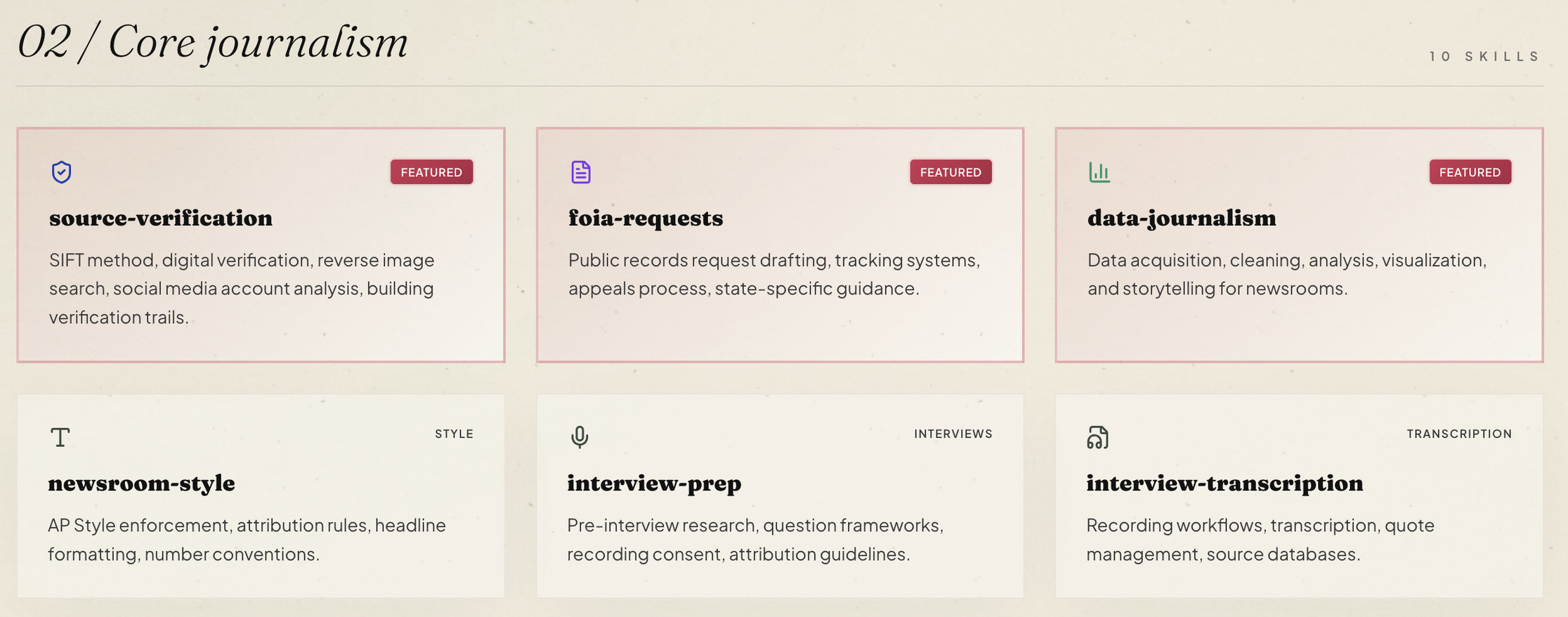
If you’re already using Claude Code, this collection is worth adding to your toolkit. Journalist and developer Jamis Buck put together a set of prompts and workflows for the kind of tasks that actually come up in newsrooms — source verification, FOIA requests, fact-checking, interview prep, web archiving, OSINT research. Less “AI for everything,” more “AI for this specific thing you need to do today.” 👉 Explore the collection
📌 Good for: investigative reporters, OSINT researchers, fact-checkers, newsroom developers
Behind the scenes
Research, explainers & deeper context to help you connec0t the dots
When sound becomes part of the reporting
We keep coming back to this one. Katherine Chui and Catrin Einhorn’s piece on Rice’s whales and noise pollution in the Gulf of Mexico is a good reminder that some stories need to be heard, not just read. The audio isn’t decoration — it’s part of the argument. 👉 Read it with sound on!
Playing through an investigation
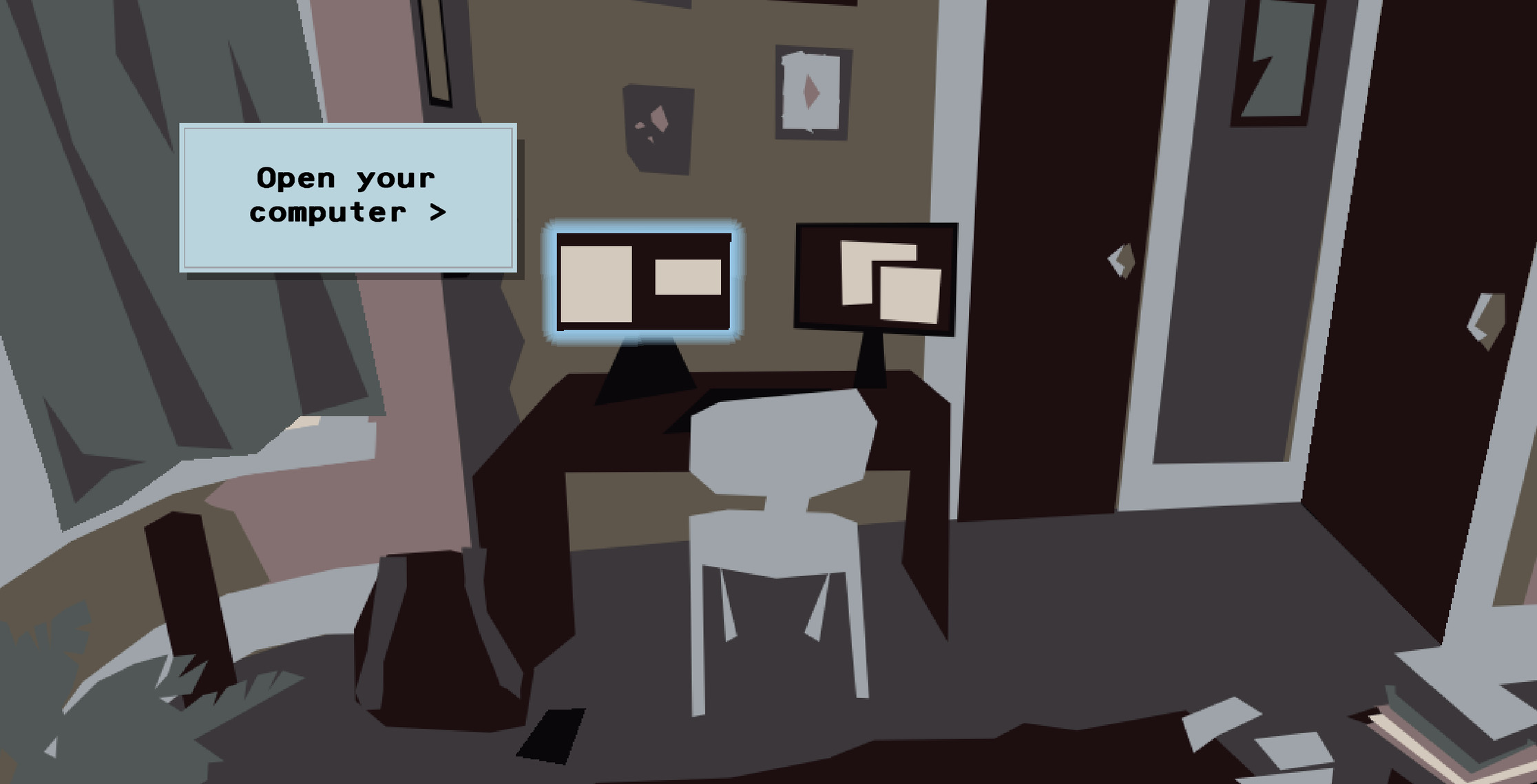
Predatorgate is a short browser-based game created by Izzy Fiacco for the 2026 Investigative Journalism Game Jam, inspired by journalist Eliza Triantafillou’s reporting and Inside Story‘s coverage of the Predator spyware scandal in Greece. Some parts are fictionalized, but it makes you think differently about how investigations can reach people who might never read a long-form piece.👉 Play the game
Community Spotlight
New voices, bold experiments, and big ideas from the field
SNF Nostos 2026 Highlights
Among 150 so interesting sessions, here are two from June 22 that we think are well worth your time. First, Pulitzer Center Executive Editor Marina Walker Guevara sat down with iMEdD Co-Founder Anna Kynthia Bousdoukou to talk about the questions journalism is actually wrestling with right now — objectivity, AI, and what keeps people in this field up at night. Then, Live Magazine in collaboration with iMEdD brought three investigations to life on stage: the hidden legacy of a Nazi eugenics programme, how Instagram is quietly reshaping the way we travel, and one of the most brazen wine frauds in history. 👉 Explore the full programme

A new newspaper
This one is a simple idea, well executed. The Atlas — a collaboration between Coda Story and The Continent — brings together reporters from Africa, Latin America, Europe, Asia, and the Middle East, and delivers their work directly to readers via Signal and email. No algorithm deciding whether it shows up. Just the story, in your inbox. 👉 Read the first issue
Let’s Chat!
If something here sparks a thought, we’d love to hear it. And if you want to pass this along to someone who might enjoy it, thank you! That’s how this little community grows:)
See you next month!