The Pulitzer Center has launched an online version of its flagship training, the AI Spotlight Series. Joanna Kao explains how this on-demand, free course is designed to help journalists and editors around the world navigate the fast-changing landscape of artificial intelligence.
As artificial intelligence begins to touch every corner of our daily lives, journalists are racing to keep up. In November, the Pulitzer Center introduced a publicly available online version of the AI Spotlight Series training program, aimed at helping journalists around the world cover the rapidly evolving field of artificial intelligence.
The idea, said Joanna Kao, the Pulitzer Center’s senior editor for information and artificial intelligence, began in 2024 with a simple observation.
The organization’s executive editor Marina Walker Guevara and journalist Karen Hao, who leads the AI Spotlight Series, were each noticing the same trend: more companies and governments were rolling out AI systems and algorithms that were starting to shape people’s lives in real and concrete ways. “Marina and Karen were both thinking about how to scale up the kind of knowledge that they were gathering on their own about reporting on AI,” she said to iMEdD.
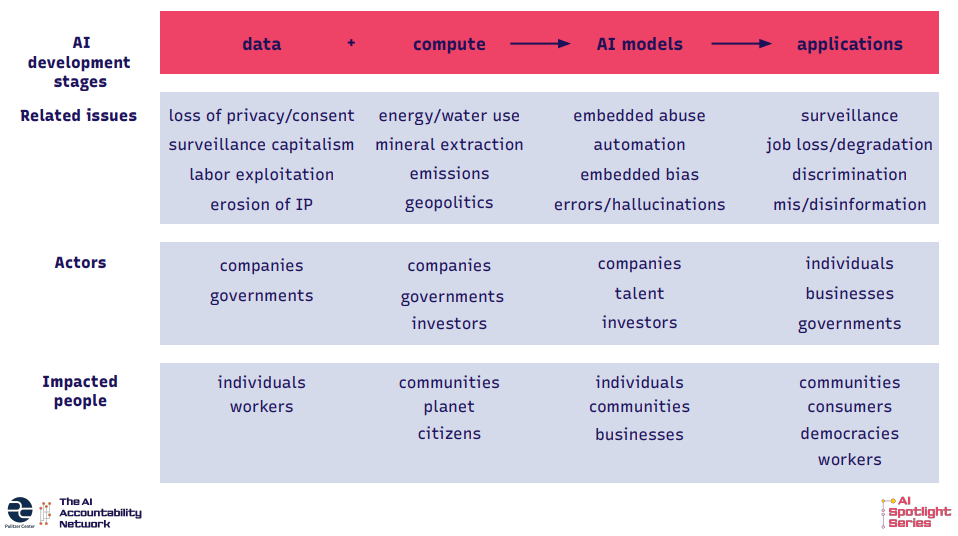
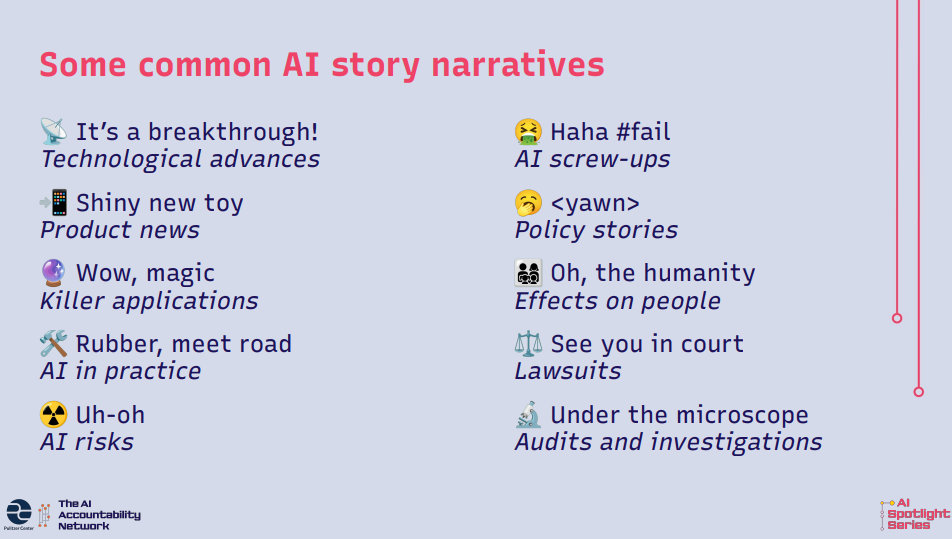
Responding to that shift, the Pulitzer Center built its online program with three tracks: one for reporters on any beat with no AI background, one for journalists seeking deeper expertise, and one for editors. Delivered through videos and slide decks, the introductory track covers AI’s history and examples of accountability reporting. The second track focuses on AI bias, misinformation, and basic data literacy, while the editors’ track offers guidance on evaluating AI pitches and steering coverage.
Kao said the online course is built from the training materials the Pulitzer Center has refined over the past two years, while running AI workshops for journalists around the world, and feedback from 3,000 participants. In May 2025, Karen Hao and Gabriel Geiger also led the first in-person AI accountability workshop in Thessaloniki, Greece, with a dozen Southeastern European journalists in collaboration with iMEdD.

AI is not just technology. You are really looking at it through the lens of power, money, and ideology. Being able to understand the context of where AI has started from and how it’s gotten to where it is, who is funding it, and what is the ideology behind it can be really helpful in the framing of your own story
Joanna Kao, Pulitzer Center’s senior editor for information and artificial intelligence
Demystifying AI for reporting and editing
The goal of the AI Spotlight Series is to provide journalists and editors with a solid foundation for investigating AI and help them put the technology into context, she added.
“AI is not just technology. You are really looking at it through the lens of power, money, and ideology,” noted Kao. “Being able to understand the context of where AI has started from and how it’s gotten to where it is, who is funding it, and what is the ideology behind it can be really helpful in the framing of your own story.”
Beyond context, the course also aims to demystify AI and clarify its basic terminology. “We really want people to understand it’s not as complicated or as scary as they think it is. There’s so much AI reporting that doesn’t require you to check code or even understand how code works”, said Kao, noting that other beats, from climate finance to health reporting, can contain just as much jargon.
How non-coding journalists can build web scrapers with AI (examples and prompts included)

A guide on non-coding journalists using AI to build web scrapers and access complex public data for their investigations.
For editors, the pressure to stay ahead can feel intense. The training encourages them to question prevailing narratives pushed by big tech. “The reason why we have this training, especially for editors, is for them to understand that that isn’t a narrative that they have to feed into”.
We really want people to understand it’s not as complicated or as scary as they think it is.
Joanna Kao, Pulitzer Center’s senior editor for information and artificial intelligence
Learning from AI reporting around the world
The course includes several case studies from across the world. “It’s definitely an intentional thing that we’ve tried…thinking about geographies of case studies that we’re bringing in, but also different sizes of organizations,” said Kao.
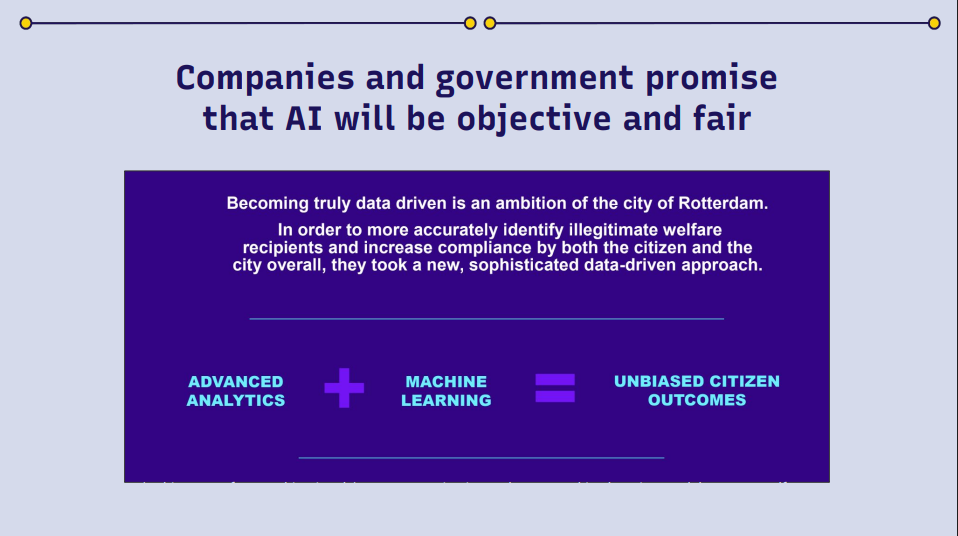
For example, the cases include a story published by Al Jazeera, that revealed the pitfalls of adopting AI in the welfare schemes of India’s Telangana state, an investigation from WIRED, focusing on Buenos Aires’ facial recognition system, which has led to wrongful arrests, and an MIT Technology Review story looking into Uber’s flawed facial recognition algorithm, that systematically locked India’s Uber drivers out of their accounts.
The AI Spotlight Series is currently available in English, with Portuguese and Spanish editions coming soon. French and Bahasa Indonesia versions are planned for 2026.
In the future, the team also wants to make the material relevant to journalists in their own contexts. “They’ll be seeing not like how do you do FOIA requests in the US or the UK but… how do you do information requests in Peru or other places in Latin America.”
After the program’s completion, participants have the opportunity to join the AI Accountability Community, which provides access to a listserv, as well as invites to community calls every two to four weeks. “And the idea is that, if you want to get inspiration for your stories, find collaborators, just listen to what other people are doing,” Kao said.
Tracking the next big stories
Looking ahead to the new year, Kao expects increased coverage of AI-related data centers around the world. “A lot of people have been announcing them this year, and then they’re trying to really fast-track them,” she adds. That’s why the Pulitzer Center will develop a specialized module on data center reporting.
“The other one is probably looking at finance. I think there’s more — there have been many more stories in recent months asking whether this is an AI bubble.”
In 2026, she adds, The Spotlight Series will also expand to civil society, providing shared terminology and a common foundation.
In addition to the AI Spotlight Series online course, the Pulitzer Center also offers in-depth resources and guidance for journalists and editors covering artificial intelligence. From investigative case studies on AI bias, labor, and surveillance, to practical guides, books, and methodological insights, these resources provide context, analysis, and techniques for rigorous reporting. You can explore investigations into welfare algorithms, AI’s environmental impact, misinformation, and the inner workings of AI systems to strengthen your own coverage and deepen your understanding of this rapidly evolving field here.