Every month we pull together tools, research, and ideas for journalists wearing… many hats.
This column started as a newsletter on iMEdD’s LinkedIn.
You can subscribe and find all past issues here.
A good month to try something new
iMEdD’s monthly column with tools, resources, and ideas that meet the needs of journalists.
By now, most of us have tested at least a few new things — some tools we bookmarked in January, a workflow tweak, maybe a platform we meant to understand better.
February is usually the month when you figure out what is truly useful and what you gradually let go. This edition is built around exactly that feeling: it’s time for a selection of tools, readings, and projects that we test and reassess- those that prove essential for the way journalistic work keeps changing every day. At the same time, there are always those things we simply keep open in far too many tabs.
And if you’re one of the many people who are new here, welcome.
Each month, we round up tools, ideas, and behind-the-scenes insights to help journalists who wear many “hats” — reporters, editors, producers, creators, and everything in between.
Up your sleeve
Tools and tricks you can put to work right away
Local journalism runs on more than reporting alone
We spent a little time exploring The Local News Playbook: Creating Value for a Sustainable Future (FT Strategies × Knight Foundation) and it’s one of those resources that helps zoom out. It maps the wider system shaping local news, from communities, advertisers, platforms, to funders and policymakers, and how value moves between them. Useful if you’re trying to explain sustainability beyond “get more subscribers.”
👉 Have a look
📌 Good for: newsroom managers, journalism support organizations, media researchers
How can you build your own algorithm-free newspaper
Tired of chasing links across newsletters, feeds, and platforms? This piece by Molly White makes the case for going back to RSS and curating your own reader with the writers and outlets you actually trust. It’s part media critique, part practical guide, tracing how platforms squeezed traffic and why direct, reader-controlled distribution still matters.
👉 Read more
📌 Good for: independent media writers, product managers freelance journalists
A new push to make encryption the default
Encrypt It Already is a campaign pushing tech companies to expand and properly implement end-to-end encryption across chats, backups, and stored data. What stood out isn’t just the tech asks, but the emphasis on transparency and user control, particularly relevant as AI features and data collection scale.
👉 Learn more
📌 Good for: privacy advocates, tech reporters, security researchers

A probe into Reddit’s data dynamics
Think-Pol for Reddit looks at how investigative work adapts when platform APIs become restrictive or adversarial. It outlines methods for tracing discourse and mapping influence when direct data access isn’t a given (a reality more researchers are running into).
👉 Check it out
📌 Good for: platform researchers, OSINT analysts, digital policy observers
Behind the scenes
Research, explainers & deeper context to help you connect the dots
Social media feeds, viral hits and real-time reviews
The text may have been published a few months ago, but it remains absolutely relevant. With the recent appearance of Bad Bunny flooding our feeds, the time has come to talk about music journalism and the fact that it now moves at the speed of the platforms as well, shaped by algorithms, fan reactions, and artists who announce their own news. This piece by Obscure Sound looks at how social media reshaped reporting, from instant coverage to new storytelling formats, and the tension between depth and speed.
👉 Read more
A deep dive into location surveillance tech
This 404 Media podcast episode starts with Joseph Cox’s reporting on Webloc, a tool reportedly acquired by ICE that can monitor phones across entire neighborhoods, unpacking how it works and the oversight questions it raises. A concise listen on the expanding reach of mobile surveillance.
👉 Listen more
Community Spotlight
New voices, bold experiments, and big ideas from the field
What if your next investigation started with the right training?
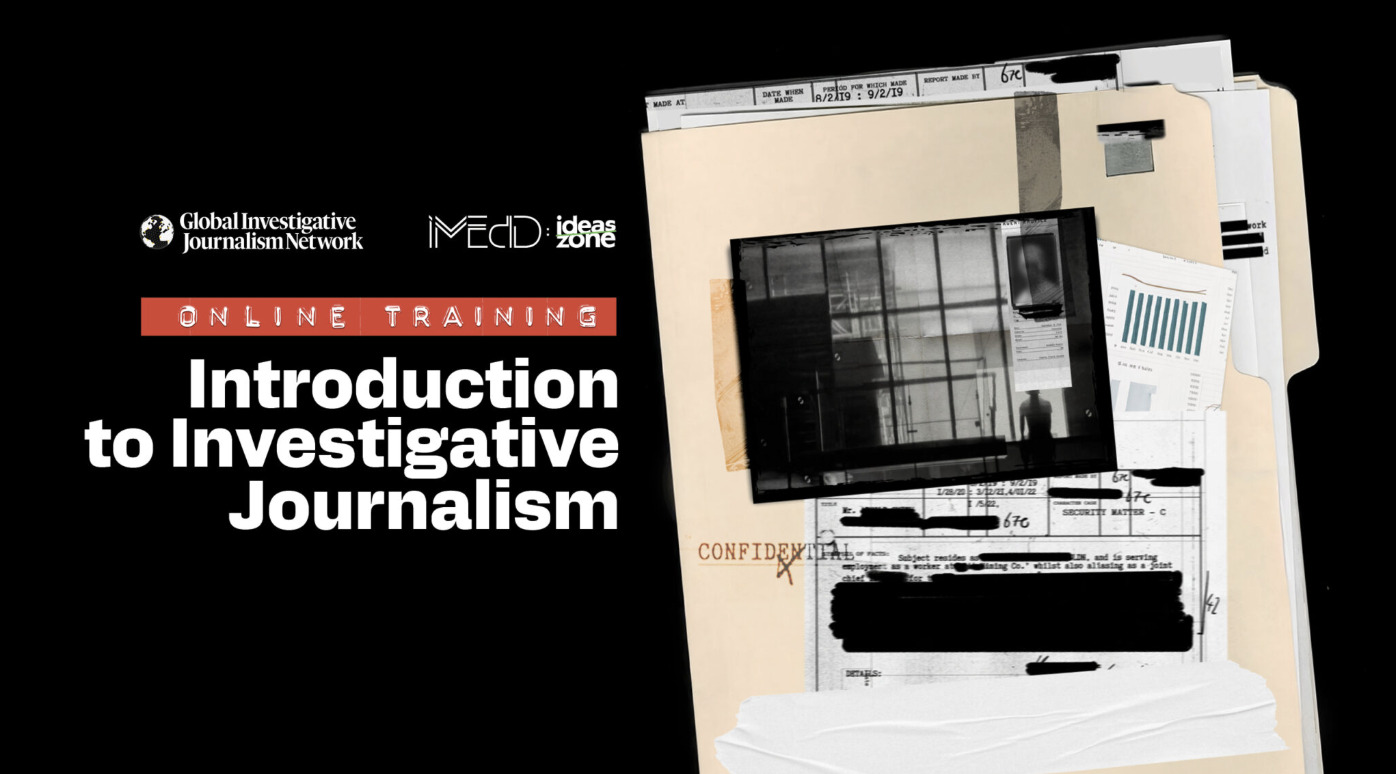
If you’ve been considering investigative work but didn’t know where to start, this program by iMEdD Ideas Zone and the Global Investigative Journalism Network is designed as a practical entry point. Online sessions, mentorship, and hands-on tools, from source-finding to OSINT and digital security, aimed at reporters stepping into investigative methods for the first time.
👉 Apply by March 6
Mapping the independent media ecosystem
The Independent Journalism Atlas is a searchable database tracking 1,000+ creators producing journalism outside traditional newsrooms — envisioned as an IMDb- or Wikipedia-style discovery layer for the creator era. Co-founded by Liz Kelly Nelson, Justin Bank, and Ryan Y. Kellett, it surfaces emerging reporting voices while mapping and supporting this fast-growing media ecosystem.
👉 Check it out
Let’s Chat!
If something here sparks a thought, we’d love to hear it. And if you want to pass this along to someone who might enjoy it, thank you — that’s how this little community grows. See you next month.