As the number of journalists murdered in Mexico rose again in the summer of 2026, reporters across Mexico speak to iMEdD about navigating pressure from drug cartels and public officials, persistent impunity and, in some parts of the country, “zones of silence.”
Featured image: Evgenios Kalofolias
Forced disappearances in Mexico: safe journalism, safer lives
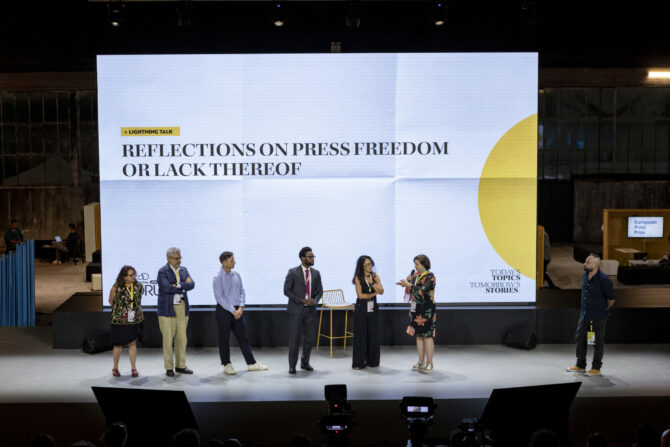
Through an interview with investigative journalist and co-founder of the Quinto Elemento Lab, Marcela Turati, iMEdD digs deeper into the phenomenon of disappearances in Mexico, the inadequate state apparatus and what journalists can do moving forward.
Carlos Castro, Roxana Guzmán, Luis Ángel López, Alex Serna, Josué Martínez, Alejandro Leyva Aguilar, Ricardo Zúñiga. Seven journalists murdered this year in Mexico — six of them in the span of just three months, between June and September, according to the Committee to Protect Journalists (CPJ) . These recent killings are only the latest casualties in a crisis that has been plaguing Mexico for at least two decades. Since 2006, 153 journalists have been murdered in the country, according to CPJ. In 2025, nine journalists were killed in Mexico — the second highest deathtoll in absolute terms in the world and a figure surpassed only by Gaza, as data from Reporters Without Borders (RSF) indicate.
Indeed, these numbers are usually more akin to places that are in a conventional state of war, similar to cases like those of Yemen, Ukraine or Gaza, says Jan-Albert Hootsen, CPJ’s Mexico representative, speaking to iMEdD. “Mexico is facing a permanent freedom of expression crisis,” Hootsen tells us, noting that the latest murders are a continuation of the years-long trend of violence against Mexico’s journalists.
There is, however, one “major caveat,” according to Hootsen: In Mexico’s recent political history, he says, violence tends to decline during the first year of a new presidency before spiking in the second, particularly against journalists and human rights defenders. With 2026 marking Claudia Sheinbaum’s second year in office, Hootsen believes the recent killings could be part of such a “second-year spike.” His hypothesis for the increase points to the relationship between organized crime groups and public officials: each new administration brings new officials, giving criminal groups an opportunity to explore the possibility of establishing working relationships with them before resorting to violence again, Hootsen believes. By the second year, these power dynamics have largely been restructured, “all the pawns have been set,” as he puts it, and violence begins to rise again.
In Mexico’s recent political history violence tends to decline during the first year of a new presidency before spiking in the second, particularly against journalists and human rights defenders.
Jan-Albert Hootsen, CPJ’s Mexico representative
Who is attacking Mexico’s press?
It is those two actors that are also responsible for most of the attacks against the country’s press. While the role of Mexico’s organized crime groups is already well-known, Hootsen tells us that “public officials are very often a part of this dynamic.” State actors were responsible for just over half of the attacks documented against the press in 2025, according to Article 19’s annual report.
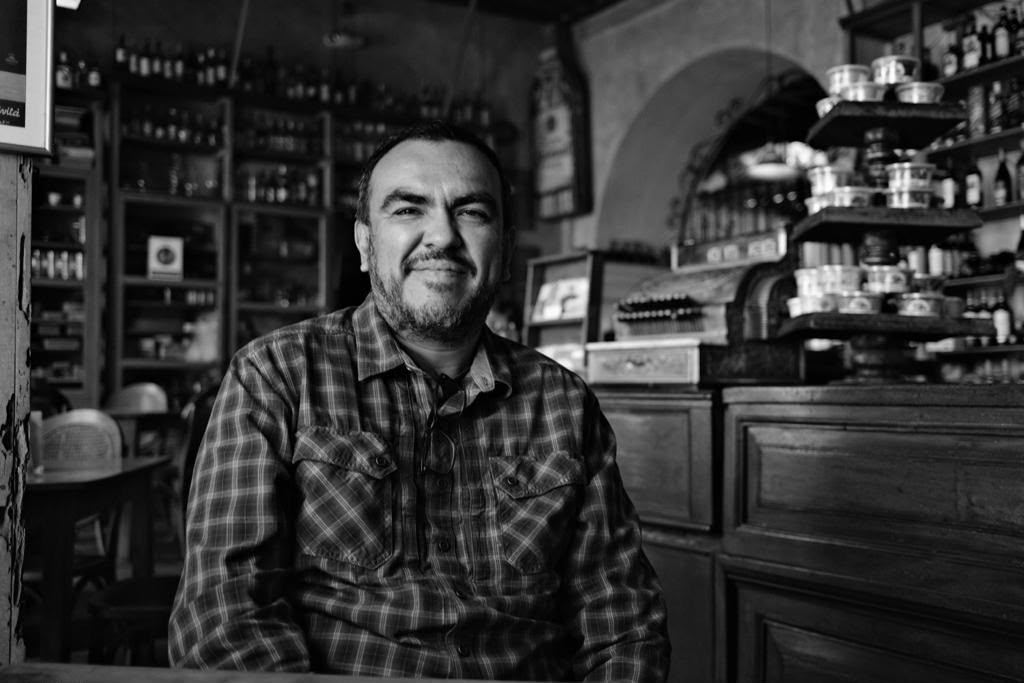
“I trust more these guys, the criminals, than the cops,” says Ulises Escamilla , a local producer and fixer living in Mexico City who has worked for international media such as the BBC and Sky News, speaking to iMEdD. “The criminals have a word, and they keep it if you keep your word,” he continues.
Escamilla recalls being followed by a person he believes was a police officer around two years ago. At the time, Escamilla was working with VICE on a documentary about the death of Jesús Ociel Baena, Mexico’s first openly non-binary magistrate, who had been found dead at his home in the central state of Aguascalientes. The person — who had been following Escamilla for some time — disappeared when Escamilla tried to take some pictures of him. “I’m sure that in that case the government could be related to the assassination,” stresses Escamilla, who believes this was the reason he was being followed.
Often, public officials and drug cartels operate in collusion. “In some parts of the country, it’s hard to tell where the crime organizations end and when the local authorities show up because sometimes, they’re just the same people,” says Armando Talamantes, executive director of Quinto Elemento Lab, a Mexican non-profit investigative journalism organization.
The recent murder of journalist Roxana Guzmán in the eastern state of Veracruz earlier this summer provides an illustrative example. Four of the eight suspects arrested in connection with her murder are municipal police officers, accused of providing logistical support to the criminal organization that kidnapped the journalist on June 2, 2026 before killing her. In early August, the Veracruz Congress removed the immunity of Raúl González Martínez, the mayor of Ixhuatlán del Sureste (a town near Nanchital where Guzmán was based), clearing the way for his prosecution over his alleged role as the mastermind behind the Guzman’s abduction and murder.
A 98% impunity rate
Whether the perpetrators are public officials or drug cartels, there is one factor tying the attacks together, according to Hootsen: impunity. “What they all have in common is that these attacks occur in places where the chance that the attackers are actually punished for their crimes, is next to zero.” The numbers are staggering — about 98% of lethal crimes against the Mexican press go unpunished, Hootsen stresses, while the impunity rate is even higher for non-lethal crimes and reaches 100% when it comes to the disappearance of journalists. “Impunity incentivizes attacks against the press,” he says.
Are Mexican authorities unable or unwilling to prosecute the aggressors? According to Hootsen “if the political will is there, the Mexican state is very capable of going after the attackers.” What causes this impunity for Hootsen is the state’s indifference, and in some cases — when public officials are involved — there is even an incentive to engage in a cover-up operation. The government is more likely to act when the attack becomes a “PR problem”. That is what happened in the case of Guzmán when the video of her abduction circulated widely in the country’s social media leading to what Hootsen calls “a firestorm in Mexican public opinion.”
Keeping the lights on: independent journalism under siege in Georgia
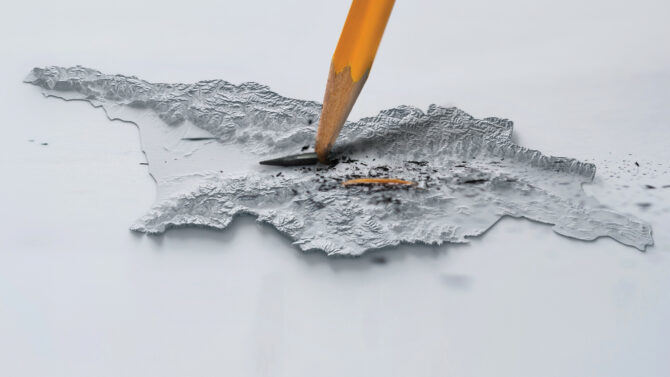
As Georgia has dropped to 135th place in the 2026 World Press Freedom Index amid unprecedented hostility towards journalists, iMEdD spoke with representatives of four independent media outlets about the challenges facing journalism in the country: imprisonments, attacks, “foreign agent” laws, and the struggle for survival.
Shrinking access to information and legal pressure
Lilia Saúl Rodriguez , an investigative reporter living in Mexico City and working for Organized Crime and Corruption Reporting Project (ΟCCRP) talks of another major challenge facing the country’s journalists: “Access to information in Mexico is becoming a dead letter,” she tells iMEdD over email. While the right to public information was expanded in the early 2000s with the approval of relevant transparency laws, the situation has since deteriorated. In late 2024 the Sheinbaum administration decided to dismantle the INAI (National Institute for Transparency, Access to Information, and Personal Data Protection), which, as Talamantes explains, had been an independent body serving as a “referee” when state agencies refused requests for public information.
Access to information in Mexico is becoming a dead letter
Lilia Saúl Rodriguez, investigative reporter at OCCRP
Quinto Elemento has used freedom of information requests repeatedly. Talamantes recalls trying to obtain public documents relating to Quinto Elemento’s investigation into the Odebrecht corruption scandal, “the prosecutor offices said: ‘Yes, you can have it, only if you pay me, like, two million pesos.’” The reporters appealed to INAI, which concluded the documents should be given to them for free. Today, that is not an option, Talamantes tells us. INAI’s oversight of the right to public information access has now been transferred to a body within the Ministry of Anti-Corruption, raising serious concerns over its independence. INAI’s historical record, including the archive of past information requests and their corresponding responses, has “vanished into some cloud-based limbo, no longer accessible to the public,” says Saúl Rodriguez.
Judicial harassment is also taking a toll on Mexican media, Talamantes says. According to Article 19,, between January 1 and July 31, 2025, there was a new judicial or administrative proceeding against journalists and media outlets every four days on average. Quinto Elemento has faced lawsuits in the past, though none in recent years, Talamantes says. Today, Quinto Elemento’s strategy to prevent legal challenges involves receiving legal advice from nonprofit organizations, like Article 19 and Propuesta Civica, while also participating “Reporters Shield”, a membership program that provides legal assistance and financial support to newsrooms facing lawsuits aimed at silencing their reporting.
Zones of silence
In certain parts of Mexico, the pressures faced by journalists have taken an even more extreme form. Subjected to violence and intimidation, primarily by organized crime, reporters are forced to restrict or abandon the coverage of sensitive topics, like drug trafficking, altogether, a phenomenon known as “zones of silence”.
Subjected to violence and intimidation, primarily by organized crime, reporters are forced to restrict or abandon the coverage of sensitive topics, like drug trafficking, altogether, a phenomenon known as “zones of silence”.
Iguala, a city in the southwest state of Guerrero, has become a silent zone “on the one hand, due to the strong presence of organized crime, but on the other hand, also because of the collusion between government authorities and organized crime,” says Jonathan Cuevas, a journalist who has worked for both Mexican and international media and is based in the city, in a WhatsApp message to iMEdD. For the vast majority of journalists, this means refraining from covering topics that harm the interests of organized crime and, sometimes, certain public officials, according to Cuevas. “Self-censorship is mandatory for all of us,” he adds.
Self-censorship is mandatory for all of us
Jonathan Cuevas, Mexican Journalist
In the state of Sinaloa, in Northwestern Mexico, journalism is severely constrained in nearly half of the state’s territory and in some municipalities there are no local journalists at all, according to a 2025 study conducted by Iniciativa Sinaloa, a non-profit civil organization based in Sinaloa’s capital, Culiacán. According to the official state version this is because of a lack of commercial interest in these municipalities, says Sibely Cañedo (Σιμπέλι Κανιέδο), Iniciativa Sinaloa’s project coordinator and a journalist living in the city of Mazatlán, speaking to iMEdD. Journalists and activists interviewed by Iniciativa Sinaloa, however, also point to the presence of organized crime as a major factor, she tells us.
A violent turf war that broke out in September 2024 between rival factions of one of the largest drug trafficking groups in the world, the Sinaloa Cartel, provides the latest context for the zone of silence in the area. The phenomenon is, however, much older. Cañedo traces it back at least to 2008, when another rupture within the Sinaloa Cartel triggered a surge in violence across the state. In Iguala, too, the zone of silence has a long history, existing long before Cuevas started working as a journalist in 2007, he tells us.
Sometimes, access to certain territories in Sinaloa is completely restricted. Journalists have been intercepted at illegal checkpoints guarded by armed groups forbidding their access, Cañedo tells us. Cañedo herself was unable to reach a community in Sinaloa’s northern municipality of Choix in July 2026, as no one was willing to take her there due to her work as a journalist. Even in Culiacán, where a certain degree of plurality is retained, reporters regularly resort to self-censorship when covering the activities of organized crime. “They can’t speak about the names of the criminal groups. They only refer to organized crime but don’t say ‘Los Chapitos’ or ‘La Mayiza’,” Cañedo notes in regard to the two rival factions within the Sinaloa cartel.
Consequences for those who continue to cover sensitive topics range from threats and beatings to displacement and murder, Cuevas tells us. He himself had to leave Iguala for Mexico City between 2020 and 2023 after receiving a series of texts and a call in October 2020, threatening to murder him and leave him “dismembered in the street or in some canal,” he tells iMEdD. He was forced to return to Iguala after losing up to 70% of his income due to his displacement.
In 2021, while in Mexico City, Iguala’s “municipal officials had asked an organized crime group to assassinate me and were offering the amount of 25,000 Mexican pesos, according to a series of screenshots sent to me via WhatsApp”, Cuevas tells us today. He believes this was related to his publications regarding financial irregularities in Iguala’s municipal government. Back in Guerrero, Cuevas’ family was being harassed and watched, “to the point where armed men intercepted my sister and her partner, threatened them, and gave them a message for me while pointing guns at their heads,” he recalls.
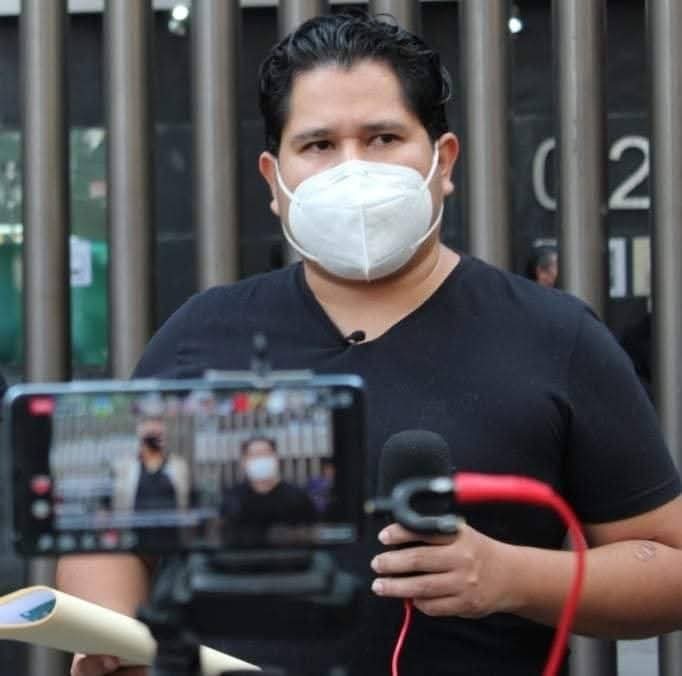
Zones of silence have disrupted the relationship between journalists and their audiences. “People don’t trust the media,” notes Aarón Ibarra, a freelance journalist based in Culiacán, speaking to iMEdD, as they suspect the media might be lying or even failing to cover certain issues altogether, he explains. For Hootsen, the consequences relate to democracy itself. “Whenever an election is coming up, it would be very good for voters to know if the candidates are corrupt on the take of organized crime. If critical journalism disappears, then you take that capacity for voters to know away because journalists are no longer covering it.”
Accountability or censorship?
In an already extremely dangerous environment for press freedom in Mexico, a new regulation aimed at protecting audience rights has opened up a different, institutional front. The set of regulations, titled the “General Guidelines for the Protection of Audience Rights,” was adopted in late August 2026 by Mexico’s Telecommunications Regulatory Commission (CRT) and, among other things, requires broadcasters to have complaint mechanisms and audience rights Ombudspersons in place. Although, following criticism, the final version of the rules is less restrictive than the one initially proposed by the Sheinbaum administration, the key question raised by the impending implementation of the new institutional framework appears to remain the same: how to ensure that efforts to strengthen media accountability do not become yet another means of exerting pressure on journalists.
Meanwhile, earlier in the summer, the Mexican government’s legal counsel, Luisa María Alcalde, presented a list of journalists, media outlets and opposition figures who the government claims attack the Sheinbaum administration. Saúl Rodriguez tells iMEdD that “it lists [the journalists’] full names and social media accounts, which makes them direct targets and makes it easier for people to attack them.”
Mexican journalism has proven to be incredibly resilient […] Journalists tend to be resilient, they tend to [be] very passionate about their work, they’re going to be very stubborn. The more you push them, the more they’ll start pushing back.
Jan-Albert Hootsen, CPJ’s Mexico representative
Yet, amid this evolving landscape of pressures “Mexican journalism has proven to be incredibly resilient,” Hootsen stresses. “Journalists tend to be resilient, they tend to [be] very passionate about their work, they’re going to be very stubborn. The more you push them, the more they’ll start pushing back. And it’s really hard for a government or for criminal networks to actually get rid of journalism altogether because they always come back.”
Ηow Mexican journalists protect themselves
Safety concerns have deterred Saúl Rodriguez from pursuing certain investigations. She tells us of the area of La Yesca and El Nayar in the western state of Nayarit, which has been “virtually abandoned by the government.” It relies on a single army outpost for protection, but when its personnel sometimes leave to collect supplies, local people are left vulnerable to robbery, murder and sexual violence by organized crime. Saúl Rodriguez has “seriously considered not going,” as the area is very remote, while some roads are controlled by organized crime, she says.
While Quinto Elemento’s team has not faced any threats or harassment lately, security remains a key consideration, especially for the freelancers whose investigations it supports. Protective measures range from communicating through Signal to conducting investigations during the day, without attracting much attention, as Talamantes tells us.
Two years ago, Quinto Elemento had to physically remove one of their reporters from the city she was working in to ensure her safety. The journalist had been investigating the involvement of public officials in the abuse of women inside a prison. “We took her out of the city a couple of days before the story would run,” Talamantes tells us.
Working with OCCRP, Saúl Rodriguez says, comes with constant security training and a series of protection measures. “They include everything from setting up a Signal chat and determining who will be tracking my movements day by day to checking in — depending on the area— every 15 minutes or every hour. […] I have to share my schedule second by second, so [that] they know where I am and can monitor me constantly,” she tells iMEdD.
Escamilla places particular emphasis on his sources’ protection, telling us he never films in their houses, preferring instead “neutral places,” like hotel rooms. Covering his sources’ characteristics, by using glasses or balaclavas for instance, is also a priority, he notes, stressing that this ensures not only his sources’ safety but also his own. If a source were to be identified “they are going to came after him and after that they are to come after me.”