Once again this year, the UNCOVERED journalism conference highlighted the importance of cross-border journalistic collaboration in the face of persistent threats to press freedom, while honoring standout investigations through its Impact Awards.
Featured image: Lisa-Marie Bosbach/ECPMF
Translation: This piece was originally written in Greek and translated into English with AI assistance. The translation was reviewed by journalist Phoebe Fronista.
Resilience, sustainability and recognition of journalism were the three themes that Timothy Large, Director of Independent Media Programmes at the International Press Institute (IPI), singled out in his opening remarks as central to this year’s UNCOVERED. This was despite the shadows cast over press freedom, ever-present in the accounts of journalists who had experienced them first-hand and yet kept on investigating.
That persistence in collaborative investigative journalism was celebrated once more at the conference, held on 17 and 18 September at the Goethe-Institut in Budapest. Amid discussions on journalists’ safety, the pressures they face and the sustainability of media outlets in a new era, a special place was reserved for the IJ4EU Impact Awards 2026 ceremony, which showcased investigations with a global footprint.
This was the fifth edition of the conference, which began online in 2021 before moving to Berlin in 2022, Brussels in 2023 and then Athens for the following two years, in partnership with iMEdD and the International Journalism Forum.
The choice of Budapest for this year’s UNCOVERED was no coincidence. The conference took place in the Hungarian capital at a time of political change for the country: following the end of Viktor Orbán’s long rule and the election of Péter Magyar as prime minister, Hungary is attempting a new, pro-European political course, including a commitment to loosen the tight grip on the country’s media. Whether this change will translate into practice remains an open question.
UNCOVERED is organized by the European Centre for Press and Media Freedom (ECPMF) together with its partners, IPI and the European Journalism Centre (EJC), as part of the Investigative Journalism for Europe (IJ4EU) program, which supports journalists and teams carrying out collaborative, cross-border investigations across Europe through annual grants. In that spirit, three cross-border “snapshots” during the conference gave the floor to IJ4EU grantees to present their cross-border investigations, with questions of collaboration at the forefront, a thread that in fact ran through the entire program.
Without a doubt, the highlight of the event was the presentation of this year’s Impact Awards.
Four investigations were awarded. The first was Factories on the Run: Inside the Global Trade that Moves PFAS Downstream, a deep dive into PFAS (toxic chemical compounds, also known as “forever chemicals,” that are used in a wide range of products, which harm the hormonal and immune systems and are also linked to cancers) and how the industry shifts production of these highly harmful chemicals to countries with less stringent rules.
Also honored was the expansive The Forever Lobbying Project. Coordinated by the newspaper Le Monde, it involved 46 journalists from 29 media outlets in 16 European countries, among them the Reporters United network and journalist Eurydice Bersi, who was in Budapest to accept the award. The investigation examined the chemical industry’s efforts to influence European legislation on PFAS and drew on more than 14,000 documents obtained through freedom-of-information requests.
Bad Practice, another award-winning investigation, brought together 50 media outlets led by OCCRP, VG and The Times. It exposed a paradoxical system of impunity for doctors who have been struck off for professional misconduct in one country but continued to practice in another. The consortium also included the Greek outlet Inside Story, along with Rafaella Maneli and Eva Papadopoulou.
Finally, a special mention went to the historical investigation Killing for the Photo, which uncovered the story behind one of the famous photographs of the execution of a Bosnian civilian during the Yugoslav wars.
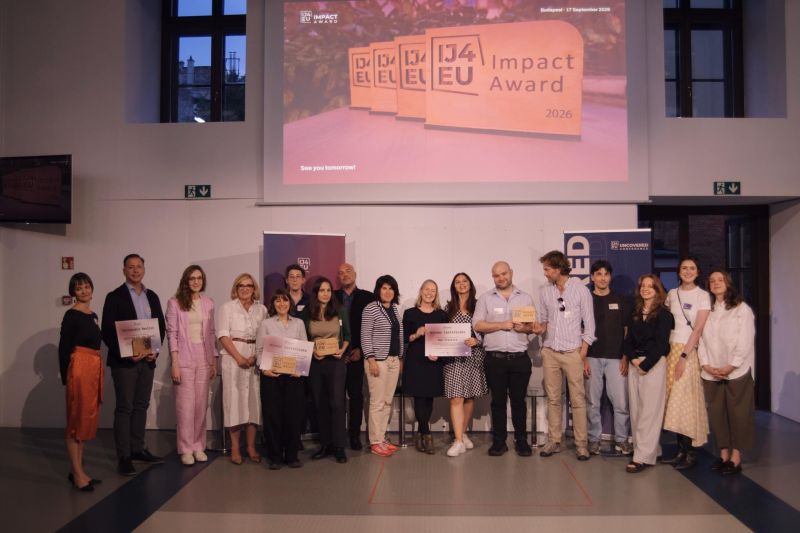
UNCOVERED 2026 also featured a variety of discussions on topics such as the pressures journalists face, the impact of their investigations (the session titled “What happened next?” was particularly compelling), press freedom and the financial sustainability of media outlets. A notable example was the workshop led by Cora Moyano of Arena for Journalism in Europe, which presented techniques for building cross-border budgets and organizing the finances of long-term investigations.
Participants also addressed issues concerning journalists’ resilience and mental health, their safety, and the challenges and difficulties they encounter in their investigative work.
The program included a special reference to the case of Daphne Caruana Galizia, following the recent court ruling in Valletta that acquitted businessman Yorgen Fenech of the charges linked to her murder.
What this year’s edition confirmed is that, while advances in technology and artificial intelligence are shaking the very foundations of how journalism is practiced, investigation remains at its core: it is the essential element in which its value and substance lie.