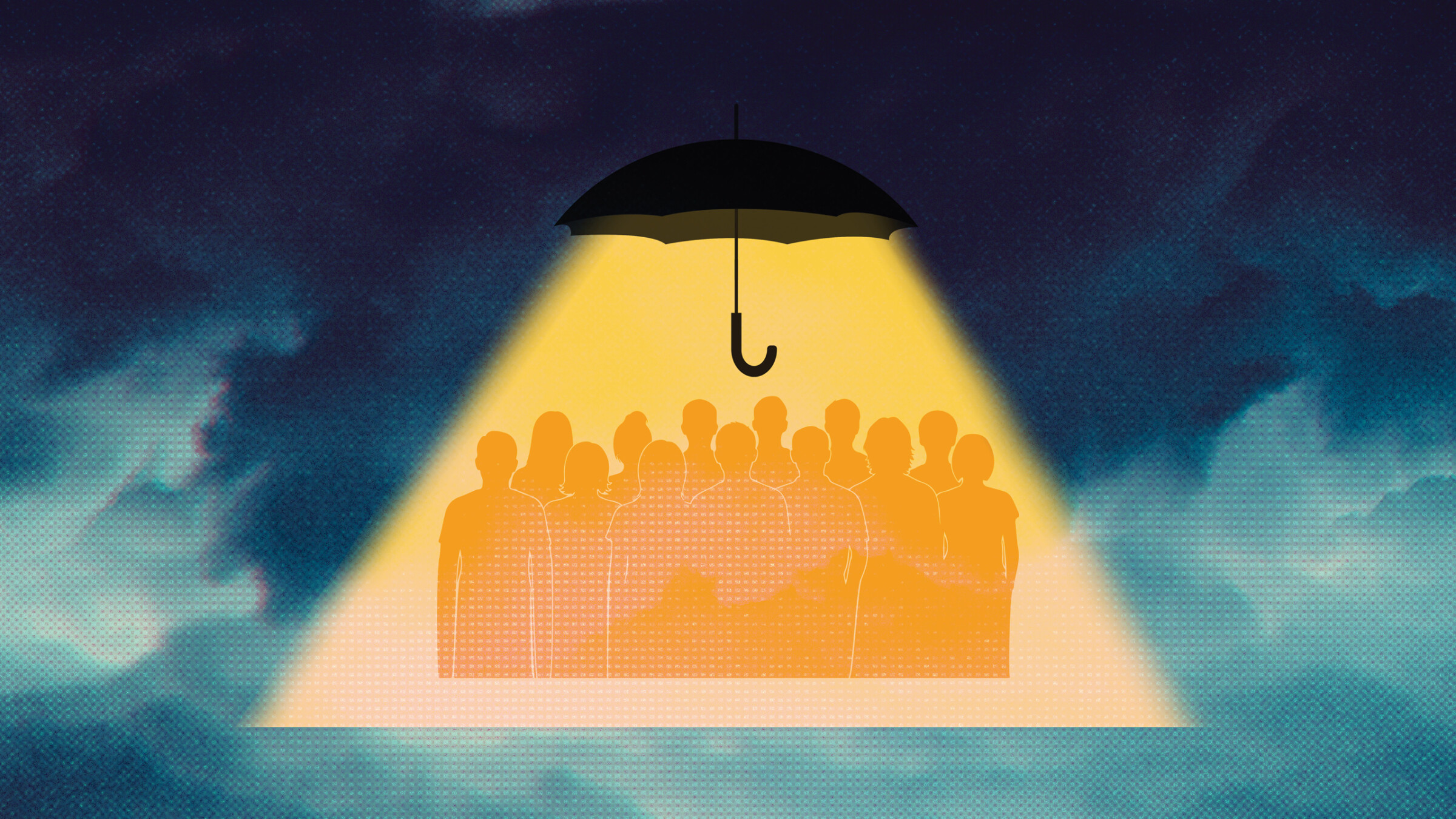
Facing an administration that is hostile to the media and belligerent in the way it wields law enforcement, journalists across the U.S. are rethinking how they identify sources and store materials.
Featured illustration: Evgenios Kalofolias
The effects were immediate, says Mazin Sidahmed, the co-founder and executive director of Documented, a nonprofit newsroom based in New York City that covers immigration and publishes in English, Spanish, Chinese and Haitian Creole.
“When the second Trump administration began, we saw an immediate drop off in the number of people that wanted to speak with us,” Sidahmed told iMEdD. “There’s just huge fear around the entire all the different communities that we serve in speaking out or even showing up to work currently. So, it has been a really difficult environment to work in.”
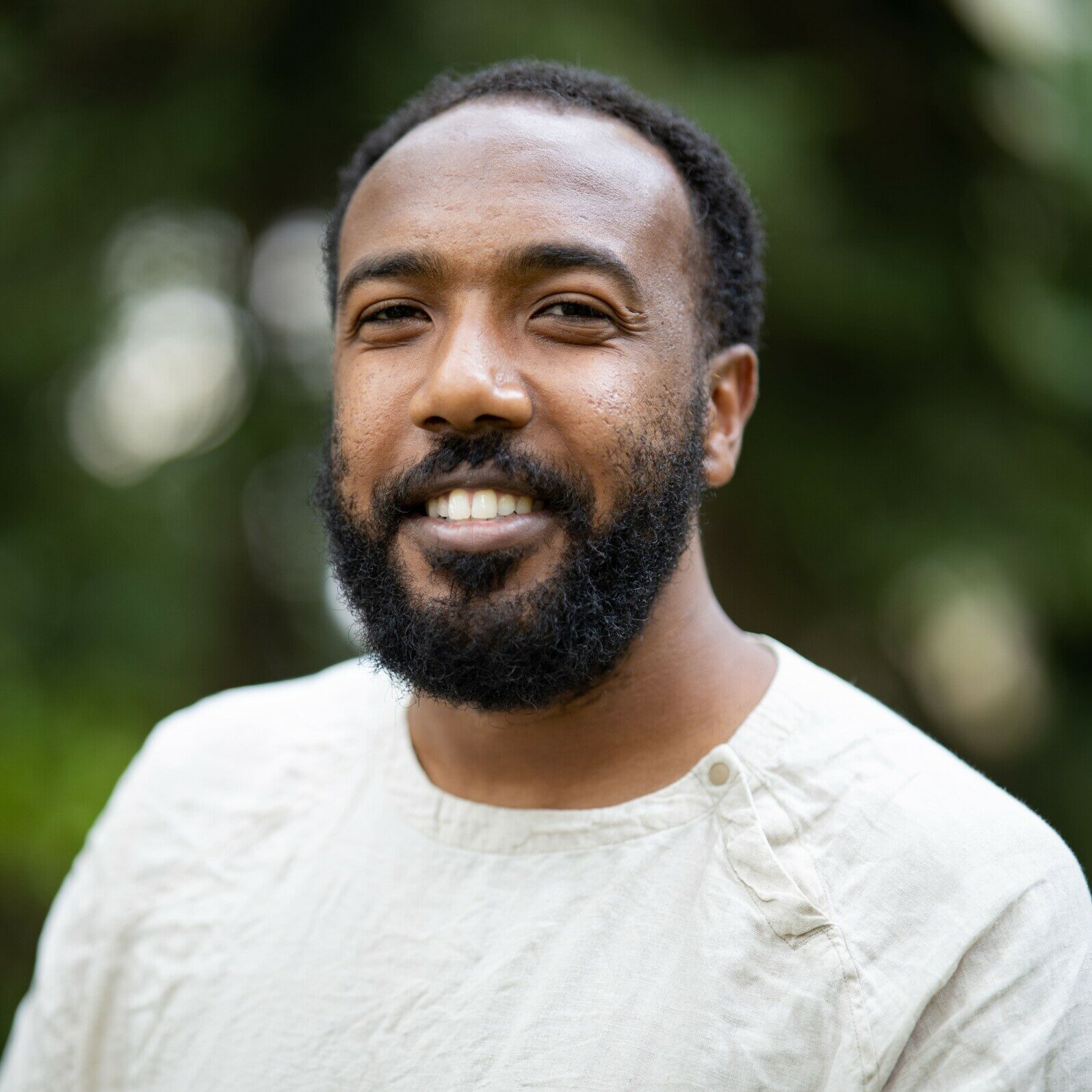
When the second Trump administration began, we saw an immediate drop off in the number of people that wanted to speak with us. There’s just huge fear around the entire all the different communities that we serve in speaking out or even showing up to work currently. So, it has been a really difficult environment to work in.
Mazin Sidahmed, co-founder and executive director, Documented
Documented, which launched in 2018, during Trump’s first term, has a team of dedicated community reporters who are fluent in the languages Documented publishes in and chat with readers on WeChat, WhatsApp, Nextdoor, and newsletters.
Rommel Ojeda has been one of Documented’s Spanish-language reporters for nearly five years. He was struck by the way his connections suddenly clammed up, both on social media and in person.
“I would get at least 200 or 100 responses to any inquiry that I had (on WhatsApp). But after Trump took office, it dropped by 50%,” says Ojeda. He told iMEdD that even people he had previously interviewed and had their names published were now hesitant to go on the record, and those who had invited him into their homes now wouldn’t even talk on the phone.
“They started to tell me that they didn’t want their name on it, they wanted their initials, or they didn’t want certain identifiers. And that was very new to me because I’ve known them. I’ve known these people for like the past, you know, four years, and they trust me, I know they trust me,” says Ojeda.
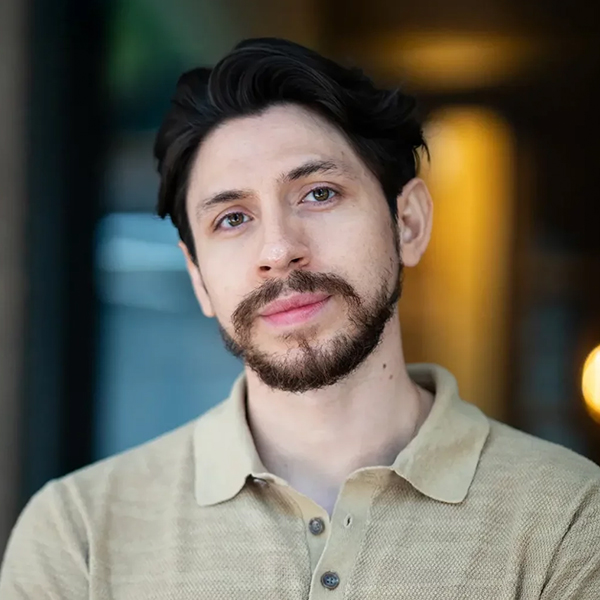
They started to tell me that they didn’t want their name on it or they didn’t want certain identifiers. And that was very new to me because I’ve known them, I know they trust me.
Rommel Ojeda, journalist, Documented
Climate of fear
During his re-election campaign, U.S. President Donald Trump promised mass deportations and an end to illegal border crossings. And he delivered: according to the Deportation Data Project, the administration’s unprecedented – and highly publicized – crackdown on immigration is estimated to have deported nearly 300,000 people in his first year in office, more than quadrupling previous yearly numbers.
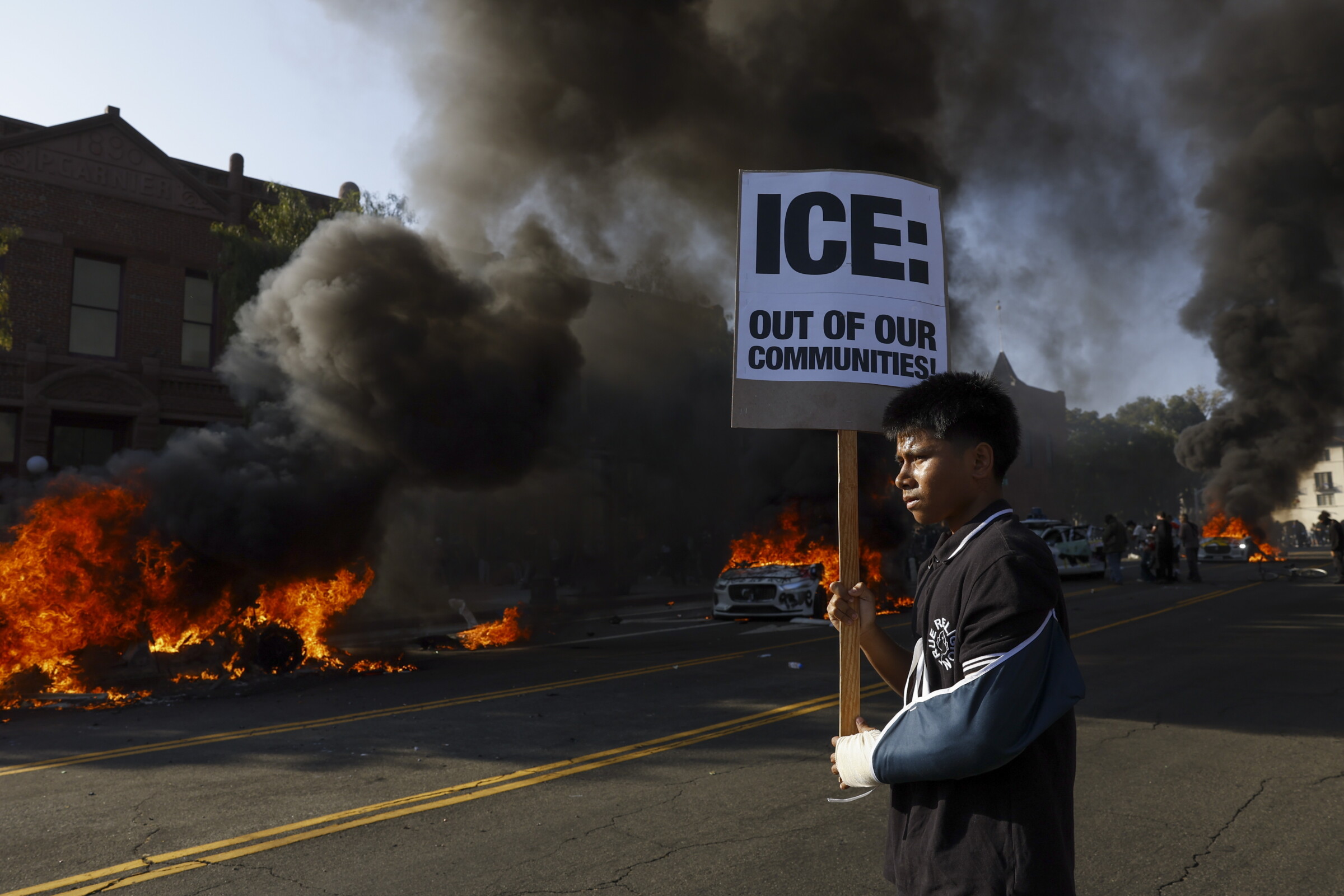
The aggressive tactics employed by federal ICE (United States Immigration and Customs Enforcement) officers in major cities such as Los Angeles, Chicago, New York City which included street arrests, workplace raids, detentions of minors and deportations to countries other than the ones from which the detainees came from have created “a general climate of fear and caution that has made many people reluctant to speak publicly,” says Paola Jaramillo, the co-founder and executive director of Enlace Latino NC, a Spanish-language nonprofit newsroom serving North Carolina’s Latino community.
One source pulled out of participating in Enlace Latino NC’s podcast on Venezuelan immigrants after the administration terminated their Temporary Protected Status (which caused around 300,000 people to lose their legal status overnight) simply out of fear that their voice could be identified and could put them at risk.
Jaramillo says it’s not only the undocumented that don’t want to go on the record. “U.S. citizens, permanent residents, and people with legal status have also expressed concern about becoming targets,” she notes.
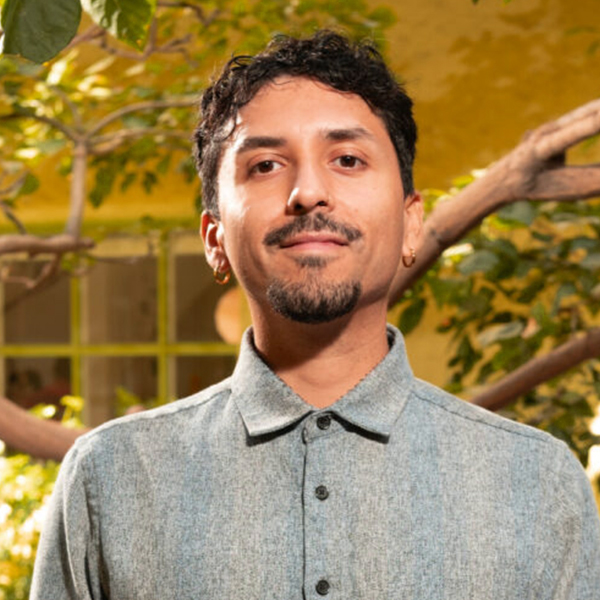
Martín Macías, a reporter at the LA Public Press has been covering protest marches since 2020. He says he’s never witnessed law enforcement be as violent against both protesters and the press as he did in June 2025, when ICE officers came to Los Angeles to conduct raids, sparking demonstrations by Angelenos. June was also when people started to refuse to speak with him, whether it was protestors, street vendors or parents waiting to pick up their kids outside schools.
“My reflex is to say, OK, what’s your occupation? How old are you? Where do you live? And I could sense very early on they were uncomfortable explaining or they were really concerned about their safety,” Macías told iMEdD. “In this climate, with this administration, those kinds of details could really be used against you in a very, very dangerous way, so it sparked a conversation in the newsroom of how do we approach this? How do we make sure that we’re verifying a source at the same time being sensitive to their situation?”
It sparked a conversation in the newsroom of how do we approach this? How do we make sure that we’re verifying a source at the same time being sensitive to their situation?
Martín Macías, reporter, LA Public Press
Breaking the norm of source identification
Journalists publish the full name, age, occupation, and place of residence of a source for the purposes of credibility and transparency. Exceptions are made for whistleblowers or for those whose safety is at risk, but the bar is high to meet those exceptions and people who don’t wish to see their names in print are usually cut from the story.
Over the last year, however, several independent media outlets that cover immigration have changed the way they identify those they interview – as well as how they store their information.
All three newsrooms that iMEdD spoke with say they practice informed consent to set expectations and ensure that those they interview understand the potential risks of speaking to a reporter – something which often leads to a refusal, says Macías.
At the LA Public Press he says they decide on a case-by-case basis whether to offer a pseudonym or first name only, and then make a note in the article that the source fears for their safety due to activism or legal status.
Jaramillo says at Enlace Latino NC they now ask whether a source adds value to a story and whether their participation could expose them to harm before printing their names.
She says this often means that they rely more frequently on anonymous sources, first name attribution, or community advocates, rather than directly identifying vulnerable individuals.
“We often remove or generalize information that could lead to the identification of an individual, especially in small or rural communities,” Jaramillo says.
At Documented they don’t offer pseudonyms, but use initals, first names and rely more on graphic designers as most people don’t want to be photographed, even from the back.
Sacrificing documentation
All three newsrooms say that digital security is paramount. They’ve stopped using transcription services that utilize AI, are unencrypted or are connected online. They use Signal to chat with sources, delete all data, Slack messages and emails after a specific amount of time and are mindful of what and how they write in internal communications.
After taking part in a digital security seminar, Documented reporters cleaned up their personal Google drives, deleting anything work-related. They now use only company devices for their reporting.
Ojeda says that even when he knows somebody’s name, in his notebook he’ll attribute a quote to “source number 2” in case he is arrested and his notes confiscated.
“It takes a lot of toll. I’m always having to be 10 steps ahead for a problem that may or may not happen, but I‘d rather take that precaution because it’s not a joke. Even one line in an article can mess up like someone’s life.”
A contract and a moral duty
First amendment lawyer James Wheaton has been representing journalists in court and teaching media law to journalism students at Stanford University and the University of California at Berkeley for over 25 years. He says that journalists today need to think more like spies.
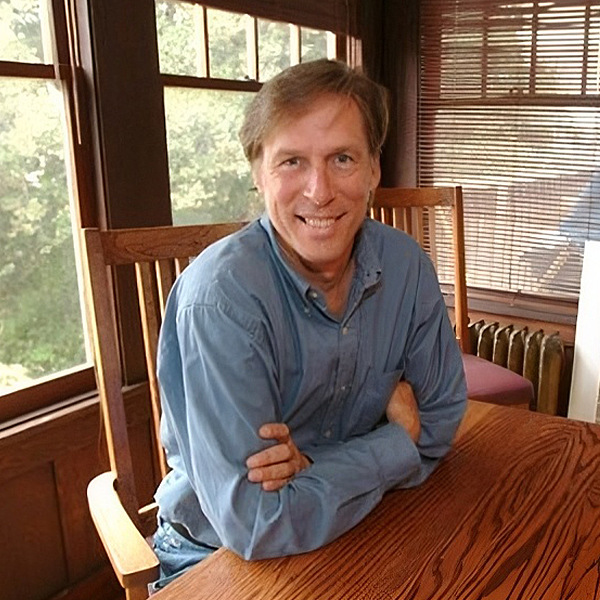
“You’ve got to be as good at what you do as a reporter as an undercover agent for the FBI or a CIA agent,” says Wheaton. “Because when you make a promise to a source to protect them if they give you information, that’s a contract. More than that, it’s also a moral duty.”
You’ve got to be as good at what you do as a reporter as an undercover agent for the FBI or a CIA agent.
James Wheaton, first amendment lawyer
Journalism as a profession is explicitly protected in the U. S. Constitution. The first Amendment states clearly that “Congress shall make no law […] abridging the freedom of speech, or of the press.” 49 out of 50 states have shield laws that protect reporters from disclosing confidential materials in court, and the Privacy Protection Act of 1980 explicitly states that no search warrant can be used to obtain materials belonging to a reporter, unless there is probably cause that the reporter committed a crime. Only a subpoena can be used to compel a reporter to turn over evidence –– but a subpoena can be appealed in court and it is the reporter, not law enforcement, that turns over the specific and named materials to the court.
Despite these robust protections, previous administrations and law enforcement agencies have often gone after reporters and their sources.
Gabe Rottman, Vice President of Policy at the Reporters Committee for Freedom of the Press (RCFP) says that under President Barack Obama, the Department of Justice ramped up investigations and prosecutions of government whistleblowers (like Chelsea Manning and Edward Snowden) under the Espionage Act of 1917.
The first Trump administration continued that trend bringing cases against a number of whistleblowers, and, crucially, authorized the use of court orders to get telephone and email records from at least eight different journalists across three outlets.
“There’s definitely greater concern both among journalists and media lawyers,” says Rottman. “Because we have the benefit of the record from President Trump’s first administration, we had a sense that things could be coming.”
Search and seizure
In January 2026, the Federal Bureau of Investigation (FBI) obtained a search warrant and raided the home of Hannah Natanson, a Washington Post reporter, seizing her devices, both personal and professional. Ostensibly they were investigating a former government contractor charged with illegally retaining classified documents. In practice, however, the government now held in its possession the names and unpublished grievances of thousands of federal workers who had lost their jobs in the previous months during mass layoffs that had been speaking with Natanson, who had published a series of articles on the issue.
After the affidavit was unsealed, it emerged that both her profession and the law that protects it had not been mentioned, making the search, in fact, illegal.
A judge issued a temporary order to halt law enforcement from reviewing the materials, and on February 24 ruled that an independent judicial review would take place. “But in the meantime,” says Wheaton, “11 or 12 hundred sources are all newly scared. And every other person in the administration who’s disgruntled, upset, maybe leaving, fears retaliation, are they going to talk to a reporter even on a secure line at this point? That’s the goal here: it’s intimidation and fear. Yes, there’s laws that protect you, but the people in charge aren’t following them.”
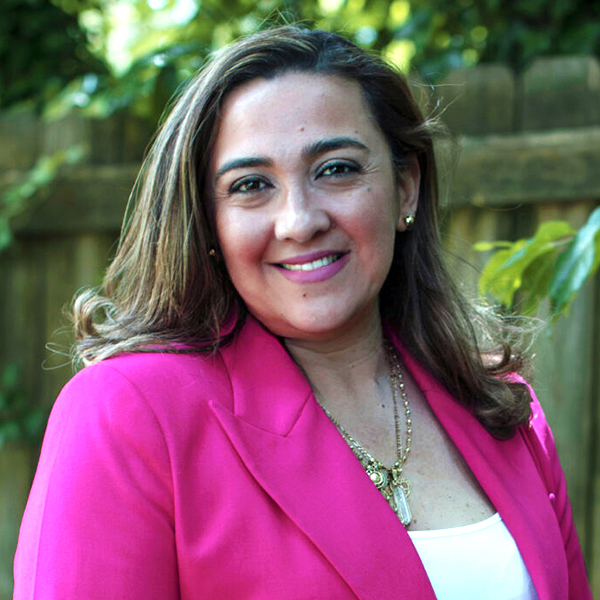
And the intimidation can work on both sources and editors, Jaramillo says by “encouraging self-censorship and weakening the media’s ability to investigate and hold those in power accountable.”
[The intimidation] can work on editorial teams by encouraging self-censorship and weakening the media’s ability to investigate and hold those in power accountable.
Paola Jaramillo, co-founder and executive director, Enlace Latino NC
A dystopian balance
Wheaton says the only way to fight suppressive actions that try to turn off “the spigot” of sources is simply to have better practices at keeping the information from a place where someone can get it. In his lectures, he tell iMEdD, he now focuses more on tradecraft than the finer points of the law.
“I teach my students: I can tell you what the law is. Don’t rely on me to save you after the fact. If law enforcement’s not going follow the law, there’s not a lot you can do about it. They’re the ones with the badges and the guns and the handcuffs.”
Wheaton tells his students to never bring a cellphone to a protest (law enforcement will be there with ‘stingray’ phone trackers), to destroy notes or keep them at a friend’s house or in a safety deposit box house and to always communicate via encrypted apps. He tells them to never meet a source at their home or workplace; and definitely not at a parking garage, like the one where Deep Throat famously met with Washington Post reporter Bob Woodward to uncover the Watergate scandal, because now there will be cameras.
The main thing to remember, Wheaton says, “if it ain’t there, there ain’t evidence,” underlining the paradox in which these journalists find themselves: instead of documenting and storing information, they now destroy it for the public good.
A more collaborative and mindful journalism
Sidahmed says that the raid on Natanson’s home was “shocking, but not surprising.” He notes that a lot of the data hygiene protocols that Documented has implemented over the last 12 months was in preparation for a moment like this.
“We’re seeing this administration really stretch the legal limits of what it can do,” says Macías from Los Angeles. “It’s definitely a really frightening and enraging period to be working as a journalist. But I do feel well equipped. I’ve got, you know, a bulletproof vest. I’ve got a bulletproof helmet. I’ve got a lot of gear. So that puts me in a little bit of a better spot to be covering this. But there’s always risk every day when you’re out there.”
Since the summer of 2025, Macías also has another level of protection: five other newsrooms that have his back. When the ICE protests in Los Angeles were going on, six independent newsrooms in the city got together to collaborate on a series of stories under the banner of LA vs ICE. Beyond the stories, the reporters got to know each other and continue to share information and tips.
“We share alerts about where ICE is present, we share resources. It’s been really special and it’s such a such a stark difference from the way newsrooms normally operate where they’re very much in close competition with each other.”
For Ojeda, this new reality that reporters are now working under is a learning opportunity for all newsrooms to see how they can be better with digital hygiene and data storage and retention. “I think if it wasn’t for this administration, a lot of newsrooms wouldn’t really consider that. You know, we’re journalists through all administrations, not just when we think we’re in danger.”
Tips on digital & analog hygiene for reporters
- Use Signal or other encrypted apps when talking with sources.
- Don’t take screenshots of a Signal (or any other app) chat because the photograph can be uploaded to the cloud – you don’t own the cloud, and the companies that do can hand over your information to law enforcement without your knowledge and consent.
- Keep your notes in a safety deposit box or a friend’s house instead of your office and home.
- Conduct a risk assessment and weigh whether it is more important to have written proof or the source’s safety; consider throwing away your written notes and delete chats after a story is published.
- Use pseudonyms or initials in your notes.
- Don’t use facial recognition to unlock your phone (in case of arrest, police can unlock your phone this way without your consent).
- Turn off location sharing on your phone when meeting sources.
- Take a burner phone to a protest, not your personal phone.
- Never meet a confidential source at their place of work or their home.
- Never use personal devices for work.
Additional resources
- The RCFP runs a free legal hotline for journalists in the U.S. to call if they are in need.
- The Committee to Protect Journalists (CPJ) has compiled a spreadsheet of resources to help journalists in the U.S. protect themselves against attack.
- The Electronic Frontier Foundation has a comprehensive guide that includes tips for safer online communications for journalists wherever they work in the world.