On the other side of journalists’ SOS messages are often emergency teams in press freedom organizations, responding to them. Three emergency team members spoke to iMEdD about what has changed and what it now takes to keep journalists safe.
Featured image: Evgenios Kalofolias
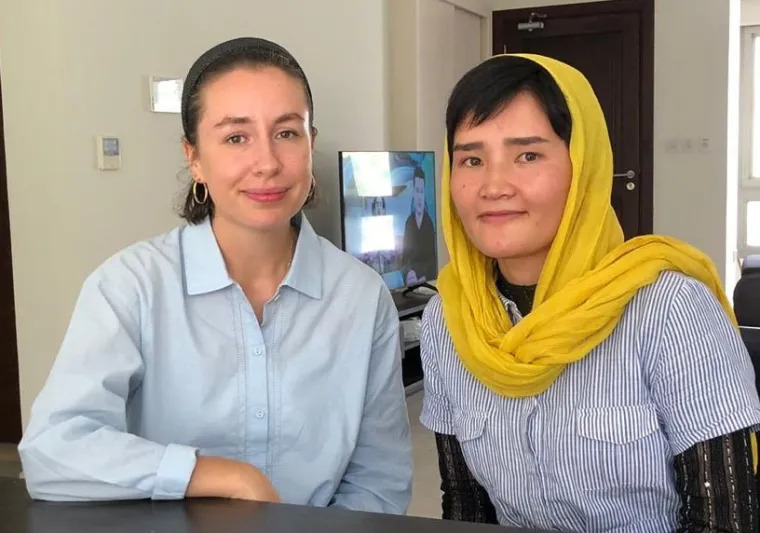
Inside three women-led Afghan newsrooms

Τhree women who run Afghan newsrooms explain the challenges of practicing journalism under Taliban rule, managing editorial work remotely, and the ongoing struggle to keep their outlets operating.
For many journalists around the world, a life-threatening emergency often begins in an instant: a phone call, a knock at the door, a message that cannot be ignored. What follows is a rapid series of decisions — what to take, what to leave behind, who to protect. There is little time to process what is happening. The immediate task is survival.
“You no longer need to be working in a conflict zone to feel unsafe while doing your job,” said Lucy Westcott, the director of emergencies at the Committee to Protect Journalists and a former journalist.
Every day, emergency teams at press freedom organizations sift through dozens of urgent emails, tips from colleagues, and encrypted messages arriving across a patchwork of secure platforms.
According to CPJ, more than 300 journalists were imprisoned in 2025 for the fifth consecutive year. In a separate report, the organization said 2025 was also the deadliest year on record for the press, with at least 129 journalists and media workers killed worldwide. Gaza was the deadliest hotspot, followed by Yemen, Sudan, Ukraine, Mexico, and the Philippines.
When Westcott joined CPJ in 2018, she said, “It felt like a different time in history.”
For years, the gravest dangers were associated primarily with war correspondents covering conflicts abroad, from Daniel Pearl, who was killed in Pakistan, to James Foley in Syria and Chris Hondros in Libya.
Since then, she added, threats against journalists have become “far more widespread and interconnected,” extending well beyond war zones and affecting reporters almost everywhere.
You no longer need to be working in a conflict zone to feel unsafe while doing your job.
Lucy Westcott, the director of emergencies at the Committee to Protect Journalists and former journalist.
The era of “poly-crises”
Lucy Westcott described the threats journalists face today as “polycrises” — overlapping physical, digital, psychological, and legal dangers that often unfold at the same time. Reporters, she said, are increasingly forced to navigate several threats at once, from multiple directions.
For CPJ’s 10-person emergency team, based in New York City and across Europe, that can mean helping secure the release of imprisoned journalists, supporting families after killings, assisting reporters facing prosecution, or helping those forced into exile.
“We are seeing the news cycle interact with our work in a very real way,” Westcott said. “Many times, the people being reported on are the same people we are helping.”
The scale of the crisis is growing. The 2026 Reporters Without Borders World Press Freedom Index paints one of the bleakest pictures for global journalism in 25 years, warning that governments are increasingly using surveillance, national security laws, arbitrary detention, and politically motivated prosecutions to suppress reporting. More than half the world’s population now lives in countries where press freedom is classified as “very serious.”
“I am trying to manage all of these different projects while making sure my team feels supported and cared for,” Westcott said. “This work can be quite relentless.”
We are seeing the news cycle interact with our work in a very real way. Many times, the people being reported on are the same people we are helping.
Lucy Westcott, the director of emergencies at the Committee to Protect Journalists and former journalist
The vetting process
“Everyone who gets in touch with us is facing an emergency,” Westcott said. But emergencies can take many forms: a looming SLAPP lawsuit, detention, deportation, or online threats that escalate into physical surveillance.
CPJ’s emergencies team triages cases according to one central question, Westcott noted: “Is someone’s life, limb, or liberty at risk?”
Once a request arrives, the organization begins vetting each case. “Each member of the team handling emergency assistance requests has a clear geographical remit – this avoids time lost figuring out who handles what,” said Valentine Gavard, journalist assistance coordinator, overseeing CPJ’s direct support to journalists at risk globally. “Yet, at least four times a week, our check-ins are an opportunity to share the situations we worked on, discuss any challenges, and reflect on how they resonate with us.”
“Even if a specific team member leads a case, what I want to avoid at all costs is for them to feel alone when it comes to devising the best response strategy. The whole team can always be brought in to weigh in on difficult decisions and find creative solutions, and this helps ease some of the pressure and stress that comes with this line of work.”
This procedure can provide assistance ranging from equipment purchases to emergency relocation grants for journalists. “I can recall the case of a journalist in the DRC who was kidnapped and sequestrated, managed to escape, and immediately got in touch,” said Gavard. “Coordinating with local partners allowed us to help him reach safety; timing was key.”
Each member of the team handling emergency assistance requests has a clear geographical remit – this avoids time lost figuring out who handles what.
Valentine Gavard, Journalist Assistance Coordinator at CPJ, overseeing its direct support to journalists at risk globally
RSF Index 2026: Press freedom worldwide hits record low
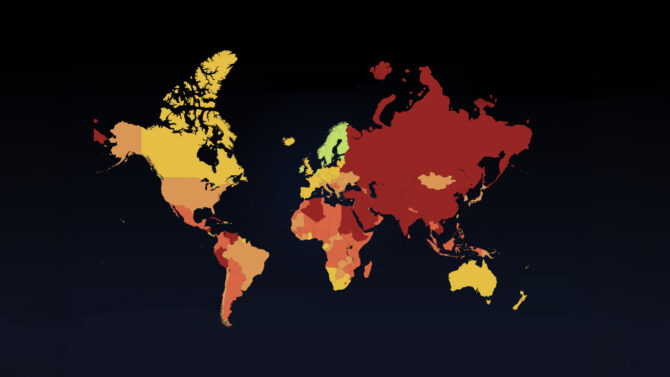
Press freedom is at its lowest level in 25 years worldwide, according to Reporters Without Borders’ 2026 World Press Freedom Index.
At Reporters Without Borders, eligibility rules are similarly strict.
The organization supports journalists threatened specifically because of their reporting, said Victoria Lavenue, who leads RSF’s assistance team from Paris.
“Our mandate is super specific,” she said. “We’re here to support journalists who are being threatened because they are journalists.”
The vetting process has also become more sensitive in recent years. “A major challenge is that we cannot communicate directly with journalists as long as they are in Iran because it’s just too dangerous for them,” Lavenue added.
There have been rare cases of government intelligence employees posing as journalists to seek information or assistance. Requests coming straight from inside highly repressive countries can immediately raise concern. “When a journalist is taking a huge risk to contact me, like someone inside Iran,” she said, “I immediately do my checking.”
Once a journalist has been vetted, the organizations typically provide two forms of support: emergency grants covering relocation costs such as plane tickets, rent, and legal expenses, and administrative assistance, including guidance through visa and asylum applications.
Removing a journalist from their country is rarely the first option, both Westcott and Lavenue said. Their teams try, whenever possible, to help journalists remain closer to home through internal relocation or other support measures.
External relocation is considered a last resort.
Journalists in exile: a growing trend
Over the past five years, a growing number of journalists have been forced to leave their home countries following military coups and abrupt transfers of power, including in Afghanistan. Emergency teams say the trend has accelerated in recent years.
It comes as many governments, including countries in Europe, have tightened restrictions on refugees and migrants. “There are very strict policies now that didn’t exist a decade ago,” said Lucy Westcott. She added that there are fewer places for journalists at serious risk — people with documented threats against their lives and their families — to go.
Over the past five years, CPJ has seen a more than 300 percent increase in emergency grants supporting journalist relocations, reflecting a sharp rise in requests for assistance.
Over the past five years, CPJ has seen a more than 300 percent increase in emergency grants supporting journalist relocations, reflecting a sharp rise in requests for assistance, according to Valentine Gavard.
Gavard began her career as a lawyer specializing in refugee law and migrant protection before returning to the field of press freedom after completing her PhD. She said more journalists are seeking help to relocate each year, while others reach out after arranging relocation themselves but struggle to rebuild their lives in host countries.
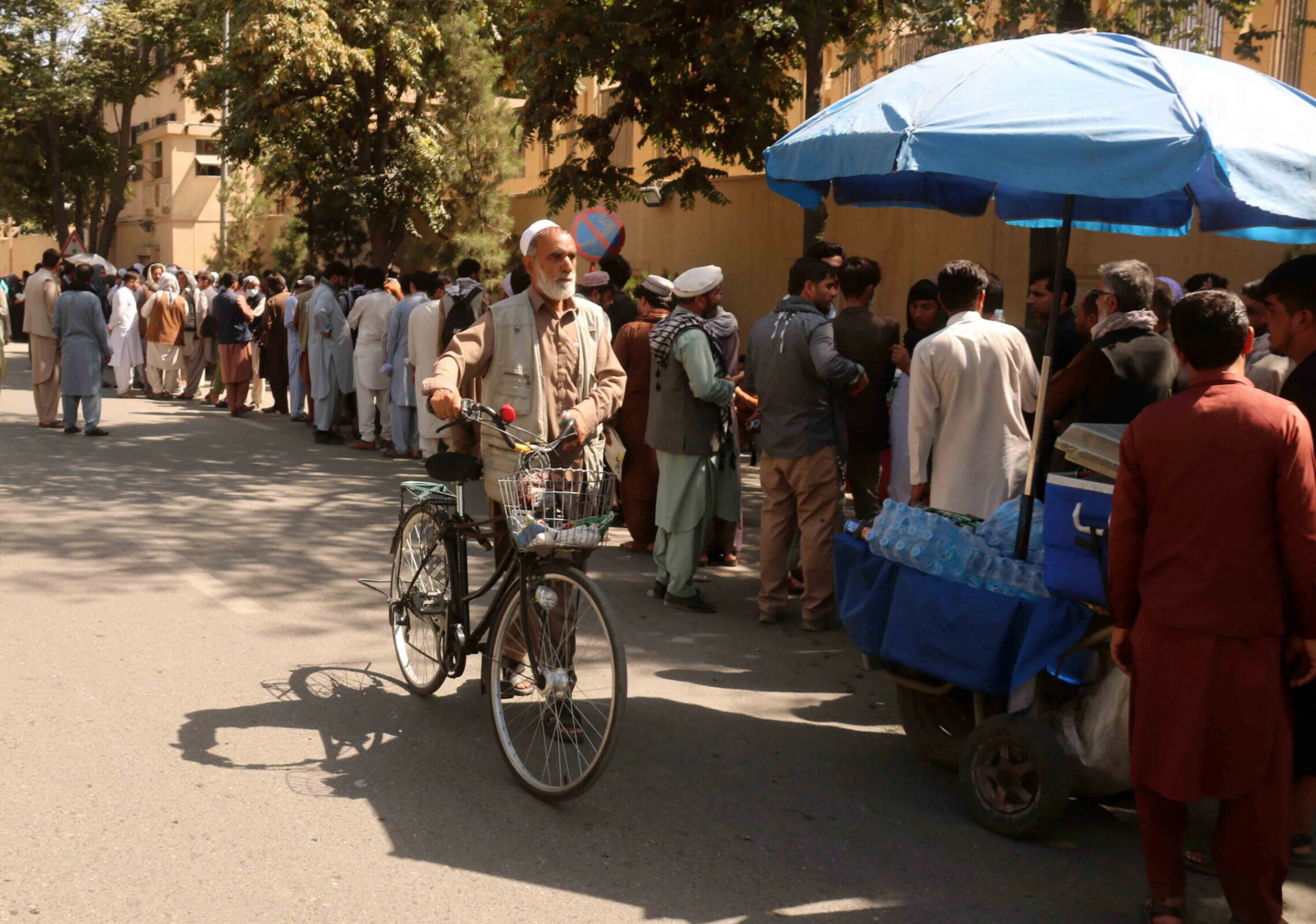
Some of that pressure still reflects earlier crises. After the Taliban takeover of Afghanistan in 2021, CPJ and RSF carried out emergency evacuations and continue to support Afghan journalists in exile years later. The organizations now focus on relocation support to countries like France, which offers a limited number of humanitarian visas, and on resilience workshops in Paris for journalists rebuilding their lives abroad.
Gavard said Sudan, Myanmar, Kenya, and Uganda have also become key nodes in this broader exodus. Sudanese journalists are relocating to Kenya and Uganda, while a growing community of Myanmar journalists has been displaced to western Thailand.
In Sudan, the military coup of 25 October 2021 brought tighter restrictions on independent reporting, while in Myanmar the same year’s military takeover saw the junta reverse earlier gains in press freedom, reinstating censorship, banning critical outlets, and pushing many journalists into exile.
Transit countries
As more journalists are forced into exile, the slow humanitarian visa system forces emergency teams to support journalists far beyond the scope of “emergency” work, said Victoria Lavenue and Valentine Gavard.
Nearby “transit countries” have become holding zones for many displaced reporters for years.
Afghan journalists are often stranded in Pakistan and Iran, Burmese journalists in Thailand, and Russian journalists in Balkan countries. Even in exile, many remain vulnerable to harassment or pressure from the governments they fled.
“Also, Pakistan right now is not very friendly to Afghan journalists,” Lavenue said. “They are deporting them back to Afghanistan. And European countries, which are often seen as a final destination, are increasingly closing their doors, making visas harder to obtain.”
At the same time, the flow of journalists leaving their home countries shows no sign of slowing. “The fall of Kabul was in 2021 — it is supposedly an old crisis, but it is not,” Lavenue said. “And then you have a new generation of journalists within the country who keep trying to push the boundaries of censorship and repression, and then they also have to leave.”
The fall of Kabul was in 2021 — it is supposedly an old crisis, but it is not. You have a new generation of journalists within the country who keep trying to push the boundaries of censorship and repression, and then they also have to leave.
Victoria Lavenue, head of the assistance team at Reporters Without Borders.
New beginnings and hope for the future
For journalists around the world in prison or emerging from years in detention, the return to everyday life can be disorienting. After 16 years in Syria’s Adra Prison near Damascus, journalist Tal al-Mallohi was released in late 2024 into everyday routines she barely recognized. She is an example of a journalist who has had to cope with this new reality.
In 2024, CPJ supported 15 journalists with post-prison support grants.
In prison, Westcott said, many journalists face violence and humiliation, and in some countries are even required to pay for food, water, and basic hygiene products. She highlighted that support for these journalists is handled differently depending on the case. In situations where journalists remain in detention and are difficult to reach directly, organizations often communicate through intermediaries, frequently family members.
“As a journalist myself, I feel connected to every journalist we have supported. I remember their names and their cases. More than anything, I feel gratitude that we have been able to help so many journalists reach safety, receive medical care, alleviate mental health concerns, and get back on their feet after being released from prison. That is what keeps us going,” said Westcott.
Even after their release, she added, many journalists continue to need support as they try to rebuild their lives, a reality that has increasingly deterred younger people from pursuing journalism.
At the 2026 Perugia Journalism Festival, where she spoke about best safety practices for journalists, Westcott recalled seeing a group of student journalists standing along the main street, dressed in yellow vests and holding signs that read: “Tell me why I should be a journalist.”
She said she walked over to them and told them, “There has never been a more important time to be a journalist.”
After years of working on emergency cases, she added, she feels hopeful. Every day, she is reminded of the value of the profession — its role in documenting facts and telling people’s stories. “I want to be hopeful,” she said, “and I will.”