Journalists, editors, and media innovators spoke to iMEdD about the visibility of journalists with disabilities and how they rethink who gets to make the news, whose experiences shape coverage, and which audiences’ journalism is meant to serve.
Main image: Evgenios Kalofolias
The quiet absence: disability in the newsroom
Across newsrooms from India to the U.S. and the U.K., disabled journalists struggle to be seen, even as diversity, equity, and inclusion policies promise fairness. Their numbers are unknown, career advancement is stalled, and accommodations are inconsistent.
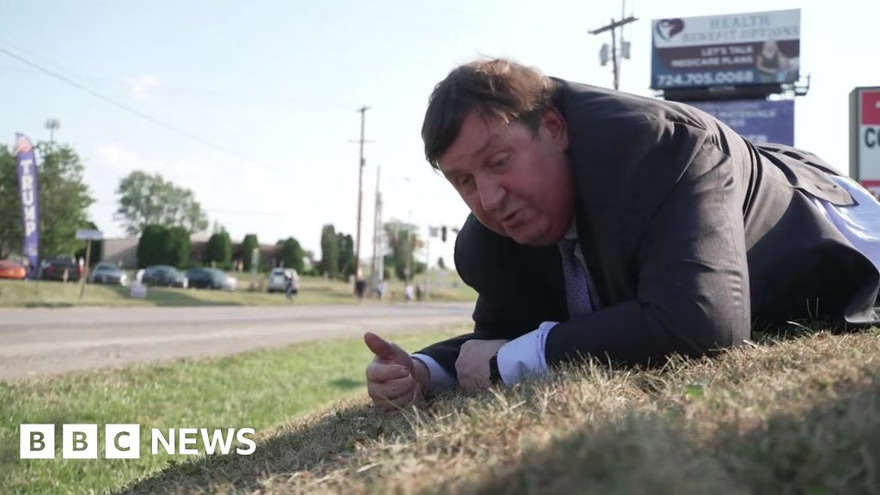
On July 13, 2024, BBC’s Chief US correspondent, Gary O’Donoghue, was preparing for a live broadcast outside Donald Trump’s rally in Butler, Pennsylvania, when he heard the shots.
Trump’s speech stopped abruptly, he recalls. Then came the screams. Within minutes, as law enforcement scrambled to understand what had happened, he was doing what reporters do in moments of crisis: gathering information.
His producer found a man who claimed he had seen the gunman and had tried to alert the Secret Service before the shooting. The witness was making extraordinary claims in the middle of a chaotic and fast-moving event.
Putting him on air was not an easy call.
“The interesting thing is, as a blind person, I didn’t really know what he looked like,” he recalled speaking to iMEdD from Washington, D.C. “I was listening to his words.”
He began questioning him, returning to the same details. His answers remained consistent. Then, the interview went viral. This was one of the first eyewitness accounts to broadcast from the assassination attempt that day, and it later helped shape the early understanding of what had happened.
He added that, had he been able to see him, he might have thought twice before putting him on air, influenced by his appearance. In November 2024, he told The Guardian that “the vision could get in the way, and… the words were the thing that really counted.”
“Journalism is a very good fit for a blind person.”
Gary O’Donoghue, who lost his vision at the age of eight, is one of the BBC’s most recognizable journalists. He is part of a small group of blind BBC reporters, including Sean Dilley and Johny Cassidy, who have been advocating for accessibility and disability inclusion.
Since the beginning of his career, he said, he has been changing perceptions around blindness. It has never prevented him from being where the story is.
“Journalism is a very good fit for a blind person,” he said. Much of the work revolves around listening: talking to people face-to-face, conducting interviews, and picking up details others might miss. Listening, he argued, is one of a political reporter’s most important skills. Too many journalists, particularly in politics, are “set to transmit all the time rather than receive,” he added.
Since the beginning of his career, he said, he has been changing perceptions around blindness. It has never prevented him from being where the story is.
Building a career without a blueprint
In his first years as a reporter, there were few role models for blind journalists in the British mainstream news. While the stories of other blind reporters helped convince him that a career in journalism was possible, most of them worked in disability-focused coverage, he said.
His ambition, however, was to report on mainstream news and politics.
“There were people who were very skeptical about a disabled person, particularly a blind person, doing this job,” O’Donoghue added. “That was hard to take at 21 years old, when people were telling you it wasn’t possible.”
The barriers were practical. In the early days, much of the BBC’s research material existed only on paper. Reporters researching a story would receive thick stacks of photocopied newspaper clippings from the archive. For O’Donoghue, that meant relying on colleagues, friends, or partners to read the material aloud. “You were always trying to borrow someone’s time,” he noted. The result was often a delay of a day or two, an eternity in a newsroom racing against deadlines.
Technology and support from colleagues helped him overcome many technical barriers. He also benefited from managers who trusted his abilities.
Today, as a television correspondent, O’Donoghue works closely with producers and camera crews. For him, maintaining a steady flow of information is essential and one of the most important qualities he looks for in a producer.
Lifting barriers
“For me, representation isn’t just about people being on screen; it’s about representing their interests in public discourse. It’s not a box-ticking exercise where you can say, ‘We’ve got this person’ or ‘We’ve got that person.’ The question is: ‘Are they actually changing anything?’,” said BBC radio producer William Kremer.
In 2025, during a fellowship at the Reuters Institute, Kremer did research on what he called “a structural blind spot” in journalism.
In the UK, an estimated 1.2 million adults, more than 2 percent of the population, have learning disabilities or a lifelong intellectual impairment. Yet he found no major news organization in the country that consistently produces news in simplified language for this group.
The idea for his research grew out of his experience raising a son with autism and a daughter with a severe learning disability. “I was working as a journalist, and after a while I started to wonder how my day job sat alongside my evening role as a carer for my daughter, and how her community was being served—or not served—by news providers,” he told iMEdD.
A year before taking time off to delve deeper into the topic at Oxford, he had approached BBC editors with a proposal to support people with learning disabilities with an “easy to understand” version of the election coverage ahead of the general election. With the vote called earlier than expected, the project did not go ahead.
I was working as a journalist, and after a while I started to wonder how my day job sat alongside my evening role as a carer for my daughter, and how her community was being served—or not served—by news providers.
William Kremer, BBC radio producer
“This brought into focus for me the fact that we, the BBC, really knew nothing about this audience. We knew nothing about their media consumption habits, we had no contacts with them, we had no talent, we had no formats,” he said.
Looking for examples elsewhere, he turned to public broadcasters across Europe that had already experimented with accessible news formats. Among them are Germany’s national public broadcasting organization, ARD, and Austria’s public broadcaster ORF. Both have been producing news in plain language for people with intellectual disabilities and others who may find standard news coverage difficult to follow.
He also discovered Norway’s TV BRA (meaning “TV Good”), a non-profit channel that had pioneered a different approach: producing news in plain language while placing journalists with disabilities in front of the camera, making them not just the audience for accessible journalism but its authors and presenters.
In 2021, journalists staged a tongue-in-cheek stunt in which they ‘kidnapped’ Norwegian politician Yonas Gura and compelled them to give an interview, asking what he would do to promote disability equality.
“So, if you’re a politician and someone asks you a question, I think it makes a difference who that person is,” said Kremer. “If that person is non-disabled and they’re asking about disabled people, that’s one thing. But if it’s someone who is disabled asking, ‘What are you going to do for people like me?’ then that changes how politicians respond—and I think it also affects whether they keep their promise.’”
From training to broadcast: an inclusive newsroom in action
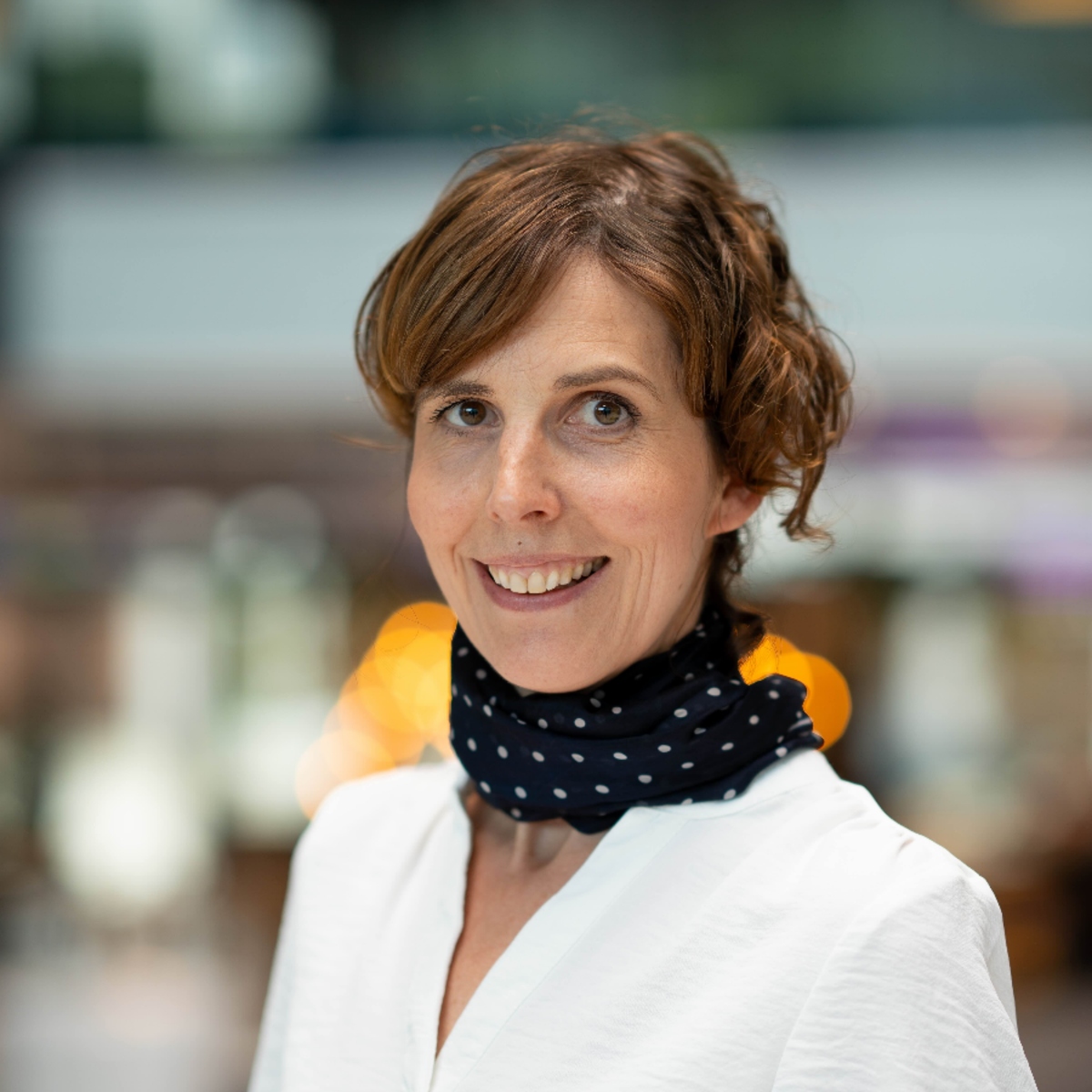
Based in Bergen, TV BRA currently employs 12 reporters with disabilities, four of them full-time. It also includes journalists, editors, and technicians without disabilities, who collaborate based on the demands of each story alongside the reporting team. “A broadcast production line can involve up to 20 people, depending on the number of contributors involved,” said Camilla Kvalheim, who founded TV BRA and now serves as its managing editor.
Kvalheim does not have a disability, but she had previously worked with people with learning disabilities in education and theatre. The channel’s output is held to the same editorial standards as any other television production in Norway or elsewhere, she told iMEdD, speaking from its headquarters, which is strategically located in Media City Bergen, a complex of buildings that also hosts other Norwegian media offices.
The idea for TV BRA formed around 2010, before the channel launched in 2020, broadcasting across multiple platforms, including an app, a website, and Apple TV.
The original motivation, she said, was simple: to create opportunities for people with disabilities to develop professionally and personally through responsibility and real editorial work. “It was about getting their voices heard in their communities and in society,” she added. “We have freedom of speech, but without a platform, without a place to [for them to] contribute, their voices don’t get heard.”
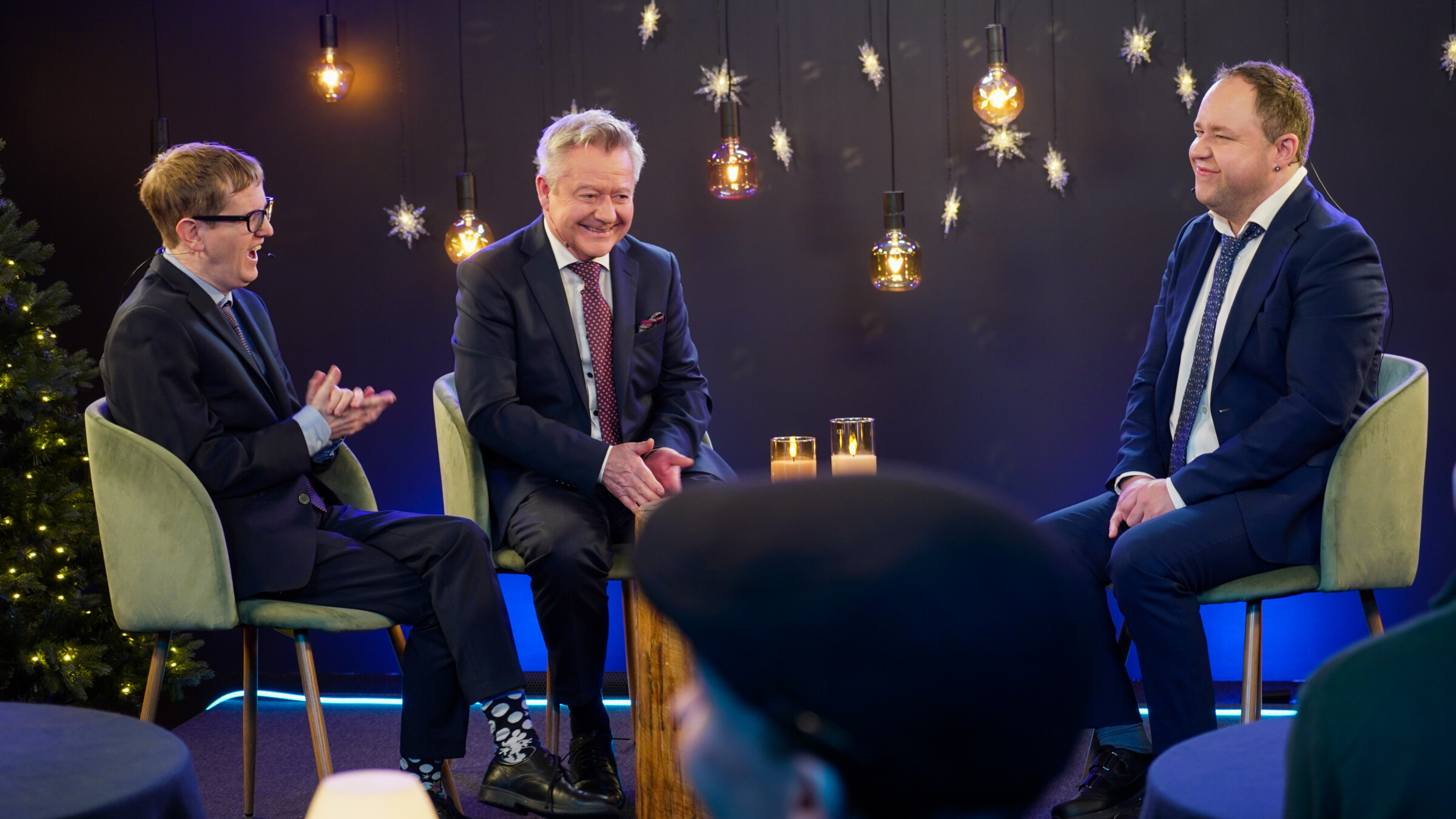
Reporters are trained through practice, Kvalheim emphasized. “We don’t talk too much, we just do.” The focus is on direct eye contact with the camera, correct microphone handling, and clear self-introductions on camera, such as name, role, location, and activity.
It was about getting their voices heard in their communities and in society. We have freedom of speech, but without a platform, without a place to [for them to] contribute, their voices don’t get heard.
Camilla Kvalheim, founder of TV BRA and its managing editor
While disability-related topics are a natural focus given the reporters’ lived experiences and desire to report on issues from their own perspective, Kvalheim added, TV BRA journalists also cover general news and have a general audience. In 2025, it worked with TV2 to cover the national election, allowing its reporters to contribute to and present the broadcast.
A disability perspective, a public good
ARD, Germany’s national public broadcasting organization, and Austria’s public broadcaster ORF both produce news segments in plain language, designed to make current affairs more accessible to people with learning disabilities. The programs also serve a broader audience, including people with dementia and migrants with limited proficiency in the national language, helping reach viewers whom traditional news outlets often fail to engage and who may otherwise turn away from the news altogether.
ARD’s segment runs at 7 pm every day. It contains three or four news items, and it is produced by the same TV presenters in the same studio as regular news.
“We’re not producing a program for disabled people,” says Sonja Wielow, the Project Leader of “Tagesschau in Einfacher Sprache” (Daily News in Simple Language). “They want news, and they get news. They don’t get a program designed specifically around their needs. We cover war, the climate crisis, and everything else happening in the world. It’s news for adults—not for children.”
Since 2020, ORF has provided daily news in plain language on its blue page, ORF.at, produced with the Austria Press Agency (APA) and an inclusive editorial team, attracting nearly 2 million page views. ORF also broadcasts a five-minute evening news summary in plain language on ORF III, aired weekdays with slow speech and subtitles to improve accessibility.
“It is enormously underestimated and important to convey that many people simply do not understand standard news and therefore have no access to information. News in Plain Language helps these people. This awareness must first reach media providers and journalists,” said Anna Mark, project manager at the ORF, responsible for the EU project ENACT and the further development of ORF’s Easy-to-Understand offers.
Members of the inclusive editorial team are people with learning difficulties or a disability, said Mark. Having a background in communication science and a focus on the relationship between media and people with disabilities, she sees a lot of potential in the project. It is important that graduates from the inclusive editorial team are now employed at ORF and the Austria Press Agency (APA).
A room for humans
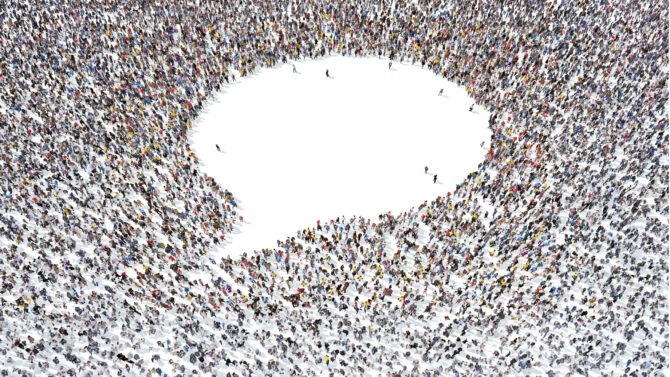
Make no mistake; the room is not innocent. People bring their politics, biases, certainties, and defenses with them. But in that room something changes.
Challenging the system
In 2008, O’Donoghue settled a disability discrimination claim against the BBC after a dispute over on-air opportunities. The decision to challenge what he saw as unequal treatment did not come suddenly. By then, O’Donoghue had spent 15 years as a full-time news correspondent. For several years, he said, he had grown increasingly concerned about the assignments he was — and was not — being given. Compared with his colleagues, the pattern did not make sense.
“I’d been trying to raise these issues, and people had listened, but they hadn’t heard,” he says. Eventually, he decided he could no longer let it go. The dispute lasted a year and took a personal toll. O’Donoghue credits his partner at the time, as well as the National Union of Journalists, with helping him through it.
Looking back, he believes the effort may have helped create change beyond his own career. “I do think about who comes after,” he said. “Others have done that for me. There have been other blind journalists before me who have blazed a trail, who have opened doors that weren’t open. That made it easier for me, and I want to do the same.”
He sees signs of change in the profession, particularly among younger journalists in their 30s who are now stepping into editorial roles. “They’ve grown up around more disabled people,” he said. “They’re less phased by difference than my generation was.”
At the same time, he reflects on how slowly some of those shifts take hold in established institutions.
“I do sometimes struggle with this,” he said. “Journalism, and the people who shape it, is often seen as an alpha profession. A kind of macho environment —even for women, in some ways.”
Journalism, and the people who shape it, is often seen as an alpha profession. A kind of macho environment —even for women, in some ways
Gary O’Donoghue, BBC’s Chief US correspondent.
He wonders whether that culture still influences hiring decisions, consciously or not, and whether some in positions of authority remain unsettled by the idea that disabled journalists can do the job just as well —or that it challenges their assumptions about what the profession is supposed to look like.