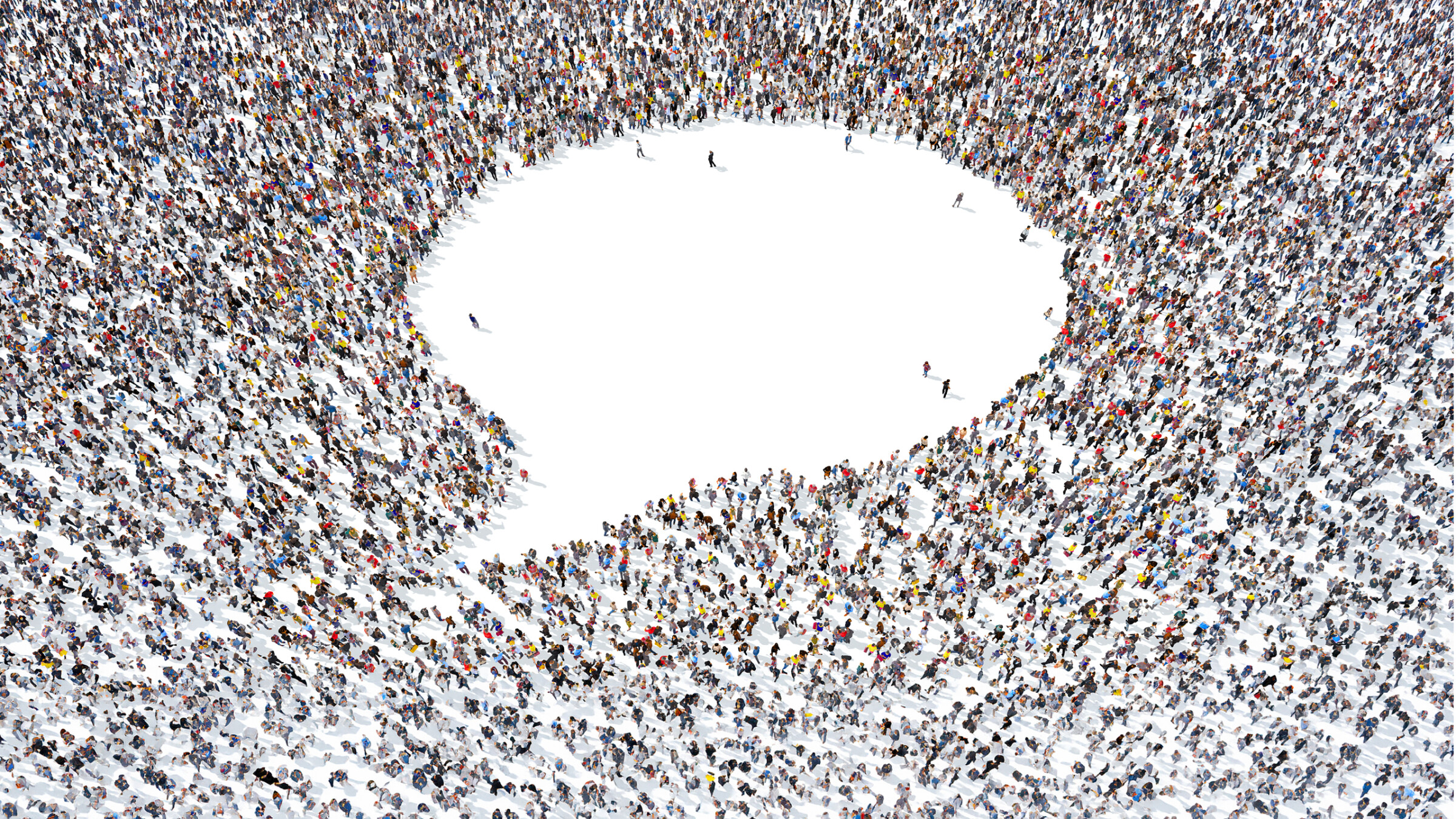
Make no mistake; the room is not innocent. People bring their politics, biases, certainties, and defenses with them. But in that room something changes.
Featured image: Shutterstock
In the past months, while working on the SNF Nostos curation, I have found myself returning to a question that seems to have an obvious answer, until you pause to think about it – why gather people in a room at all?
It is a privilege, of course, to help shape a public gathering that marks 30 years of SNF grantmaking and places Humanity at the Core. A week in which science, health, arts, culture, health, sport, public dialogue, performance, journalism and music come together under the umbrella of philanthropy, but are also asked to coexist without pretending that they naturally speak the same language. From a journalist’s point of view, it is also a puzzle. We are trained, (or should be trained) to be suspicious of framing, of spectacle, of anything that risks answering a content question with a format answer.
However, the more I think about journalism in the here and now, the more I wonder whether format is closer than ever to the core of the existential question.
Local journalism, with love — and as an antidote to alienation
If the ambition is real systemic change, then backing locally embedded, community-rooted journalism is not charity. It is common sense.
Journalism has always been an act of mediation. We gather, verify, edit, publish. We decide what matters and try to explain why. But the space between a newsworthy event and the public is now crowded by forces that do not simply carry information.Rather, they distort it, accelerate it, monetize it, weaponize it, and scarily enough, even imitate it.
At a recent conference, in front of a crowd with many journalism students (and their dreams), my colleague Kelly Kiki put it clearly: artificial intelligence did not create the crisis of trust, it found it primed and ready. If we treat AI, platforms, and slop as the beginning of the problem, we let ourselves off too easily. The deeper issue is not only that falsehood travels faster. It is that even truth now often arrives exhausted, massaged, stripped of context.
One would argue that, for journalists, this is more than a professional inconvenience. It is the ground shifting under our feet, again! Yes, producing good journalism remains essential. But what happens when a verified fact lands as just another piece of content? When an investigation enters the same feed as propaganda, entertainment, synthetic noise, and someone’s performance of certainty? When the public square is not just randomly fragmented, but explicitly engineered to make shared meaning harder?
I do not have an answer that satisfies me. Maybe that is why the question of physical encounter keeps coming back.
The SNF Dialogues Initiative, which will be permeating the week of SNF Nostos in different formats, is one example of this instinct: public discourse as a method and a platform. Putting ideas to the test, and a way to put disagreement, questions, and civic attention in the same space. Another example is live Journalism which, at its best, works in a similar direction. Before jumping to conclusions, no, it doesn’t replace reporting. It brings the story, the reporter, the evidence, and the audience into a setting where trust is not demanded in advance but tested in public.
Make no mistake; the room is not innocent. People bring their politics, biases, certainties, and defenses with them. But in that room (provided you don’t stare at your phone while others talk), something changes. You cannot reduce disagreement to a quote in a post comment section quite easily. You are forced to share context, and equally importantly, to listen at the same speed. To test what you think against what is actually being said. And to not having to squint to tell the AI video from an actual person. There are other senses to engage and hopefully, physical AI will be easy to tell apart from humans for a while.
And one last thing – the sense of ownership over your own understanding of things, has a completely different weight to it when you have to get up, get dressed and show up for it, as opposed to doom-scrolling till your battery or dopamine runs out.
I’m not arguing that this is the solution, maybe it’s merely a condition. But without places where people can still meet, listen, argue, and briefly see the world from the same angle, I am not sure how journalism, or public life for that matter, continues to ask its questions at all.