The six winners showcase the very best of independent journalism in Europe in a challenging year for institutions and democracy.
What does outstanding journalism look like in 2026?
According to this year’s European Press Prize winners, it looks like reporters spending years pursuing accountability. It looks like journalists following evidence across borders, scrutinising new technologies, documenting the realities of war and migration, and challenging institutions that would rather avoid public scrutiny.
Announced in Lisbon on 3 June, the European Press Prize 2026 honours journalism that refuses easy answers. Selected from more than 800 submissions spanning 44 countries, this year’s winners across five Award categories and a Special Award demonstrate the persistence, courage and public-service commitment that define the best reporting in Europe.
Distinguished Reporting Award
“What the wounds are telling us”
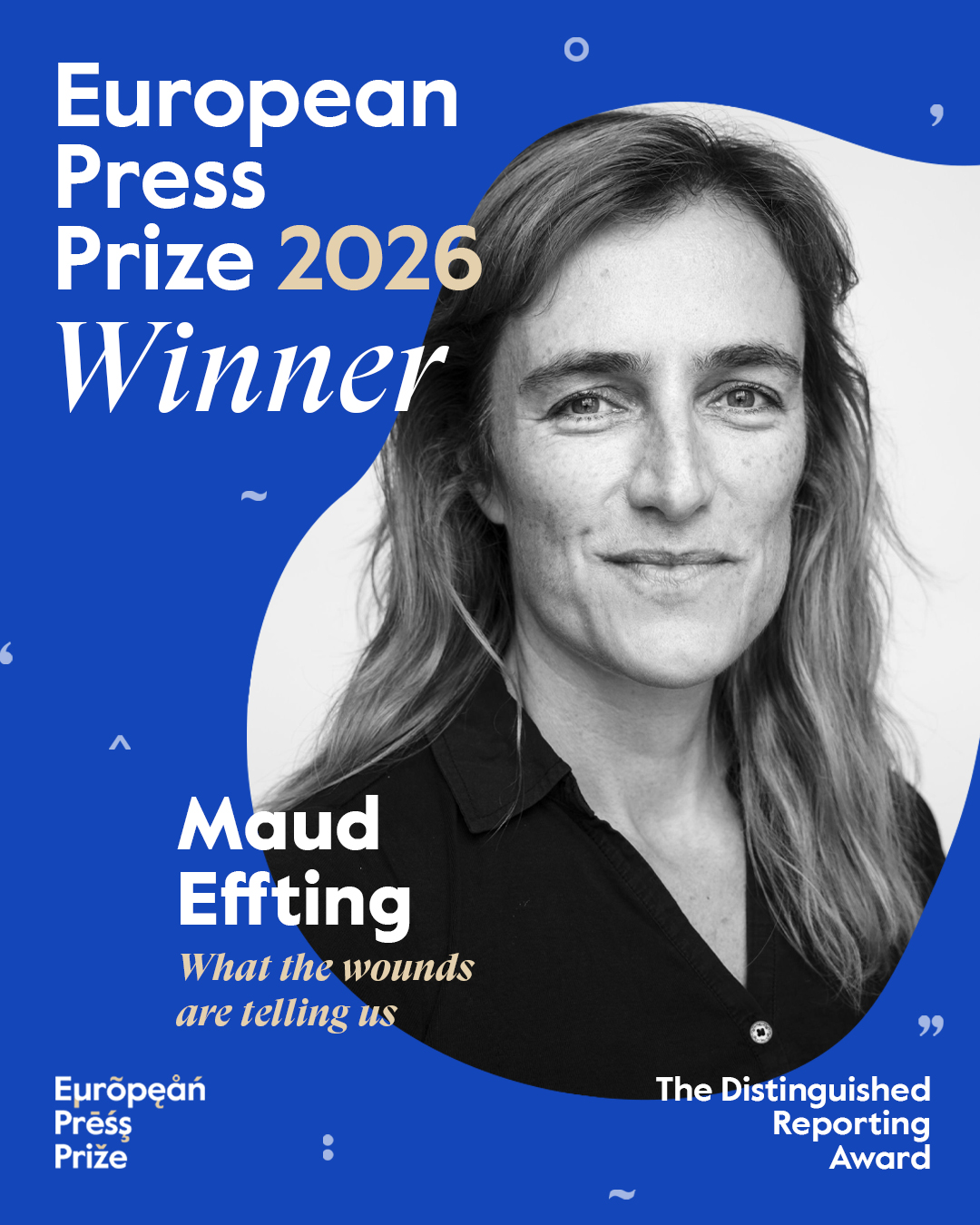
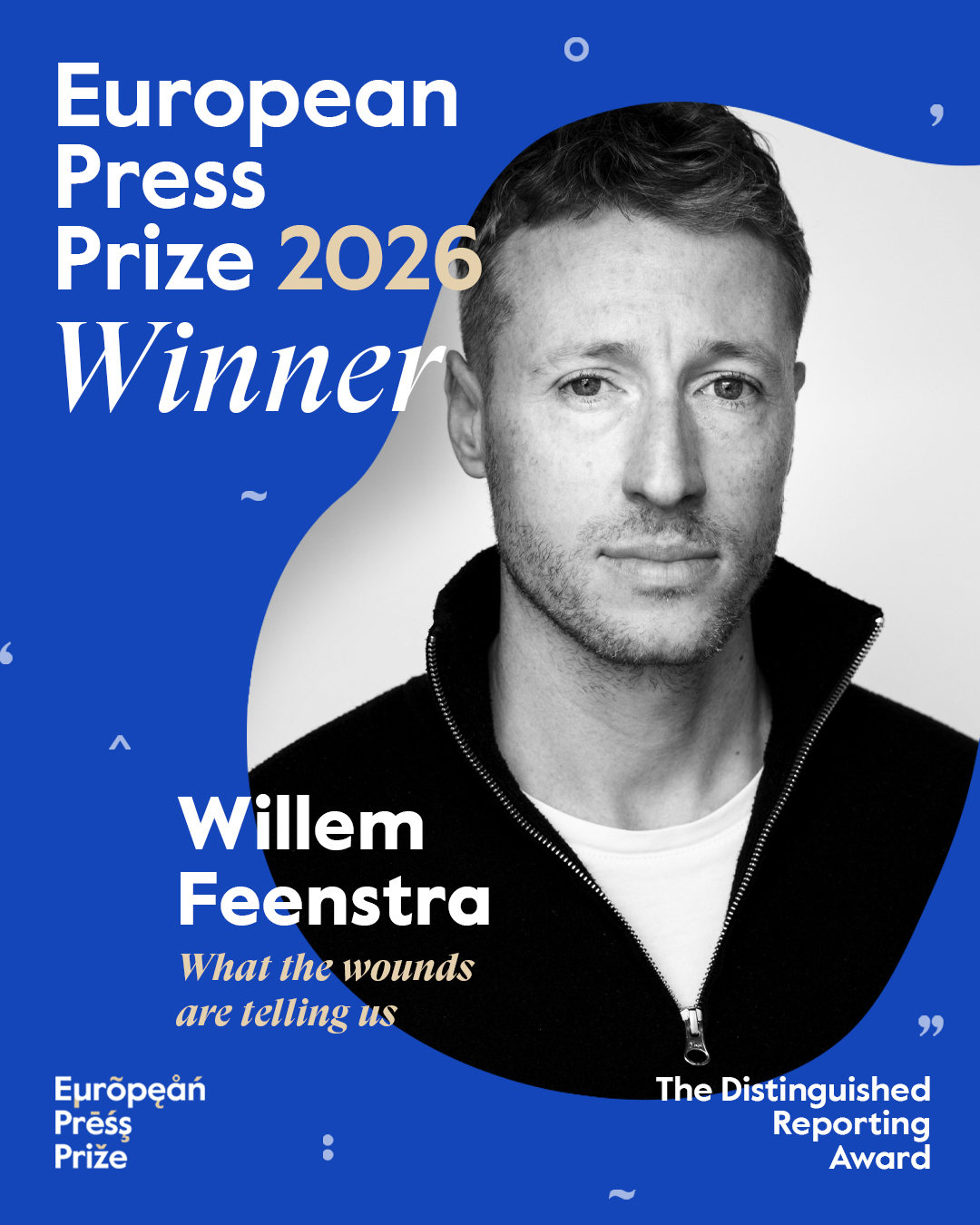
The Distinguished Reporting Award was awarded to Dutch journalists Maud Effting and Willem Feenstra of de Volkskrant for What the wounds are telling us. Drawing on testimony and documentation from international medical professionals working in Gaza, the investigation examined evidence gathered in hospitals and clinics during the ongoing conflict.
What the Judges said: “Very impressive work combining data gathering together with deeply human portraits of the doctors. The framing of these doctors as the ‘last international eyewitnesses’ is significant. A very rigorous project, especially in the context where access is almost impossible.”
Runner-up in this category was the report Dying for gold: Who killed the miners of Buffelsfontein? written by Liam Taylor of The Economist’s 1843, that discussed the deadly impact of blockading hundreds of miners underground in South Africa.
Innovation Award
“Mole or cancer? The algorithm that gets one in three melanomas wrong and erases patients with dark skin”


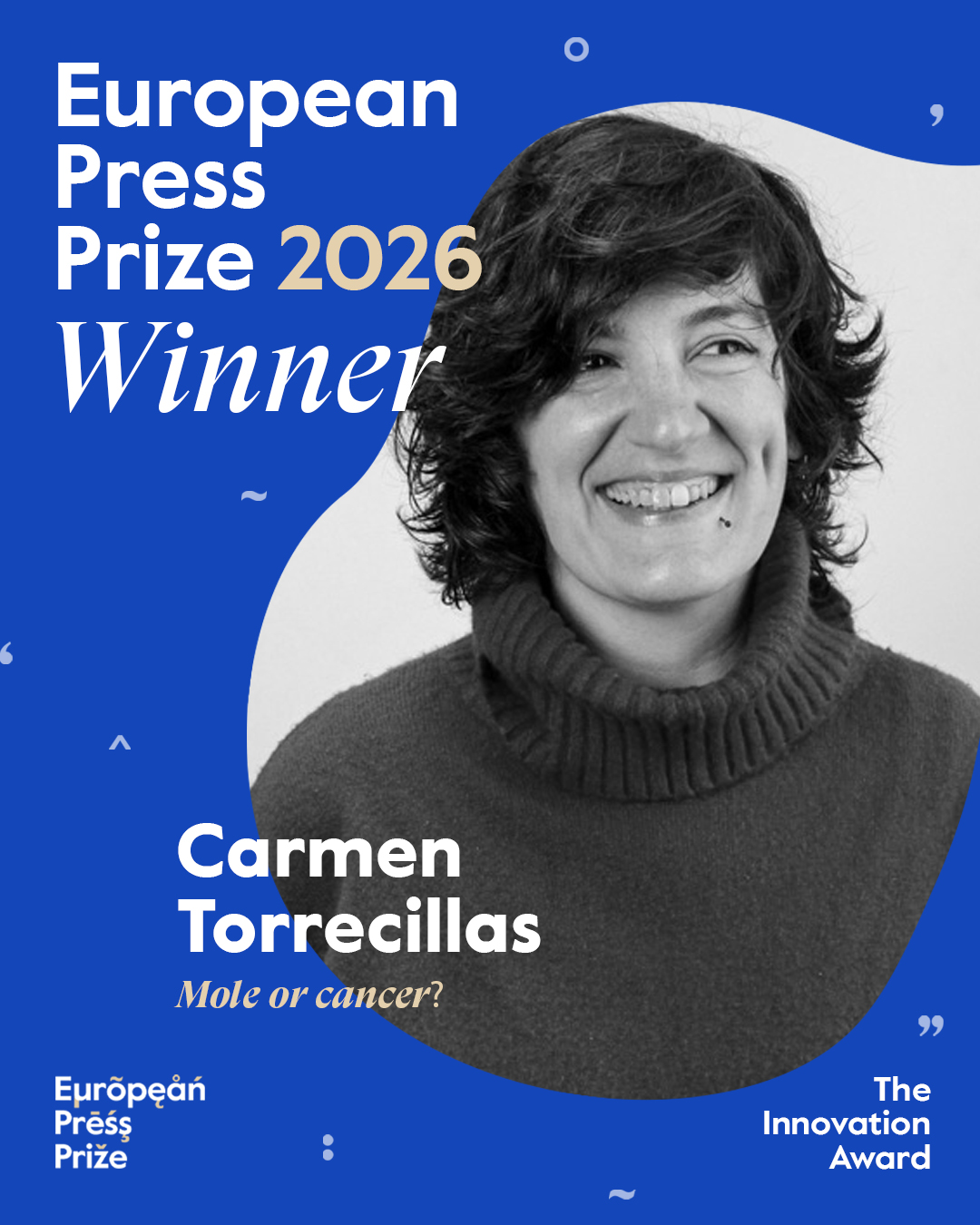

The Innovation Award went to Spain’s CIVIO (Ángela Bernardo, María Álvarez del Vayo, Carmen Torrecillas, Adrián Maqueda) for its investigation into an AI-powered skin cancer detection system used in public healthcare. The reporting revealed serious concerns about the algorithm’s accuracy and the lack of transparency surrounding its deployment, highlighting broader questions about accountability as artificial intelligence becomes increasingly embedded in public services.
What the Judges said: “Outstanding work. A great example of a data journalism investigation with clear methodology. Civio is known for its algorithmic transparency investigations and they don’t disappoint this time either. The usefulness of their reporting is also beyond doubt.”
Runner-up in the Innovation Award was the investigation How companies avoid inclusion – and even save money by doing it by Kristina Kobl, Nikolai Prodöhl, Lisa Kreutzer, Emilia Garbsch, Natalie Sablowski, Sabrina Winter, Sabrina Ebitsch, Theodor Ahrens, for the Austrian journal andererseits, the German newspaper Süddeutsche Zeitung and the platform FragDenStaat.
Investigative Reporting Award
“The Brother D conspiracy – Exposing an international child abuse cover-up that left children in Africa exposed to a predator for decades”
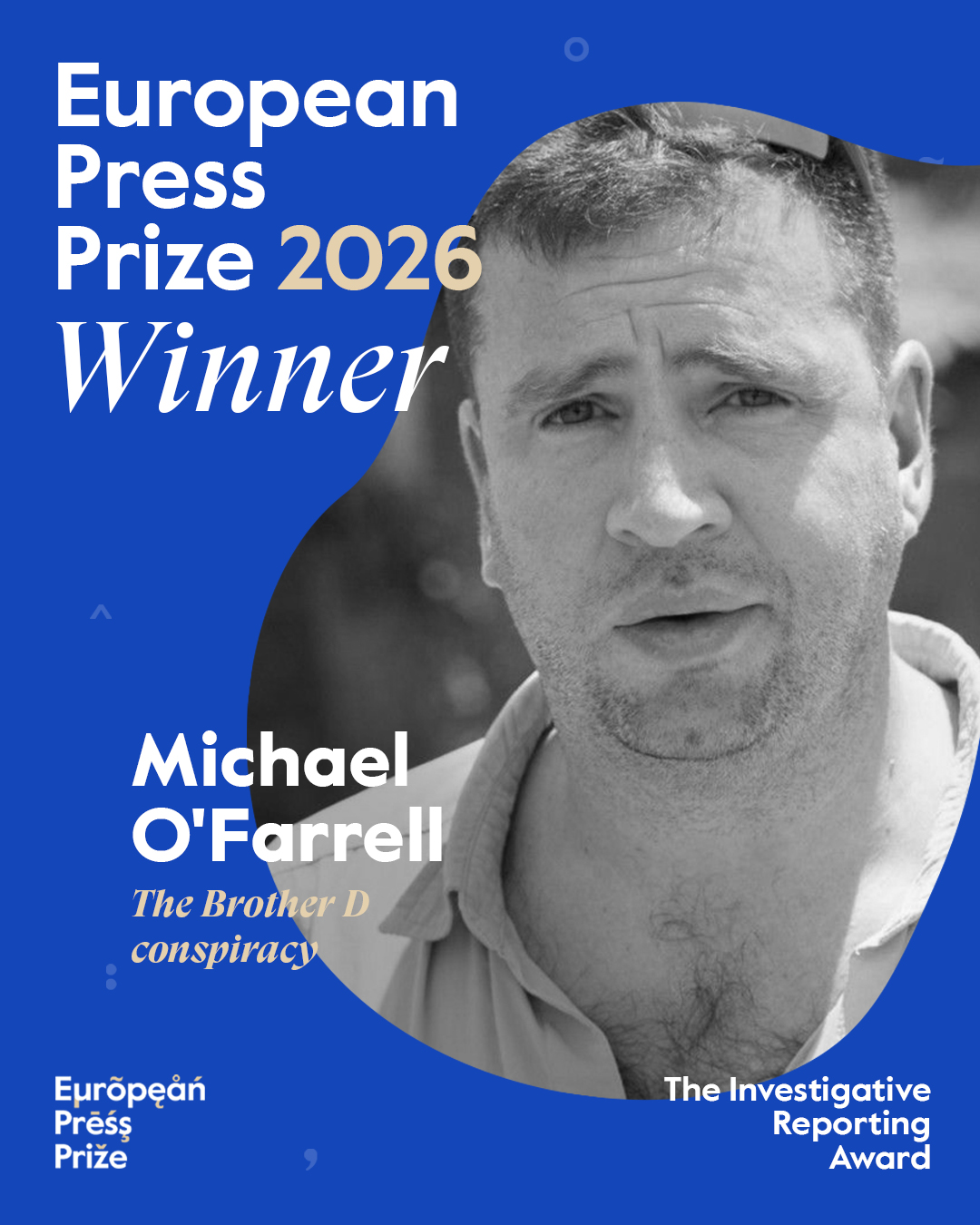
Irish journalist Michael O’Farrell received the Investigative Reporting Award for The Brother D conspiracy, a decade-long investigation into the concealment of child abuse allegations and the institutional failures that allowed abuse to continue for years.
What the Judges said: “Terrific work from a local outlet with huge impact that is the culmination of a very long investigative effort. This constant laser focus on an important issue is what brings change and is very commendable.“
Runner-up in the Investigative Reporting Award was the investigation DNA for sale? The untold story of Greece’s newborn screening scandal, by Christoforos Kasdaglis and Despina Papageorgiou for Reporters United and Efimerida ton Syntakton.
Migration Journalism Award
“Unaccompanied children sleep on the floor in shifts in Greece’s ‘Model Camps’. The EU is aware”
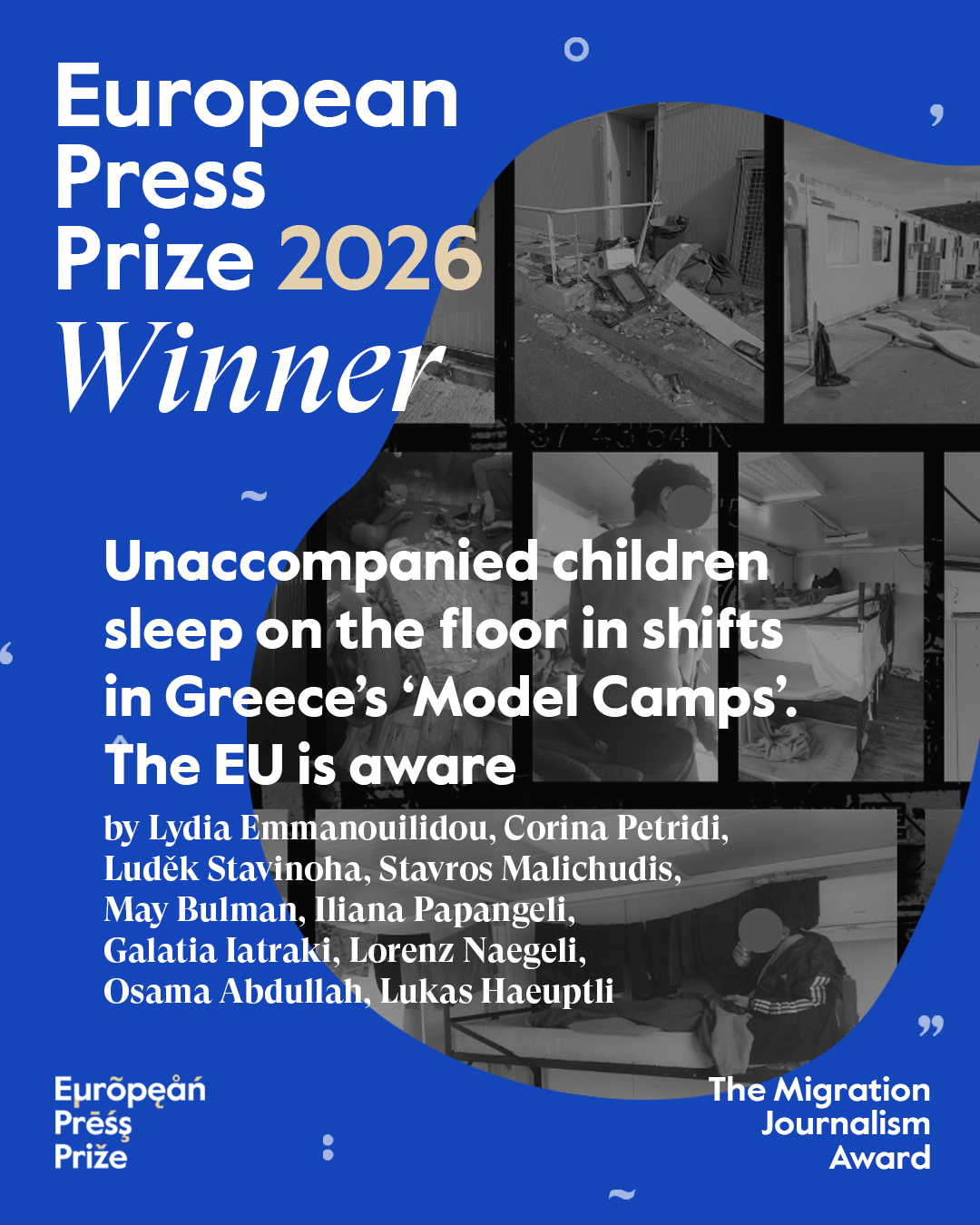
The Migration Journalism Award recognised a cross-border investigation by journalists from Greece and Switzerland: Solomon (Lydia Emmanouilidou, Corina Petridi, Luděk Stavinoha, Stavros Malichudis, May Bulman, Iliana Papangeli, Galatia Iatraki), Republik (Lorenz Naegeli, Lukas Haeuptli) and WAV Recherchekollektiv (Osama Abdullah) investigated the conditions faced by unaccompanied children in refugee camps on the Greek islands. Through freedom of information requests, internal documents and extensive field reporting, the investigation documented overcrowding, inadequate care and significant gaps between policy commitments and lived reality.
What the Judges said: “A well-executed investigation that will become important evidence when looking back at this period of time. The institutional reporting is strong, devastating in its accounts, and is revelatory in understanding so many ways asylum seeking children can be failed.”
Runner-up in this category was Hamshika’s puzzle by Hamshika Krishnamoorthy, Hannah Kirmes-Daly, Leon Spring and Benja Zehr of Al Jazeera that narrates how a Sri Lankan woman seeking asylum in the UK ended up in Rwanda.
Public Discourse Award
“Not again!”
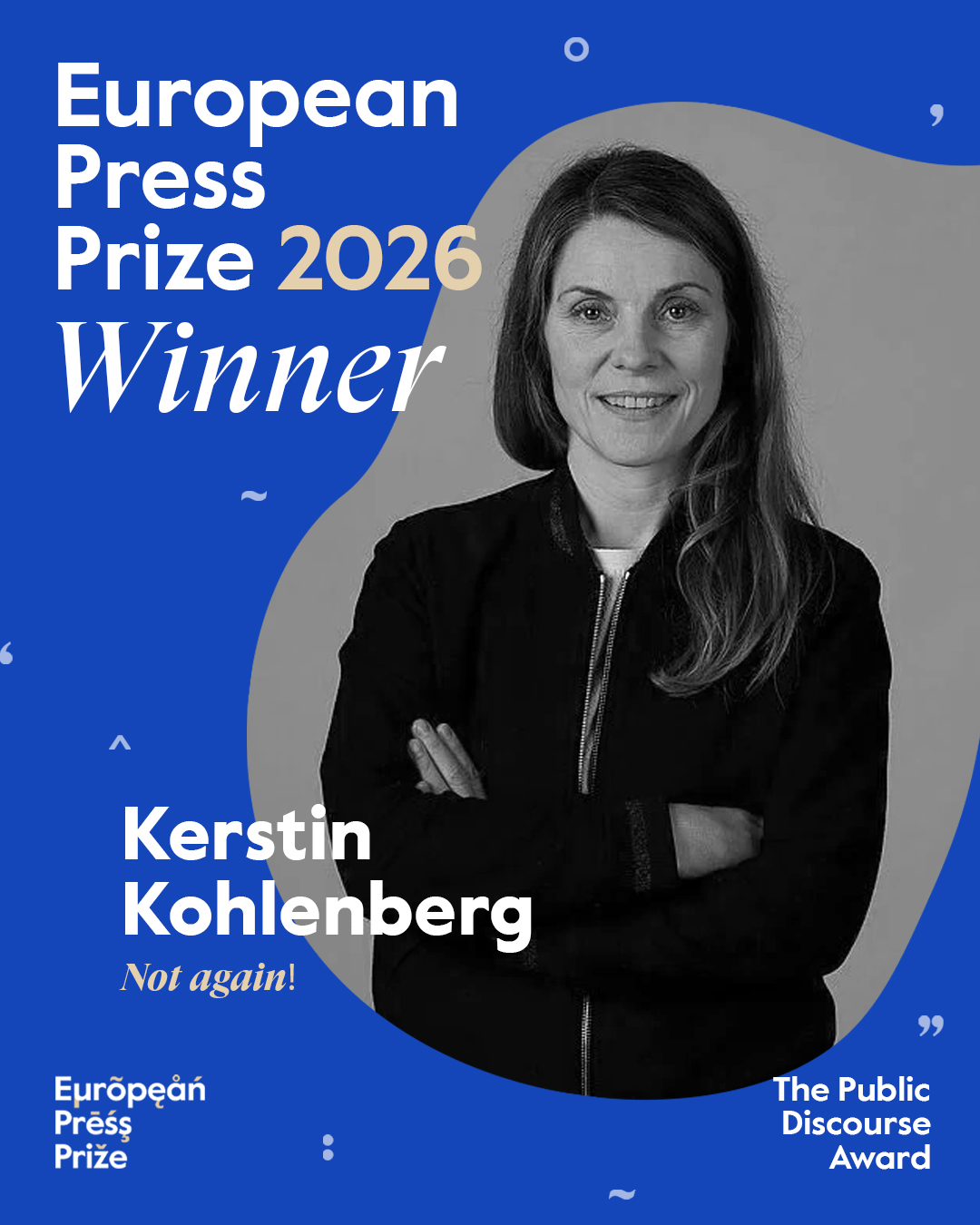
Germany’s Kerstin Kohlenberg received the Public Discourse Award for Not again!, an analysis of political developments in Germany through the lens of her experience reporting from the United States.
What the Judges said: “A very well-researched piece that really makes you think. The author has a marvellous eye for details when describing the characters and the topic really crosses borders as it’s applicable to many other countries.”
In this category there were two runner-ups: Anne Grietje Franssen of the Dutch NRC for the article Am I allowed to grieve my self-chosen abortion? and Filip Struhárik of the Slovak Dennik N for the article Unhappy, lonely, and unable to talk about it: Why men are losing friends.
Special Award
“Killing for the photo”

This year’s Special Award was presented to Croatian journalist Barbara Matejčić for Killing for the photo, an investigation revisiting one of the most widely published images from the Bosnian War. More than three decades after the photograph was taken, the reporting explored the ethical and historical questions surrounding its creation and publication, uncovering new perspectives on a defining image of the conflict.
What the Judges said: “A fascinating story that turns many previously unturned stones. A really impressive reporting effort that is very powerful and rare. A fantastic piece of reporting with perfect dramaturgy.”
Reflecting on this year’s winners, European Press Prize Jury Chair Natalie Nougayrède described the selected works as
an inspiring showcase of tenacious and civic-minded reporting, celebrating journalists who dive deep into complex realities and help us connect dots at a time of dizzying shocks and transformations.
Each award comes with a €10,000 grant, intended to fund personal projects that will continue to enrich the European media landscape.
The full list of Winners and Runners-Up is available on the European Press Prize website.
About the European Press Prize
The European Press Prize celebrates the highest achievements in European journalism. It is made possible by a number of foundations and organisations that strive to encourage independent quality journalism in Europe: Stichting Democratie en Media, Stichting Veronica, Jyllands-Posten Fonden, Politiken Fonden, The Scott Trust, Robert Bosch Foundation, iMEdD – Incubator for Media Education and Development, The Irish Times Trust and Media Development Investment Fund.