As audiences scatter across social platforms and AI-powered search tools, Lisa Gibbs, president and chief executive of the Pulitzer Center, is betting that accountability reporting can remain essential –if journalists stay relentlessly curious, keep asking difficult questions, and find new ways to ensure their stories break through the noise.
Photos: Petros Toufexis/iMEdD
Jelani Cobb on freedom of speech, the Press, and White House reporting

Jelani Cobb, Dean of the Columbia Journalism School, author, and longtime staff writer for The New Yorker, speaks to iMEdD about academic freedom in the United States, the challenges facing the press today, so-called “Trump coverage,” and the public interest as journalism’s enduring mission.
As a freshman at the University of Miami in the 1980s, Lisa Gibbs wasn’t planning on becoming a journalist. She was studying mathematics when she spotted a job posting for the student newspaper, The Miami Hurricane, while walking across campus. The position was modest: copy editing two nights a week. She decided to give it a try. That small decision set her on an entirely different path. “Working at the Hurricane changed my major, career path, and life, and nourished friendships I still have today,” she wrote on LinkedIn.
Over the next three decades, Gibbs built a career that mirrored the transformation of modern journalism itself: from award-winning business reporter to Associated Press executive, and later to a leader in developing philanthropic models to sustain public-interest reporting.
In June 2024, she became the second chief executive in the Pulitzer Center’s history, leading the nonprofit that supports hundreds of journalism projects each year across global regions and media platforms. A former journalist, she has guided the organization through a period of rapid change in journalism and the broader information ecosystem.
Under her leadership, the Pulitzer Center has expanded beyond its original focus on international crisis reporting. The definition of “crisis” has widened, extending closer to home, from climate change and public health to the accountability of artificial intelligence. At the same time, the organization has deepened its work in audience engagement, education initiatives, and new forms of storytelling.
The Pulitzer Center does more than fund journalism. Each year, it backs hundreds of reporting projects in more than 100 countries, while helping those stories reach classrooms, communities, and policymakers. The goal is not simply publication, but impact, from informing public debate to driving accountability and change. Through a 2025 grant from the Stavros Niarchos Foundation (SNF), the organization has expanded its support for reporting on underexamined global health issues, including the mental health consequences of the war in Ukraine and the growing role of civilian scientists in the country’s wartime innovation efforts.
Speaking at SNF Nostos 2026 in Athens on June 23, Gibbs highlighted investigative reporting projects supported by the Pulitzer Center that have helped bring overlooked global health issues into public view.
“We can’t fix problems that we don’t know about,” she said during her talk. “This is one of the greatest powers of journalism: it shines a light on the actions of people and institutions in positions of power that affect us all.” She described this approach as “breakthrough journalism” — journalism in service of the public that not only informs audiences but also inspires them to get involved and drive meaningful change.
Speaking to iMEdD before arriving in Athens, she discussed her work, which centers on one of the defining questions facing journalism today: how high-impact reporting can not only be produced, but also reach audiences in an increasingly fragmented media landscape.
The Pulitzer Center is now 20 years old. When you look back at the projects it funded in the beginning and compare them with the work you’re supporting today, what does that evolution reveal about how journalism—and the needs of the industry—have changed?
When the Pulitzer Center was founded in 2006, our founder saw a gap caused by media outlets, primarily in the United States, closing international bureaus and eliminating the jobs of US foreign correspondents. As the internet was starting to impact the financial conditions of the media, cost-cutting happened overseas first. And it meant that either the coverage wasn’t getting done, or they had to rely on freelancers to do it, who needed support. […] Over 20 years, we have evolved into a truly global organization. We’re supporting journalists all over the world. We work in the US, but also in Latin America, Africa, and Southeast Asia, to support journalists reporting for their own regional and national media outlets. The original idea behind the name Pulitzer Center on Crisis Reporting was that the crises of the world – conflict, war, famine – needed more attention. Now, crises are happening all around us at home. Climate change is a crisis. The impact of foreign aid cuts on global health is a crisis. So, I think we’ve really expanded our definition of the important issues that need reporting, as well as our understanding of the audiences that need to see that reporting. […] From the very beginning, the Pulitzer Center has always believed in the value of bringing journalists into the community, especially bringing journalists to university campuses or into middle and high schools to introduce students, even 12-year-olds, to the world around them. Journalism is a powerful tool for doing that. And that idea of journalism’s ability to educate, build curiosity, and create connections has really blossomed. Now, the notion of audience engagement is very central to our mission, especially at a time when technology, social media, and the broader information landscape have changed so dramatically. People get their information from so many different sources and platforms. If we aren’t helping make sure that journalism reaches as many people as possible across different platforms and within communities, then how can it have the impact we know it should?
Now, crises are happening all around us at home. Climate change is a crisis. The impact of foreign aid cuts on global health is a crisis.
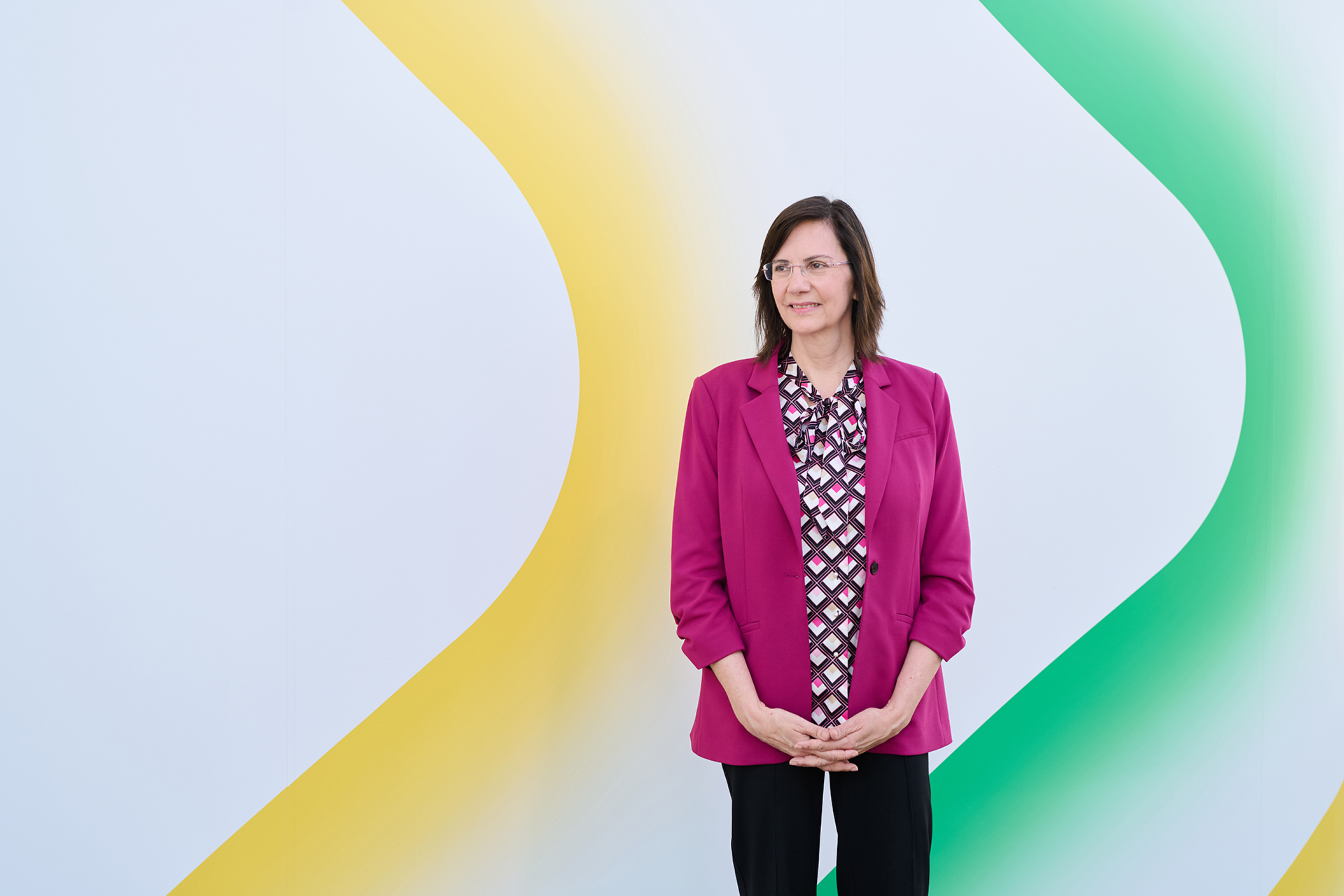
Lisa Gibbs, President and CEO of the Pulitzer Center.
Surveillance capitalism, counterintelligence for civil society, and journalism: a conversation with Citizen Lab’s founder
The founder and director of the University of Toronto’s renowned Citizen Lab sat down with iMEdD in Athens to talk about the crisis he perceives in liberal democracy and the future of digital spyware.
From art exhibitions and poetry contests to collaborations with influencers, the Pulitzer Center’s work extends well beyond traditional journalism. In an era of rapid changes in the information ecosystem and declining trust in news, how should journalists now think about audience engagement?
I think what has happened in the information ecosystem just makes this work more urgent than ever, especially given the decline in trust, which is related to this information ecosystem. […] There’s the phenomenon of news avoidance, where people either feel like the news makes them sad, angry, […] or maybe they’re just being flooded by other things. So, I think that we have gotten more creative and put more work into thinking about innovations and how we can experiment with reaching audiences. The other side of it is what we might call social distribution, or thinking about how an AI-mediated information flow is having an impact. If more and more people are going to AI search to get their questions answered, how do we make sure that really important investigative journalism is discovered?
And this is an ongoing conversation. […] There are many conversations underway about the right ways for news outlets to address it. In the meantime, one of the things we recently launched is a creator-skills training program for journalists. The idea is to help journalists already working in newsrooms build their social storytelling skills. What we see is that when we went to journalism school, we didn’t necessarily get training in how to communicate a piece of journalism on TikTok, how to make a YouTube video, or anything like that. It simply wasn’t part of the thinking at the time. Newsrooms are now playing catch-up. That’s an example of how the Pulitzer Center identifies a gap. […] So we worked with some great people to create a six-week course, and we’re now piloting it, where journalists whose projects we are supporting are also working through this curriculum to design, create, and translate their reporting for different platforms.
One thing that stood out to me in your 2025 annual report is that you’re not just investing in the next generation of journalists, you’re investing in the next generation of citizens and news consumers. Why? What do you see when you look at today’s young people?
One of the things we realized was that bringing journalism into middle and high schools matters. We created a poetry contest called Fighting Words that invites students to read a piece of our journalism and write a poem about it. In part, these programs give teachers a way to structure classroom exercises around writing and critical thinking skills. We’re doing more than simply bringing a journalist into a school, so students can see what journalists do. We’re connecting youth to the world around them and helping them understand issues in a very real, human way. That’s what journalism does: it brings those stories home. And especially in today’s world, where young people spend so much time on screens. We are not long after a pandemic that created loneliness and disconnection, and teachers are reporting isolation among students. […] Through writing a poem or a letter to a lawmaker or someone in power, students discover that they have agency to play a role and participate in the world.
We’re connecting youth to the world around them and helping them understand issues in a very real, human way. That’s what journalism does: it brings those stories home. And especially in today’s world, where young people spend so much time on screens.
Lisa Gibbs, President and CEO of the Pulitzer Center.
Climate change is one of your biggest areas of investment in journalism, and much of the reporting approaches it through the lens of local communities. Why is that local perspective so important?
We do a lot of work on how information reaches local communities, but we do also do quite a bit of work around reaching policymakers, making sure that we’re bringing the projects to places like the United Nations Climate Conference and the major world conferences. […] It’s also important that community voices are reflected in the journalism, [so audiences] can understand the real human impact of issues such as illegal mining in the Amazon. There are real families and lives that are at stake, including people who are making a living from that to support their families. They have a perspective, too.
I was struck by something you said in another interview about global health reporting: that you’ve brought journalism into public health university classrooms, not just as a subject to study, but as a practical tool for learning. And where has the media fallen short in covering them?
It’s something I’ve been thinking about a lot lately in the context of health. Right now, just as trust in journalism has fallen, trust in health providers and institutions has fallen. There’s data about the number of people who don’t believe in science or don’t believe in the medical record, or who are not likely to trust public health institutions. One of the things I worry about in terms of where media has fallen short is that the decline of resources in newsrooms means they don’t always have the expertise in-house to understand how to properly report on science and medicine. [….] We haven’t had as much strong reporting and information on these topics as the public deserves. This is also why it’s important to think about how to reach people where they are, especially those who hold misconceptions. It also gets back to why we work with universities. It’s about helping future leaders understand real-world health issues, because they’re going to be the ones who eventually run our health systems. […]
Why is it so important for journalism to investigate global health issues?
I think one of journalism’s most important roles—and one of its unique superpowers—is the ability to shine a light on situations that others don’t want people to know about. We dig through the data, we knock on doors, and ask questions. We don’t stop at the easy answer.
How non-coding journalists can build web scrapers with AI (examples and prompts included)

A guide on non-coding journalists using AI to build web scrapers and access complex public data for their investigations.
The same applies to AI reporting. Why does AI literacy matter for journalists today?
Similarly to what I was saying before about health, as the technology has exploded, it’s not just about gadgets or tech tools—it’s transforming healthcare, law enforcement, and really every aspect of society. Journalists who don’t have a particular knowledge of how technology works or experience with it are being asked to write about AI and have had to quickly get up to speed, not just on what the technology is, but on how to ask the right questions to assess whether it is good or bad, and what it actually means. […] Through our AI Spotlight series, we have set about the task of helping journalists around the world build the knowledge and skills they need to report on the predictive algorithms their local companies are using, what those systems mean, and how they are impacting schools or other parts of daily life. We’ve trained more than 3,000 journalists, and demand has been so strong that we’re now creating new modules. We’re also exploring bringing the Spotlight series into universities and even into high schools for teachers. […] Everybody talks about government accountability—nobody questions that. But we need to be talking about AI accountability as well.
As someone who has reported and edited through multiple waves of disruption in the industry, what reporting habit or journalistic value do you think younger journalists should hold onto, no matter how much technology changes?
My mother used to ask me, when I was a little kid, if I didn’t know the answer to something. She would say, ‘Well, weren’t you curious?’’ It’s important that journalistic values persist regardless of whether you’re reporting and writing a story for a newspaper, producing a video for broadcast, or even creating content for TikTok. The values of curiosity, not being afraid to ask questions about things you don’t understand, and thinking about the fact that when you are a journalist asking questions, you are representing the public. Being fearless in that sense, and endlessly curious — to me, those are core values that do not change, regardless of the platform or what’s happening in the industry. […] I also think that the ability to understand data, the importance of evidence, and verification are essential journalistic skills. We need to be able to evaluate and analyze a situation rather than simply taking what people say at face value.
It’s important that journalistic values persist regardless of whether you’re reporting and writing a story for a newspaper, producing a video for broadcast, or even creating content for TikTok. The values of curiosity, not being afraid to ask questions about things you don’t understand, and thinking about the fact that you are representing the public.
Lisa Gibbs, President and CEO of the Pulitzer Center
After more than three decades in journalism, you’ve seen the profession reinvent itself more than once. When you look 20 years ahead, what do you think journalism will look like, and where do you see the Pulitzer Center within that future?
I believe we will still be doing that same core work 20 years from now. But where that work will be published, how that work will be published, we don’t know, and so it’s really hard to say. Right now, we’re thinking a lot about how AI and large language models are reshaping the way people interact with information, and what that means for major investigations and accountability projects—how we ensure that important journalism continues to reach audiences. So, I think those core principles will remain the same; we’ll still be doing this work five or even 20 years from now, though I can’t say exactly how it will look. And I am an optimist. People are understandably worried about how AI is changing the industry and whether audiences are paying attention. […] And I think we just have to continue to work to get [journalism] in front of people and help them see the value of it.
Trust has become one of the defining challenges facing journalism. What have you learned about building trust, and where do you see the biggest opportunities for journalists to reconnect with the communities they serve?
I do think those direct connections matter. When people can hear from journalists directly about how they do their work and understand that they’re real people, that is hugely important in building trust. And similarly, this is something we’ve been talking about a lot: how can we showcase the stories of journalists, not just the stories themselves? How can we bring people into the reporting process—the challenges journalists face, why they chose a particular project, and how did the reporting come together? I think there’s a lot more that both we and the industry can do to essentially show itself and be more participatory in community conversation with their readers and viewers. […] One of the things we were especially excited about were some of the health projects supported by SNF, stories about what was happening in Africa. When a journalist goes on [US] public radio to talk about that reporting, they’re helping local communities understand the larger context of how decisions here impact others, other communities, all interconnected. And I think that’s a core value, too.
This interview was edited for length and clarity. Lisa Gibbs participated as a speaker at SNF Nostos 2026. Her talk, “How Journalism Changes the World: Global Health in Focus,” took place on Tuesday, June 23, 2026. You can watch the talk on demand here.