
2025 was a year when doubt became both the condition journalists worked under and the weapon used against them. False images went viral faster than facts. Newsrooms ran on exhaustion. Artificial intelligence quietly rewired reporting, while political pressure, online or physical abuse, and the killing of journalists tested the limits of press freedom itself.
In this collection of essays, editors, reporters, and media innovators from iMEdD’s network reflect on a year that forced journalism to confront its own vulnerabilities, its ethical red lines, and its responsibility to keep going anyway. Together, these essays trace what it means to report truthfully when trust is under siege —and what the profession must carry into the year ahead.
Curated by Katerina Voutsina, Kelly Kiki
Featured image: Evgenios Kalofolias

The future of press freedom depends on radical solidarity
Marina Walker Guevara
Executive Editor, Pulitzer Center
I had been waiting to see the U.S. media unite and stand up to Trump’s bullying since the early years of the first Trump administration. I grew frustrated watching White House correspondents freeze in place while the president berated one of their colleagues. More recently, corporate bosses at CBS and ABC capitulated to the President’s legal threats.
It was all intimidation and business practicalities.
This is why it was so refreshing to witness on October 15, 2025, almost the entire pool of Pentagon correspondents — yes, Fox News and the conservative Newsmax, too — turn in their badges and exit the historic building together rather than agree to a set of censoring rules that would have rendered their journalism useless.
I envision many more acts of radical journalism solidarity in 2026 as authoritarianism challenges press freedom even in places that were once safe for independent journalists. From the frontlines or in exile, journalists worldwide will lean on one another to continue to ask the tough questions; they will double down on collaboration methods and data sharing; they will not compromise their integrity for fear or for access. Autocrats will notice that it’s much harder, often impossible, to disperse and dilute a united corps of fiercely independent, globally minded, radically collaborative truth-seekers.
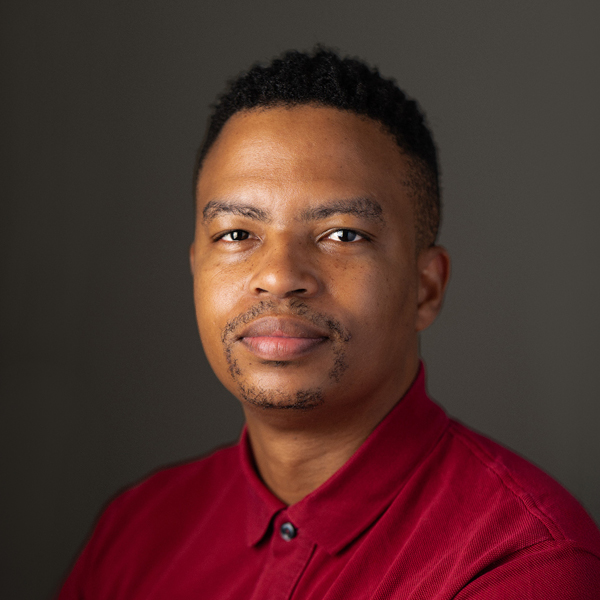
How AI is moving from a fad to a financial lifeline
Tshepo Tshabalala
Project Manager and Team Leader at Journalism AI
One of the defining moments for small newsrooms in 2025 wasn’t a breakthrough, but rather a surrender. That artificial intelligence, mainly generative AI, stopped being an interesting experiment and became a non-negotiable economic necessity. This key shift was the most significant event we have seen. Local publishers simply couldn’t afford to hire the staff they needed, so they started treating AI like a super-efficient, digital intern.
We now know that AI can truly take over the boring tasks like summarizing mountains of documents, transcribing interviews instantly and creating simple graphics or basic ad copy to help with revenue and sustainability measures. However, AI hasn’t replaced reporters. It has simply freed them from the administrative grind. Their saved time can finally be spent on the essential work: finding the real, impactful stories that no machine can replicate.
Now looking ahead to 2026, the biggest challenge isn’t about the technology itself, but about the soul of local journalism – trust. AI performs poorly when it comes to hyper local nuances – those small details that make a local story meaningful. The easy path is letting AI churn out generic, low-quality fillers, risking the one asset journalism has, your local credibility. But the smart newsrooms will dedicate their saved money and time to proper training on AI ethics, ensuring the machine only assists, never dictates. The risk is that small outlets trying too hard to save a bit of money will rely heavily on chatbots, thereby losing the integrity that makes their journalism essential.

The blue “Press” vest is now turned into a target
Rawan Damen
Director General of Arab Reporters for Investigative Journalism (ARIJ)
As 2025 ends, we are sifting through the wreckage of a profession shattered by a genocide. At ARIJ, we spent twenty years building a foundation for investigative truth in the Arab World, but nothing prepared us for the systematic erasure of our colleagues in Gaza, Palestine.
When I accepted the IJ4EU Impact Award for The Gaza Project, in September 2025, I stated clearly: this genocide is unacceptable. To say journalists were “caught in the crossfire” is a lie. They were not accidents; they were targets.
The goal of this genocide is silence. By killing the Palestinian behind the lens, the Israeli perpetrator attempts to bury the evidence of their crimes. We are now forced to navigate a reality where the blue “Press” vest, once a symbol of protection, has been turned into a target.
We have learned that the physical safety of the journalist is the core of all human rights. Without it, the “right to know” does not exist. To allow these killings to continue until today, December 2025, without accountability is to choose a world of darkness.
Our mission remains: the coverage must continue, but the world must ensure that truth-tellers do not have to die to tell it.

The Hong Kong fire that wasn’t: A reminder of journalism’s role
Chieu Luu
Director of Video, South China Morning Post
We live in a time when almost everyone has a camera phone and can whip it out to record video of events as they happen. Apps make video editing easy, and clips can be published in mere minutes.
That’s precisely why now, more than ever, the role of a journalist is crucial in determining what is and isn’t true.
Take the recent deadly fire in Tai Po, Hong Kong, which started on November 26, for example. As videos of the burning apartment blocks flooded social media, one was particularly dramatic. It showed firemen carrying out operations inside a burning building. Not surprisingly, the video was shared and re-shared and amassed more than 200,000 views on Facebook. Users said they genuinely believed the video was from the Hong Kong fire.
Except, it wasn’t.
A fact check by South China Morning Post journalists found the video was actually from a fire in Chile in 2024.
Technology has made doing parts of our jobs easier. But it has also given way to a lot of misinformation that can easily be disseminated as fact.
The world needs journalists who work hard to verify facts, ask tough questions, peel the layers of the onion and get the story right.
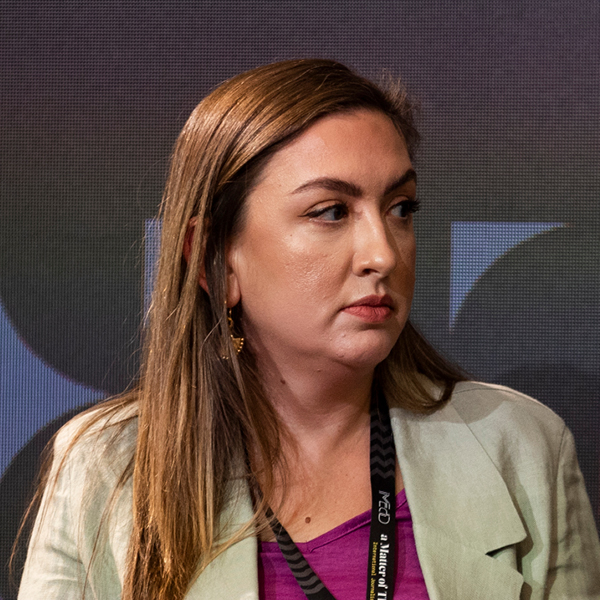
The retreat of #MeToo: The silent war on women journalists
Nektaria Stamouli
President of the Foreign Press Association in Greece
In the beginning of 2017, a man became the —arguably— most powerful person on Earth. The same man, a few months earlier, was caught on microphone bragging about his ability to change the minds of reluctant sexual partners, by “grabbing them by” their genitals. During that same year, an internet phenomenon took the planet by surprise: The #MeToo movement uncovered many tragic and irritating stories, and gave hope to women, that maybe things were beginning to change.
Alas, no. The medium of that hopeful hashtag, Twitter, now “X”, has been captured by a buddy of the ‘grabber-in-chief’, and is flooded with hate, mainly against women. And as Donald Trump returned to the White House for a second term, sexism has been refuelled. The vulnerability of women, including journalists, who try to stem this flood with their work and personal example has never been greater. Online harassment and smear campaigns targeting female journalists challenge their ability to work freely and safely, leading to self-censorship and the loss of critical women’s voices.
In conservative Greece, the situation is dire, as the MeToo movement never made any significant progress; its political and media elite was never really touched, and this elite is now claiming back the lost ground, angrily. As I can personally attest, organized internet trolls respond to anything they do not agree with, using hyper-sexualized language, commenting on women’s appearance, their sexual life, and hinting at their use of sex as a means of professional advancement.
To my fellow journalists, that suffer under this abuse, I can only say: Try to ignore them! Live your life fully, fight your important fights, and leave them fighting the air, sinking in their own refuse.

Burnout: The silent crisis undermining watchdog reporting
Timothy Large
Director of Independent Media Programmes at the International Press Institute (IPI)
What if the most pernicious threat facing investigative journalists isn’t a hostile government or a malicious lawsuit, but burnout itself? Working with hundreds of reporters who collaborated in 2025 on stories supported by the Investigative Journalism for Europe programme, I was struck — as always— by the extraordinary work they produced. But I also sensed a kind of ambient exhaustion running through the investigative community. Not dramatic breakdowns, but something slower and more pervasive: frayed edges, dwindling reserves, the feeling of pushing through on willpower alone.
The circumstances would drain anyone. Investigations have grown more complex, networks more sprawling, adversaries more sophisticated. Journalists face smear campaigns and legal threats. And all of this unfolds as newsroom budgets contract and donor funding tightens, turning even the most committed teams into reluctant managers of scarcity.
We often tell journalists to be resilient, as though resilience alone can compensate for structural fragility. But burnout isn’t a personal lapse. It’s a warning signal from an ecosystem under strain. One challenge for 2026 is to stop treating mental health as a private burden. If we believe that investigative journalism is critical to democratic health, then sustaining the watchdogs has never been more important. We ignore this at our peril.

Investigating health beyond borders and breaking news
Asraa Mustufa
Managing Editor of The Examination, and a 2026 JSK Fellow (Stanford University)
Public health once again became breaking news in 2025, but this time, some of the most salient threats to the health of people and the planet came from those tasked with protecting it.
From its first days in office, the Trump administration embarked on a dramatic agenda to roll back public health funding, research, and infrastructure, peddling dangerous misinformation to change policies and health guidance under a mantra to “Make America Healthy Again.”
But the rapid-fire developments couldn’t just be told as a national story. The U.S. has for decades played a leadership role in global health, and American medical guidance has long shaped public health decisions worldwide.
My newsroom, The Examination, investigates global health threats and we immediately understood the need to keep reporting after the news faded from headlines to understand the human cost and global fallout. It will require the perspective and expertise of journalists around the world to properly investigate the far-flung consequences, uncover hidden players and report out emerging countermeasures to this massive retrenchment in the years to come.
In 2026, journalists will need more vehicles to meaningfully band together to do this. For our part, The Examination launched the Alliance of Global Health Journalists —in partnership with Global Health NOW and Salud Con Lupa— to build a cross-border community of health journalists dedicated to holding powerful interests to account and serving the health information needs of everyday people and communities.

Chasing glory, losing readers: The award problem in journalism
Daniel Howden
Founder and Director, Lighthouse Reports
If there’s one thing that fearless truth-tellers are shy about scrutinising, it’s journalism awards. A group of people who pride themselves on confronting reality and asking awkward questions of authority become schmaltzy pretty fast when there’s a nomination on offer.
Let 2026 be a year with some systems-level thinking about the awards culture. We could ask what these prizes reward? What incentives are created? And how could it be reformed?
Anyone who steps onto the journalism conference circuit from outside the industry quickly realizes that something is off. It’s not a niche topic. In the US, the Pulitzers skew the entire calendar of investigations and feature production, as newsrooms optimise timing to land the big stories as near to deadline as possible.
While the main crisis facing journalism is the battle for attention from the public, awards’ criteria remain fixed to eternal standards and templates that ignore this. The truth is that too many reporters and editors value the acclaim of their peers more than public engagement.
A shake-up of categories, judges, and prizes could drive a change in mindset in a media landscape that’s sometimes divorced from its own reality. (Self-note: must check LinkedIn, remove award-winning from bio.)

2025 was the year that AI began to shape the world of journalism
Maxwell Tani
Media Editor & Co-host “Mixed Signals” podcast
It was the year that the New York Times rolled out new AI tools that it said would eventually write social copy, SEO headlines, and some code. It was the year the Wall Street Journal used AI to generate summaries of human-written stories, and Business Insider introduced automated stories edited by a human. Even the New Yorker, the paragon of longform American journalism that still employs an army of human fact checkers, began rolling out AI audio transcriptions.
It has also meant a growth in malicious slop fake news that fooled and embarrassed legitimate news organizations. Some news organizations, too, inadvertently created AI slop this year. The Washington Post botched its rollout of AI-generated podcasts, ignoring internal reviews that found major errors in AI scripts.
It’s only the beginning; 2026 will see even more AI use in newsrooms as media leaders hope to further personalize news content. Increasing AI use raises two important questions for next year: Will the revenue media companies get from working with AI be meaningful enough to support their mission, doing impactful journalism and reporting? And will any AI-generated content actually be decent enough that people want to consume it?

Stronger together
Emilia Díaz-Struck
Executive Director, Global Investigative Journalism Network
With the deterioration of democracies, wars and conflicts, human rights abuses, disinformation powered by AI, as well as corruption impacting directly the lives of citizens around the world; the need for investigative journalism hasn’t been greater. This context has also posed big challenges for the journalism community this year: deterioration of press freedom, increased risks, attacks, exile, sustainability.
2025 was undoubtedly a tough year for journalism, but also a year of collaborations, resilience, and of finding answers as a community to continue serving citizens around the world by holding power to account and uncovering stories of public interest. This was visible at the Global Investigative Journalism Conference*, held in November 2025 in Kuala Lumpur. More than 1,500 journalists from 135 countries and territories exchanged knowledge, research methods, tools, and experiences, strengthening the investigative journalism community.
2026 will be a year to deepen the power of collaborations, networks, and community. More solidarity, collaborations at many different levels – not only to conduct investigations, but also to respond to the threats and needs, will be central. By doing so, investigative journalism will combine traditional and new methods to uncover stories, reach the audience, stay independent, develop business models, and address the current reality.
* Note: The Global Investigative Journalism Conference was co-hosted by the Global Investigative Journalism Network and Malaysiakini. iMEdD was one of the conference partners.

The weaponization of doubt
Haggai Matar
Executive Director of +972 Magazine
We have seen this happen with the Gaza genocide. By preventing international media from entering Gaza for over two years now, Israel’s main goal has not been to prevent information from coming out of this besieged and bombarded strip of land. Coupled with the killing of about 250 Palestinian journalists, with setting up an army unit designated to label journalists as terrorists, and the propaganda efforts utilizing racist tropes to discredit even the ones who are not thus framed, the main goal has been to weaponize doubt. What the war crimes machine needed to ward off criticism and accountability was for enough people to take a position of blissful agnosticism, to adopt the assumption that “you just can’t really know what is happening in Gaza.” Had more people been willing to believe Palestinian journalists, without conditioning trust on the “professional”, “impartial’ reporter parachuting in from some Western country, we could have ended the horror much sooner.
Yet the weaponization of doubt is not a problem unique to the genocide my country recently committed. It is the emerging reality of public discourse in 2026. The perfect storm of increasing news consumption through echo chambers and the spread of ever more authentic seeming AI-generated content is paving the way for power holders to manipulate public opinion, sowing disbelief in everything, creating the impression that nothing could be accepted as facts.
While our profession cannot survive without doubt, at this time we have to recognize how it can so easily be weaponized against the weakest in society, against the broad public, and against us as truth-tellers. What that can lead to —we have all just witnessed in Gaza.
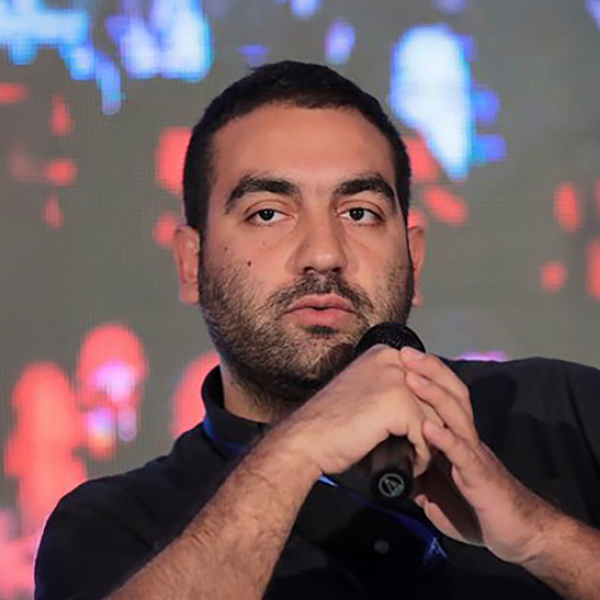
The doctrine of artificial intelligence
Sotiris Sideris
2026 Nieman Fellow (Harvard University), Data Journalist (Reporters United, Center for Collaborative Investigative Journalism)
In 2025, knowledge is defined not only by accuracy but also by the way it is presented and accepted. In this context, artificial intelligence does not function as a neutral technology, but as an infrastructure of trust: It promises consistency and reliability, is implemented before it is tested, and shifts accountability to the future, camouflaging compliance as a consensus. We are no longer talking about passive chatbots, but about agents that act autonomously and influence social, political, and economic processes.
In this landscape, innovation is not born in newsrooms, but it shapes them. Platforms and models are changing faster than they can be understood, creating a permanent gap between research and practice. Journalism responds with a delay, often without the resources or the will to exercise meaningful control.
In 2026, we will not be judged on whether we use artificial intelligence in our reporting, but by whether we can continue to do research without surrendering our skepticism and ethics to systems that make decisions without accountability. The acceleration of models and the integration of algorithms into every aspect of life render any invocation of technological neutrality inadequate. Without documentation and accountability, journalism risks reproducing either the promise of progress or the fear of disaster.