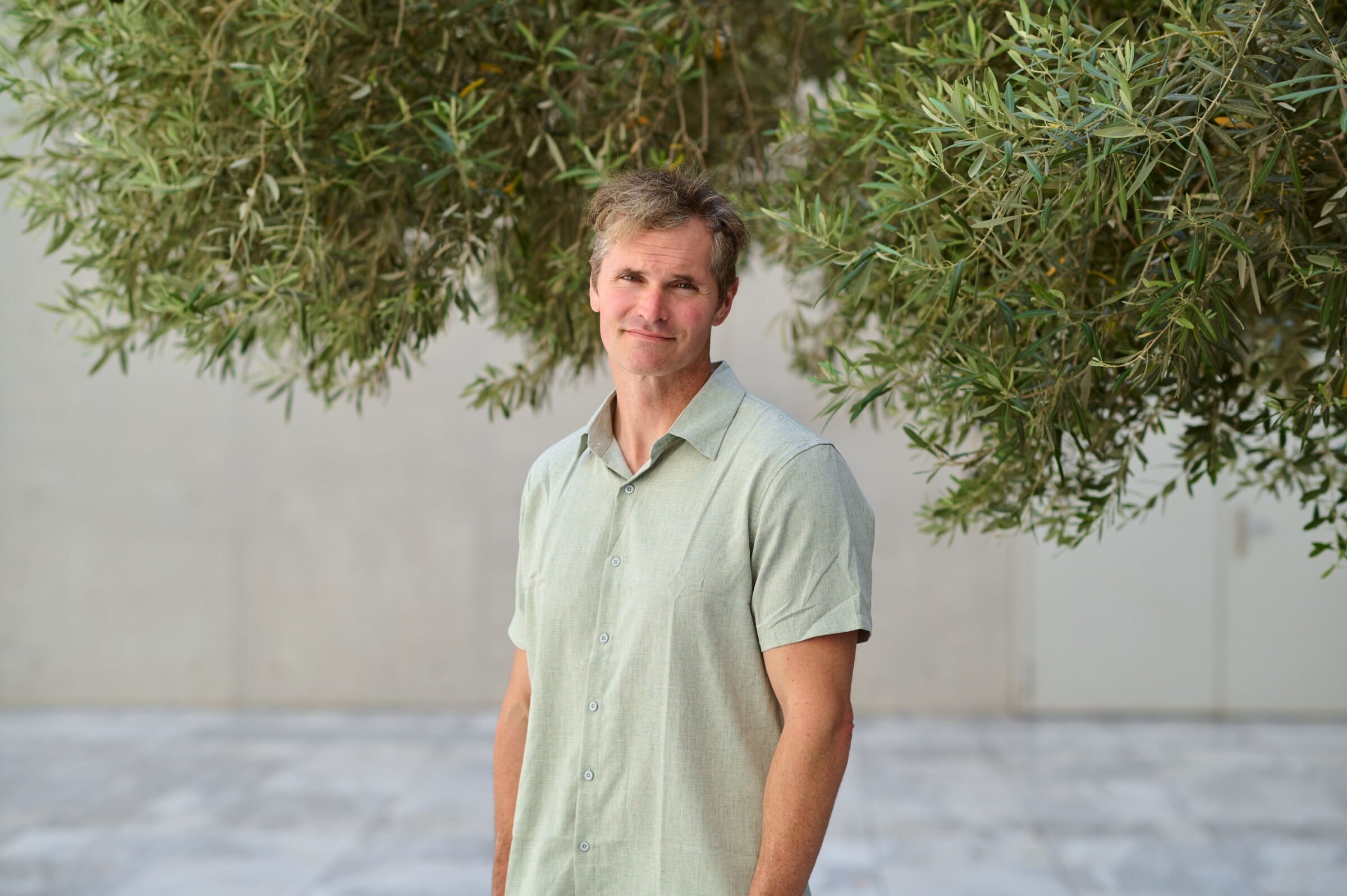
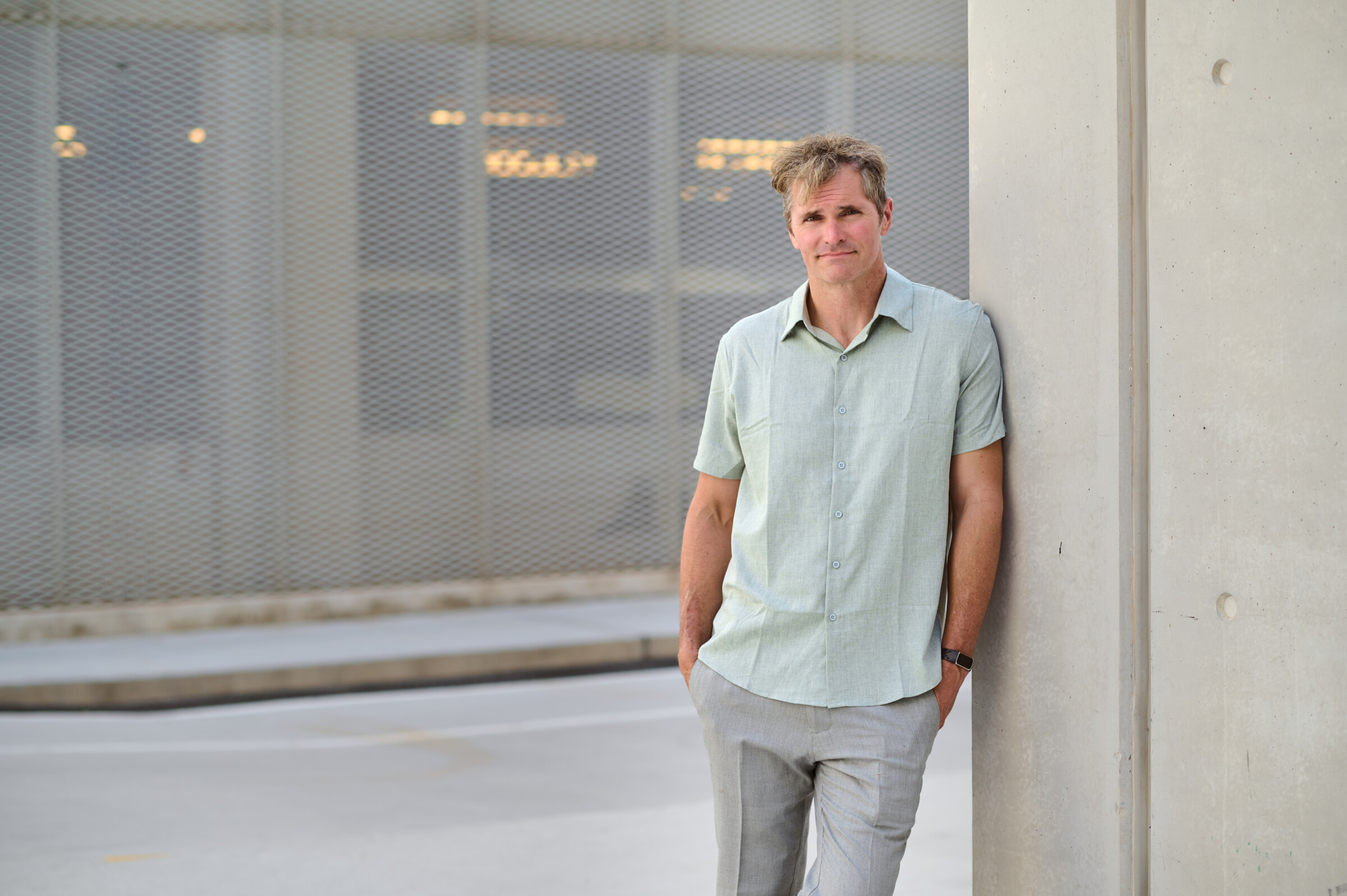
Rhett Butler, founder and CEO of Mongabay, speaks to iMEdD about Mongabay’s transformation from a one-man project into a global media non-profit reporting on nature, the “recipe” for driving impact, how to achieve financial sustainability.
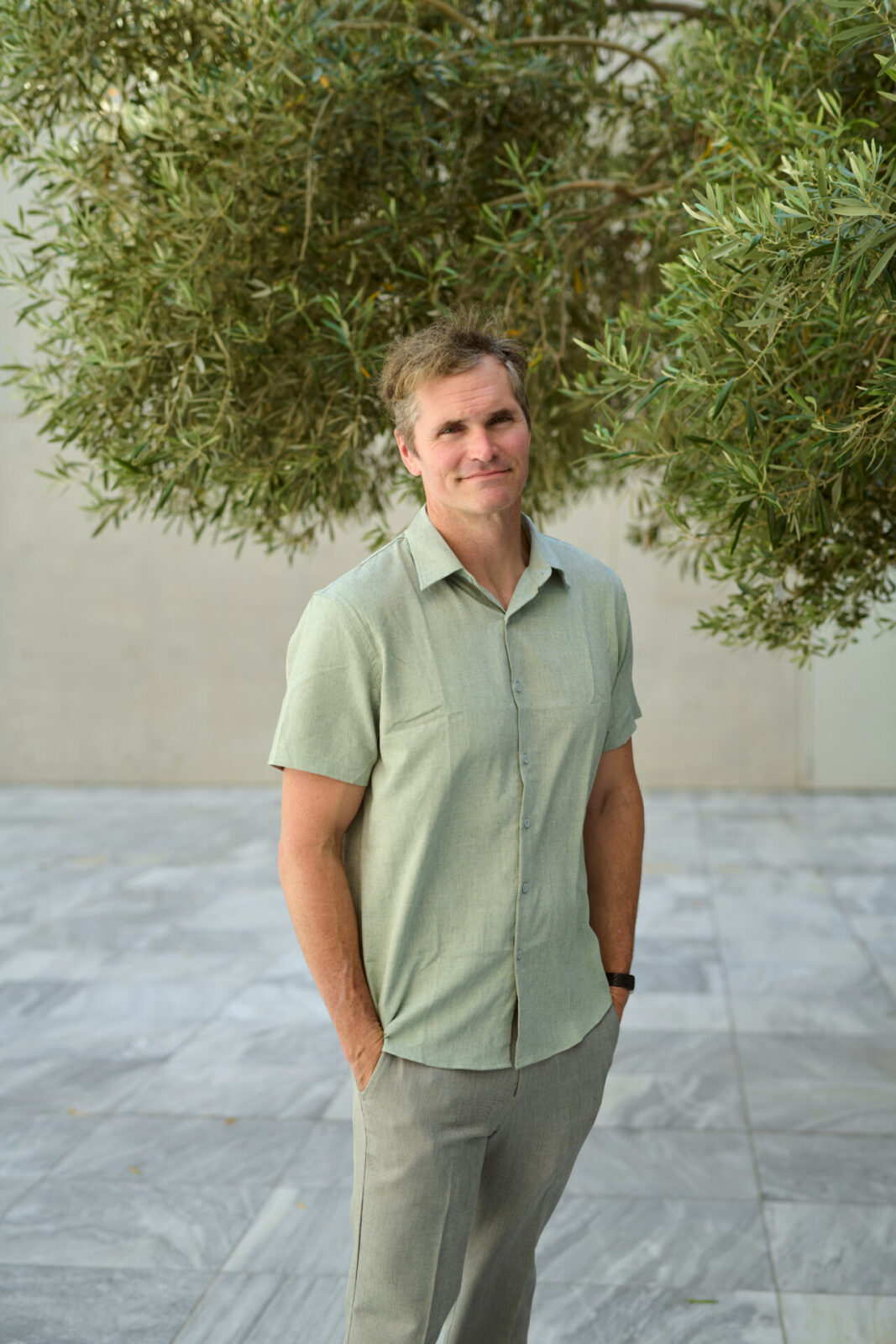
Photos: Petros Toufexis/iMEdD
Unpacking the story: Brazil’s hidden shark meat trade
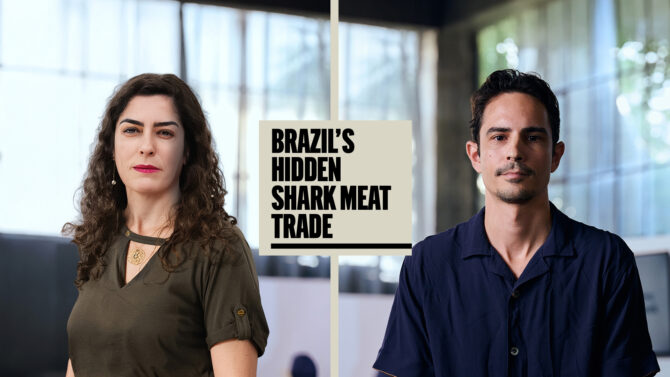
Mongabay journalists Carla Mendes and Philip Jacobson reveal that toxic shark meat is being served in schools, hospitals, and prisons.
Salamanders, snakes, frogs and lizards. Those are some of Rhett Butler’s fondest childhood memories. Growing up, his house was only a few minutes away from a creek and just a breath away from beautiful forests and redwood trees. Having a travel agent mother meant Butler got the chance to travel often as a child, even visiting tropical forests where the diversity of his favorite species was the greatest. Given his upbringing, Butler’s fascination with nature hardly comes as a surprise.
One of his earliest attempts to protect the nature he so deeply cherishes came during his college years, when Butler wrote a book to raise awareness about the importance of tropical rainforests. That project was quickly abandoned, however, when the publisher he found refused to include photos in the book. Without images, the text would fail to convey the beauty of rainforests, which, Butler believed, defeated the whole endeavor’s purpose. Instead, he decided to upload the text online where people could read it for free and, so, in 1999, Mongabay was born.
Mongabay, which is named after Nosy Mangabe, a small island off the coast of Madagascar and which started as a one-man project, has today expanded into a non-profit media organization employing approximately 140 staff, with a global network of more than 1,100 journalists who contribute from some 85 countries. Mongabay, whose nature reporting covers anything from tropical forests to oceans and indigenous rights, regularly publishes high-impact stories.
Following Mongabay’s yearlong investigation revealing illegal cattle ranching in Brazil’s Arariboia Territory, Brazilian authorities removed up to 2,000 illegal cattle. In another investigation, Mongabay exposed companies falsely claiming U.N. backing to secure contracts with indigenous communities, giving these companies economic rights to more than 9.5 million hectares of indigenous forests. Several communities challenged or terminated their contracts after the story’s publication.
One of Butler’s favorite impact stories dates back to 2014, when Mongabay revealed that a company working with local communities to produce cacao in the Peruvian Amazon was clearing rainforest for plantations while claiming to be restoring it. Following the investigation, the Peruvian government revoked the company’s permits, and it was later delisted from the London Stock Exchange.
By combining a global reporting network with stories driving real world impact, Mongabay has in many ways “redefined global environmental journalism”, as the Tällberg Foundation puts it. In recognition of that work, the Foundation honored Butler with the 2025 Tällberg-SNF-Eliasson Global Leadership Prize — an award given annually to “outstanding leaders who demonstrate the willingness and capacity to address the complexity of 21st-century challenges”. In June 2026, several prize winners gathered in Athens, Greece during SNF Nostos 2026. iMEdD met with Butler on the sidelines of SNF Nostos to talk about Mongabay’s work.
The way we approach journalism is to focus on places where we can have high marginal impact. We’re looking for places where change is happening, where journalists can actually help make a difference.
Rhett Butler, founder and CEO of Mongabay
Mongabay operates as a globally distributed virtual newsroom. Can you tell us a bit more about this decentralized structure and how it came about?
Mongabay started very modestly. It was just me in my apartment for the first several years. Eventually, I had an intern who became a staffer, and he lived in Minnesota, which is halfway across the U.S. I had worked in an office before, when I had a real job, and the whole idea of commuting is wasted time for me. I was very productive at home and I’m also very independent, so I was okay with that structure.
The first thing Mongabay did once it became a real entity, which is when I formed the non-profit, was to establish an outlet reporting in Indonesia, which was halfway around the world. We weren’t going to have an office to support the Indonesia team, because we were going from two people to six people at that point. Also, the people in Indonesia lived in different places and Jakarta has horrible traffic, so it made sense to keep that model going. Now we have about 140 staff and we are structured around bureaus. The Global Bureau is a catch-all for everything that’s not its own independent bureau. Those independent bureaus are Indonesia, India, Africa, and Spanish-speaking Latin America. We are hoping to do a Brazil bureau soon. Everything is incubated in the Global Bureau until we have enough resources to spin it out into its own structure, meaning it has leadership, and it has a newsroom team. Everything is under a U.S. entity, which is intentional [as] there’s a risk of having an entity in certain countries, because it becomes a magnet for lawsuits and a way to shut down journalism. […]
Why did you choose to establish your first bureau in Indonesia and why are most of your staff based in the Global South?
The way we approach journalism is to focus on places where we can have high marginal impact. A place where there is already a lot of good journalism being done is less of a target for us — we’re looking for places where change is happening, where journalists can actually help make a difference. The Global South has the highest biodiversity, it tends to have the highest degree of threat, and there also tends to be the least amount of journalism.
Indonesia was the first place and the reason I chose it was because I did a lot of reporting there and I knew that there wasn’t much environmental news coverage that spanned the [country], it tended to be very local. It’s a biodiversity hotspot and there were a lot of issues: a very high rate of deforestation, a lot of wildlife trade, a lot of illegal fishing, and many of these problems were centered around mismanagement or corruption. So, I thought journalism is actually something that can help move the needle, because it can increase transparency and, therefore, accountability, at least in theory. […]
Mongabay started as a for-profit project but later transitioned into a non-profit organization. Can you walk us through that decision?
It was a transition between 2012 and 2014. I had run Mongabay as a for-profit of advertising for the first several years and when it started it had no model, because I had a real job and I wasn’t trying to make money off Mongabay. But, then, I saw this opportunity to quit my job and pursue my passion. In around 2010, I was approached about doing a book by a very well-known book agent that would probably do fairly well, but I decided that the effort of promoting a book was much more than actually writing it. I had to spend all this time doing a road show, as well as marketing and sales, and if we booked it really well, it might sell 50,000 copies. Whereas I had 100,000 people a day coming to the website. So, the website made a lot more sense.
I thought that if I want to take this to the next level, I have all these ideas I want to pursue that there is no advertising-based business model for — Indonesia was the first example. But if I do that, I’m going to have to give up being a journalist, which is something I love, to become a fundraiser and manager, neither of which I’ve done before. I don’t have any connections to wealth; I don’t know the foundation world. So, this was an unknown, but I [decided] I’m going to try it and see what happens.
I got [a] grant and I started Mongabay Indonesia, it went really well, then I got some other grants and started to see that this is actually a way that we could expand Mongabay, because advertising doesn’t seem like it’s going to sustain expansion. And this was actually before the collapse, so it was very fortuitous timing. We didn’t start the non-profit out of desperation; it was really out of seeing an opportunity. […]
Eventually, I donated all the articles to the non-profit, so Mongabay had a really strong base and since then we’ve had consistent compound growth over time. We’ve gone from having seven people in our first year as a non-profit to now having 140, a 20x increase. I would never have forecasted that happening, I thought we’d probably cap out at 10-15 [people], but I also didn’t make any assumptions. I thought, let’s see how it goes, be very experimental, and avoid catastrophic mistakes.
We’ve gone from having seven people in our first year as a non-profit to now having 140, a 20x increase. I would never have forecasted that happening.
Rhett Butler, founder and CEO of Mongabay
All eyes on earth: Strategies and tools for environmental stories
As climate change impacts communities worldwide, journalists who were present at the iMEdD International Journalism Forum 2025 shared strategies and tools to help turn attention to the planet’s most pressing issues.
Today, Mongabay is doing well financially, at a time when many independent media are struggling. Is there a strategy behind it?
There is a strategy. I don’t come from a journalism background, and I didn’t assume that you had to do things in a certain way. I focused on trying things and seeing what worked and learning from it, so an iterative process.
One of things I decided right out of the gates is that there’s an inherent power imbalance in philanthropy. If you want to try to counter that imbalance to some degree, you need to be independent, you need to be able to say no to funders. That necessitates a diversified funder portfolio. We have 35-40 foundation funders now, but none of them is more than 10% of our budget. We also have individuals who donate. That has enabled us to weather various storms, whether it’s people deprioritizing climate change or a board changing their priorities. […]
You need to be independent, you need to be able to say no to funders. That necessitates a diversified funder portfolio.
Rhett Butler, founder and CEO of Mongabay
Impact forms a core part of Mongabay’s work, and many of your stories have achieved remarkable results. Is there a “recipe” for impact and how do you measure it?
It’s really about the audience — who are you trying to reach and what are they going to do with the information? Mongabay is not trying to be a mass market publication, [although] we did have over 100 million visitors to our website last year. But we’re targeting very specific user groups — people who are managing commodity supply chains in the private sector, or people who work in government agencies that manage natural resources, or journalists or philanthropists. There are about eight groups that we define, but each of those groups has their own jargon and way of communicating. The way that we cut across the silos is by writing in a general interest format, and that’s how we end up with a much broader audience.
The idea of driving impact really ties back to our business model. As an advertising-based model, you’re monetizing your traffic; you’re trying to ideally maximize your traffic. That’s a very different strategy than trying to maximize your impact, because you might do things that are very superficial to drive up traffic numbers if you’re just trying to do advertising.
A practical example of this was in 2021, when Facebook accounted for about 85% of our external referral traffic. Analyzing the numbers, we could see that the quality of traffic was very low: people wouldn’t go very far into a page and they wouldn’t stay that long. […] So, we thought: why are we putting all this effort and time into Facebook? At the same time, the anecdotal evidence suggested that Facebook wasn’t as relevant anymore for reaching decision makers. […] We, [therefore], thought to deprioritize Facebook and instead put that effort into other platforms like LinkedIn. […] We did that and the next month we lost four million visitors to the website, which would have been devastating if it had been an advertising model. But the total number of hours people spent on Mongabay actually increased, so we lost all this “garbage traffic” that had no impact in terms of what it drove.
You would have never made that decision as a for-profit, but as a non-profit, it makes sense. That goes back to that impact orientation. At a very high level, it’s always thinking about the audience and how people use information. It’s a secret sauce for how you ultimately drive impact.
You also have to measure impact. A lot of outlets publish something and then move on to the next thing. But you need to have a mechanism where you collect information on the outcomes from that reporting. Part of it is doing follow-up reporting. You can build systems, […] check back with the person who reported the story or the sources, for instance on 3, 6, 12, and 24-month intervals, have a conversation and hear what happened after this. Through that process you can get new story ideas, but you can also get evidence of impact. Then, there’s also social media listening and paying attention to what feedback you get and capture all that information, [which] we put into a database, and then we map out what that impact looks like.
It’s always thinking about the audience and how people use information. It’s a secret sauce for how you ultimately drive impact.
Rhett Butler, founder and CEO of Mongabay
You’ve been deeply involved in environmental journalism since 1999. Do you see any major developments or emerging trends in the field?
One is the rise of big data and the ability to process that. There are all these new data sources, whether it’s open-source intelligence or satellite imagery. There’s an overwhelming amount of new information coming into the system. Then, in the past couple of years, [we had] the emergence of large language models, machine learning, and AI to process some of that data.
Our team in Peru has done some of that. They did an image search of satellite data for airstrips in the Amazon. They were able to identify them and then they had local journalists verify them, which led to some very interesting reporting that correlated murder of indigenous people to the presence of these airstrips, because they were being built by narco-traffickers. […]
One of the big concerns around AI is that it is going to take jobs. In our context, it will allow us to work in languages we’d never otherwise pursue and create jobs for people in places where we wouldn’t otherwise work.
Rhett Butler, founder and CEO of Mongabay
You are in the process of launching an AI tool called Story Transformer. Can you talk about that?
We haven’t launched Story Transformer yet, we’re still building and we’re hoping to roll out six languages this year. The basic idea is that we have these key user groups that we’re focused on, but there’s one big user group that we have not focused on: micro decision makers, who are typically on nature’s front lines. They are deciding whether to cut down a hectare of mangroves or to plant trees and cumulatively they have a huge impact in the world. They have a lot of agency as well — they can replant forests and defend their lands, [for example].
The question is how do you reach those people? Sometimes they have low literacy skills, sometimes they don’t speak Hindi, Bahasa, English or Spanish — they speak very local languages. They may not have much money to surf the internet or download apps, so they rely on subsidized platforms like WhatsApp. They’re effectively in information deserts.
The idea is for Story Transformer to leverage LLMs to do transformation both in languages but also in formats. Think of a 1500-word story in English on livelihood benefits of a temporary fisheries closure and have it transformed into a 90-second audio message on WhatsApp in Tagalog or Nigerian Pidgin or Quechua. […] There is a process to improve the translation quality […] and it also goes through an editor, so there is always a person in the loop, which ensures quality. They’re also the distribution channel, because they are going to be based in these areas. Their job is to also form relationships with local media, radio and NGOs on the distribution side and to listen as well. So, those issues that are arising for those communities can then filter back into the reporting ecosystem.
It also lays the groundwork for potentially commissioning stories down the line from local journalists. One of the big concerns around AI at Mongabay and in journalism generally, is that AI is going to take jobs, which is a valid concern. But in our very specific context what we see is using this tool to be very expansionary in terms of jobs, because it will allow us to work in languages we’d never otherwise pursue and create jobs for people in places where we wouldn’t otherwise work. The idea would be to eventually open this up to other media outlets so they can use it at inference cost.
This interview was edited for length and clarity.