The final part of this series explores a question that reaches beyond technology: who gets equal access to the news? Although many news organizations have made progress, accessibility remains uneven. iMEdD spoke with journalists, researchers, and accessibility experts about the changes still needed, from newsroom culture to the growing role of artificial intelligence.
Featured image: Evgenios Kalofolias
Putting disability at the center of the story
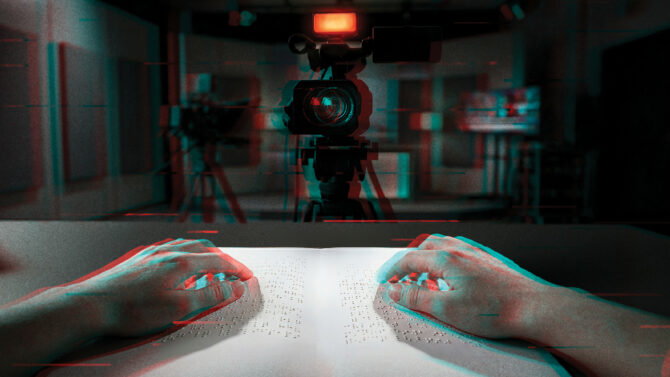
Journalists, editors, and media innovators spoke to iMEdD about the visibility of journalists with disabilities and how they rethink who gets to make the news.
For many people, avoiding the news is a choice. For millions of people with disabilities, it can be the result of something else: a news industry that was not designed with accessibility in mind.
Missing closed captions on a video, an image that lacks a description for screen readers, or a website that a user cannot navigate can make a news story inaccessible before a reader even reaches it.
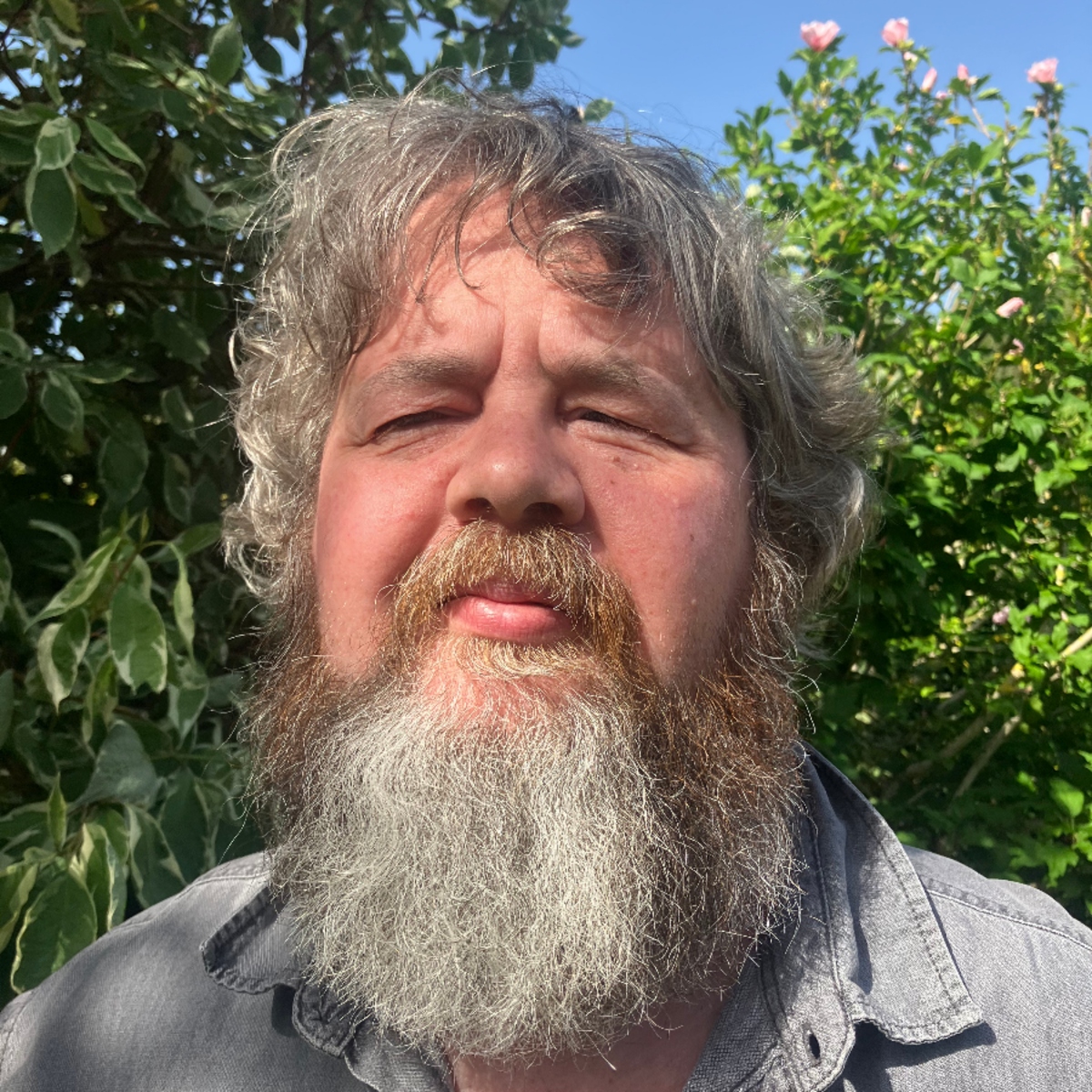
Johny Cassidy, a blind digital special projects producer at BBC News, knows that gap firsthand.
He uses a subscription-based screen reader, a text-to-speech tool that reads aloud the content displayed on a screen. But the tool can only go so far, he said, speaking to iMEdD. “It has to work in tandem with websites that have been built in an accessible way.”
The BBC has adopted the Web Content Accessibility Guidelines (WCAG), a global standard developed by the World Wide Web Consortium (W3C), said Cassidy. The guidelines encourage practices such as using clear headings, semantic HTML, and descriptive text for images. Over the past decade, many major broadcasters have begun adopting parts of these standards. But turning those standards into practice often depends on individual news organizations and the choices they make about accessibility.
Creating effective audio descriptions and captions requires more than simply adding accessibility features. It demands specialized skills, careful word choices, and an understanding of standards.
Johny Cassidy, digital special projects producer at BBC News
Producing accessible material “is a form of art”, Cassidy said. “Creating effective audio descriptions and captions requires more than simply adding accessibility features. It demands specialized skills, careful word choices, and an understanding of standards.”
In 2024, he created and published a set of guidance for journalists on writing alternative text (alt text) for images to make news more accessible.
“The journalists at the BBC now need to do a mandatory training course on proper text descriptions, which the screen reader then picks up,” said Cassidy. “So, when a blind person comes across a BBC news story, and there’s an image, they will get an equitable experience because of the training that the journalists have done.”
Beyond compliance
According to the World Health Organization, nearly 1.3 billion people worldwide live with a significant disability. International frameworks, including the Convention on the Rights of Persons with Disabilities and the European Union’s European Accessibility Act, call for digital content to be accessible through tools such as captions, sign language interpretation, Braille, and screen-reader-compatible formats. In 2024, UNESCO outlined key principles for accessible media, ranging from closed captions and audio descriptions to keyboard navigation, alt text, and usability testing with disabled users.
As Johny Cassidy pointed out, even many news websites that meet basic accessibility standards still have shortcomings, particularly those crowded with advertisements and pop-ups. “There’s a difference between technically accessible and usable,” he said. A website may be navigable with a keyboard or screen reader, but if it requires excessive tabbing or lacks a clear structure, the experience can still be frustrating and unequal.
There’s a difference between technically accessible and usable.
Johny Cassidy, a blind digital special projects producer at BBC News
According to the 2026 WebAIM Million Analysis of the one million most-visited home pages across the web, researchers identified 56,114,377 distinct accessibility errors, an average of 56.1 errors per page. The errors increased by 10% since 2025. The report suggests that the trend reflects broader changes in web development, including greater reliance on third-party frameworks and libraries, as well as “vibe coding.” Users can look up any website to see how its home page performs in terms of accessibility and to detect errors.
A recent research also found that accessibility in any kind of video production is often treated as a “feature added” after content is created rather than something built into the production process from the beginning. Captions, audio descriptions, and sign language interpretation are often added only after filming is complete, leaving little room for creative decisions or meaningful integration.
Filip Bircanin, a research fellow at King’s College London and the study’s lead author, told iMEdD that by the time accessibility is considered, information gathered earlier in production, from script notes to camera setups and location details, has often been lost or never passed on to the teams responsible for making content accessible. “The result is an approach driven more by compliance than inclusion,” he said. Because audiovisual production is typically spread across multiple companies and vendors, he added, accessibility practices can also vary widely from one project to the next.
When AI opens doors and creates new barriers
In 2025, speaking to Journalism.co.uk, Johny Cassidy had argued that tools such as generative AI could significantly improve accessibility, provided they are used carefully.
“The possibilities offered by generative AI could make a huge difference if we get it right,” he said. “The ability to use the technology to create multimodal versions of stories for people who need things delivered in different ways could have a huge impact on accessibility. All these need to be talked about more and experimented with.”
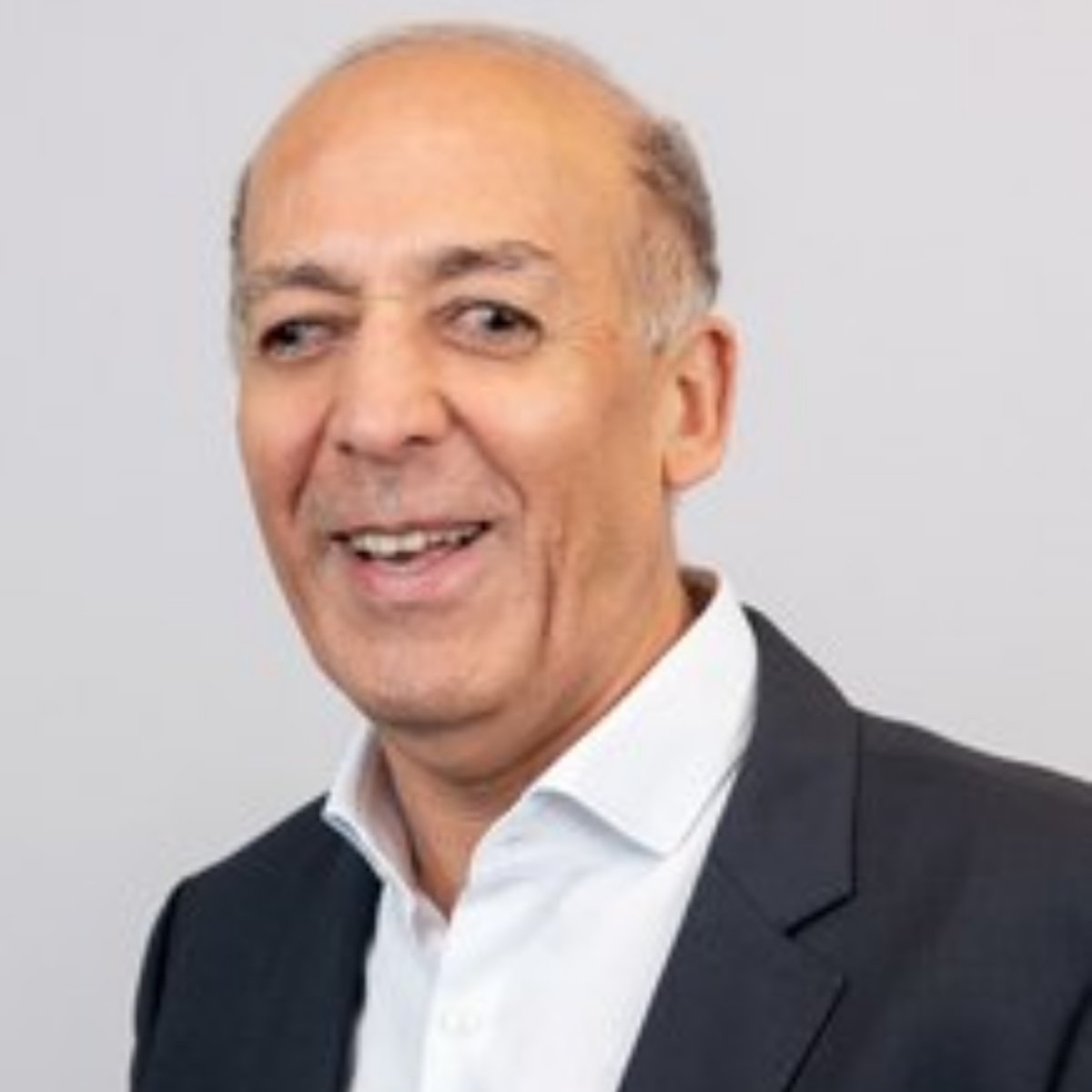
Prof. Alireza Darvishy, head of the ICT Accessibility Lab at the Zurich University of Applied Sciences and one of the experts who contributed to UNESCO’s guide on media accessibility, shares that optimism, but with caution. Severely visually impaired since childhood, he has spent decades researching how technology can expand access for people with disabilities.
Darvishy said to iMEdD that the same AI tools that can improve accessibility can also reinforce longstanding stereotypes. He recalled what happened after his autobiography was published. As part of its marketing campaign, the publisher used an AI tool to generate a podcast based on the book. He then sent it to him for approval. “When I listened to it, it mostly focused on my visual impairment,” Darvishy said. “Instead of saying, ‘This guy is a professor in digital accessibility who has developed innovations,’ it centered on my disability.”
He objected. “I had to tell the publishing house that I didn’t agree with the podcast because it portrayed me in a way that doesn’t reflect who I am,” he said. “I’ve been challenging that perception for more than 30 years. My visual impairment should not be the focus. It’s time to change that.”
The challenges, he noted, often extend beyond how AI portrays people with disabilities. Many of the tools themselves are still not fully accessible.
Even when AI can help interpret information, Darvishy said, journalists and other users need to be able to trust what it produces. “If I receive a histogram or a line chart about any topic and I’m not able to interpret it, I can upload it to a Gen AI tool and say, ‘Describe it to me,’” he said. “If I’m a journalist and I’m blind and I want to write an article, it’s important that the information I receive is reliable.” Privacy, he added, is just as critical. “You don’t want to expose that you have a disability of any kind, such as ADHD, autism or anything else,” he said. “You should be able to decide explicitly whether other people know about that.”
A tool for truly accessible PDFs
A document can be created with accessibility in mind and still leave users behind.
That limitation led Prof. Alireza Darvishy and his team to develop PAVE, short for PDF Accessibility Validation Engine. The free tool, first introduced as a research project in 2014, allows users to upload PDFs, identify accessibility problems, and fix many of them directly in a browser. Its latest version, PAVE 2.0, combines automated checks with guided human review, reflecting the team’s belief that accessibility cannot be fully automated.
Journalists can upload the PDF, make it accessible in a few steps, download it and provide it to the public.
Prof. Alireza Darvishy, head of the ICT Accessibility Lab at the Zurich University of Applied Sciences
“If you have a PDF document and you don’t have the source document, for instance, the Word document, or even if you do have the source document, but you want to check whether the PDF is really accessible, you can use PAVE,” Darvishy said. “Journalists can upload the PDF, make it accessible in a few steps, download it, and provide it to the public.”
The team is now exploring how generative AI could expand those capabilities, particularly for describing complex visual information. “We utilize AI. It can create a description of the chart, depending on the chart type,” Darvishy said. “We are working on that, especially for line charts, pie charts, etc. To some extent it can create descriptions automatically, but journalists, or whoever, should control that if it’s okay.”
A need for a different newsroom culture
Professor Georgios Kouroupetroglou, head of the Accessibility Unit for Students with Disabilities at the National and Kapodistrian University of Athens and director of the university’s Speech and Accessibility Laboratory, has tracked the needs of students who request accessibility support. He found that in the 2025–2026 academic year, students with disabilities in the Department of Communication and Media Studies accounted for just 1.7 percent, far below the shares in departments such as Informatics and Telecommunications, Mathematics, Law and Medicine, where students with disabilities account for 5-18% of the department’s student body. The finding, Kouroupetroglou told iMEdD, suggests either that relatively few students with disabilities choose to study journalism or that those who do are less likely to seek accessibility support.
The gap extends beyond who enters journalism. It also affects how newsrooms approach accessibility once they produce content.
As Johny Cassidy explains, “there is a huge disparity between the content audiences consume and the tools journalists need to do their jobs.” “That is where the problem becomes much more pronounced. Many of the systems, [editing] platforms, and tools journalists rely on every day are not accessible to me. A lot of the software used for television and audio editing still creates barriers.” People who design tools and systems, he added, need to recognize that not everyone interacts with technology in what might be considered “a traditional way”.
That is where accessibility training comes in.
Journalists and other media professionals should understand the fundamentals of accessibility and disability issues. This could include regular awareness sessions to help staff create more inclusive content.
Prof. Alireza Darvishy, head of the ICT Accessibility Lab at the Zurich University of Applied Sciences
Kouroupetroglou argued that accessibility is often less about learning new tools than about using existing ones differently. His team has developed practical guides to help university professors make their lectures more accessible, showing them how to use the features already built into the software they rely on every day. He believes news organizations could adopt a similar approach by creating practical guides and training for their journalists.
“[Accessibility] training should be part of the ongoing professional development that media organizations already provide,” added Darvishy. “Journalists and other media professionals should understand the fundamentals of accessibility and disability issues. This could include regular awareness sessions, brown-bag lunches or accessibility training to help staff create more inclusive content,” he added.
The quiet absence: disability in the newsroom
Across newsrooms from India to the U.S. and the U.K., disabled journalists struggle to be seen. Their numbers are unknown, career advancement is stalled, and accommodations are inconsistent.
Making news easier to understand: Lessons from journalists
Plain language is becoming a practical tool for newsrooms trying to make journalism accessible to wider audiences, including people with learning difficulties or a disability.
William Kremer, a BBC radio producer, said journalists should focus on removing unnecessary complexity from their reporting. Accessibility, he said, often comes down to reducing the “clutter” in news stories and helping audiences absorb the most important information. While accessible news may contain fewer details, it can be more effective when the essential information is clear. Kremer also emphasized the importance of context. Without it, news can create confusion and anxiety. Using the example of a fire, he said audiences need information such as the distance from the event or how frequently similar events occur to understand what the news means for them.
Sonja Wielow, the Project Leader of “Tagesschau in Einfacher Sprache” (Daily News in Simple Language) at Germany’s ARD, said one of the biggest lessons from the program was rethinking the traditional news structure. Instead of starting with the latest development, journalists should provide the background audiences need to understand why a story matters. “We provide the necessary context before introducing the news itself,” she said.
At Austria’s ORF, Lara Fischer, project coordinator of the Inclusive Editorial Office, said journalists should also consider who they are producing news for. Her team selects topics based on the needs of its audience and focuses on explaining information that can affect people’s daily lives. Anna Mark, who represents ORF in the ENACT project, said working with people with disabilities has helped journalists challenge assumptions about their audiences. For her, accessible journalism requires listening directly to the people who use it and using their feedback to improve how news is produced.
Together, their advice is simple: write with clarity, provide context, understand your audience and test whether your journalism is reaching the people it is meant to serve.