Nine years after Daphne Caruana Galizia was assassinated, the acquittal in the trial of the businessman accused of involvement in her murder has confronted Malta with a question that goes far beyond a criminal case: What protects journalists when their reporting threatens powerful interests, and what happens when the judicial system fails to bring those responsible to justice?
Featured image: Shutterstock
Journalism in Mexico: Anatomy of a silence
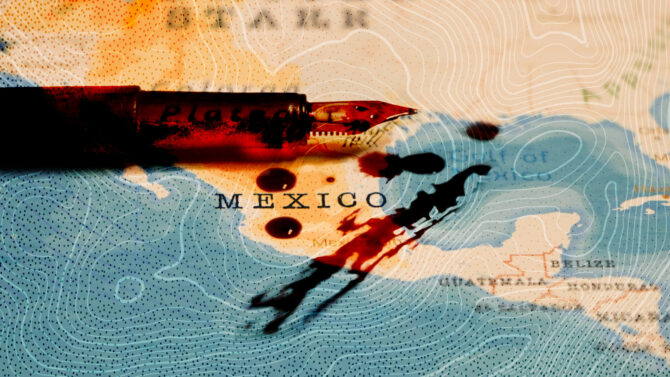
Amid another increase in the murders of Mexican journalists in the summer of 2026, reporters across Mexico speak to iMEdD about navigating pressure from drug cartels and public officials, persistent impunity and, in some parts of the country, “zones of silence.”
On September 2, the verdict in the longest-running murder trial in Maltese legal history took less than a minute to deliver. Corinne Vella, Daphne Caruana Galizia’s sister, remembers listening to every word as the weight of the nine years since her sister’s assassination came into focus. There was reason to hope that the case might deliver something long denied: justice for the murder of a journalist.
“You are there waiting to hear something you’ve been expecting for a long time, for good reason, because the evidence was indicative of guilt,” Vella told iMEdD.
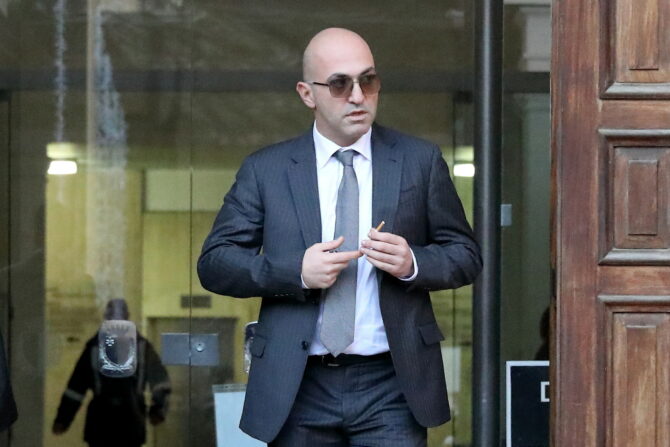
Yorgen Fenech, one of Malta’s richest businessmen, faced two charges: complicity in Caruana Galizia’s murder, and association to commit the crime. As the verdict was read, Vella held on to one expectation. “At least one would succeed,” she recalled thinking.
Neither did.
“And then, you hear ‘not guilty’, and immediately your mind has to catch up. And you go on to the next [charge]. And it’s the same process again.”
The trial lasted 55 days, with hearings six days a week, often running from 9 a.m. until 5 or 6 p.m. In Hall 22 of Malta’s Law Courts in Valletta, jurors had heard testimonies from over 100 witnesses, including graphic details of the explosion that killed Caruana Galizia.
After the acquittal, Fenech, his family and his lawyers began cheering. “It was as if they had won a football match,” Vella said. She found the reaction difficult to bear. “This was not the behavior of an innocent person. This was the behavior of someone who knows he is guilty, who has more or less admitted it. It was a horrible sound.”
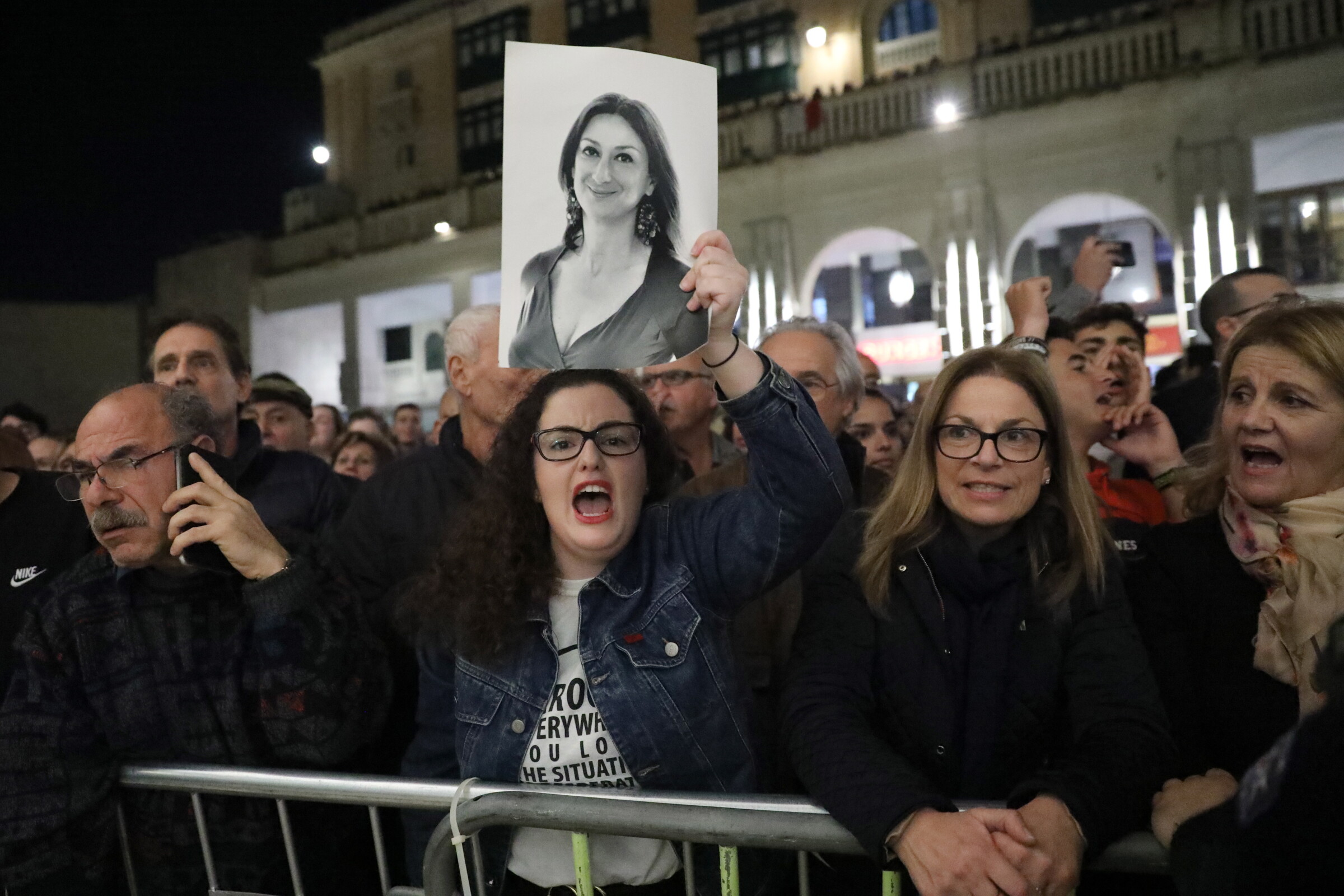
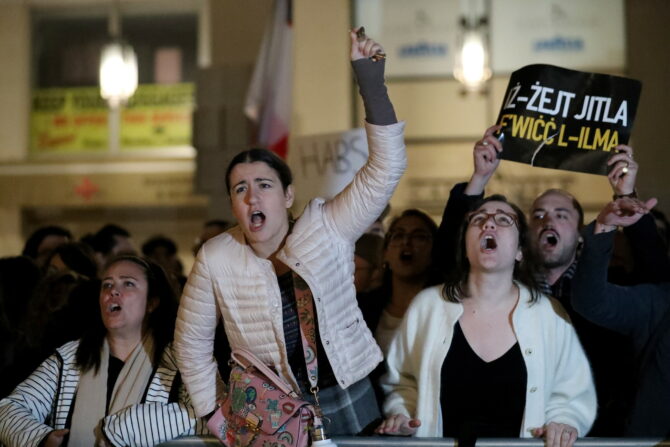
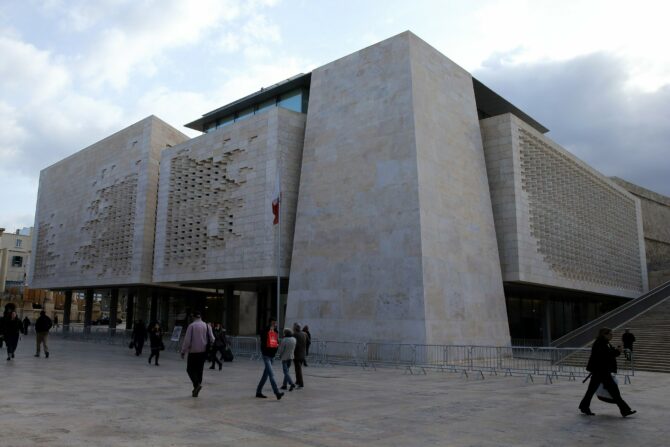
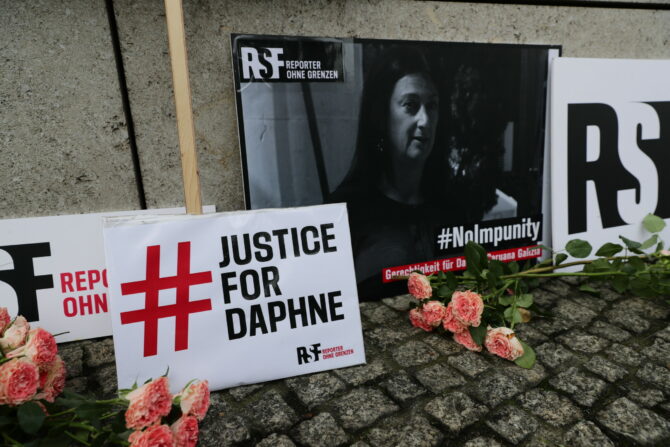
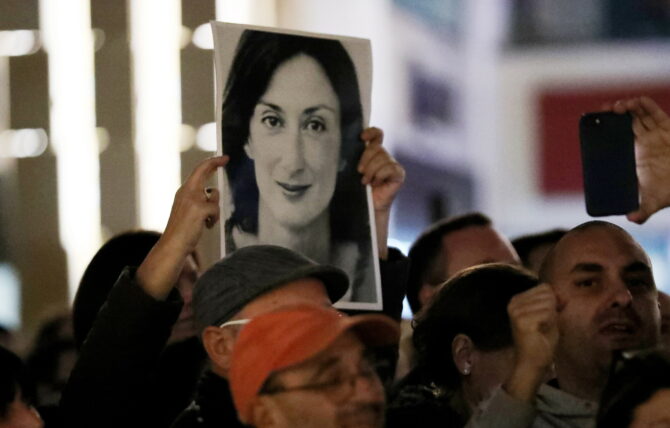
That evening, at about 9:30 p.m., protesters gathered outside the Parliament and marched to Castille, the Prime Minister’s office. Some carried banners: “The Trial Has Ended. Our Work Has Not” and “Impunity Ends Here.”
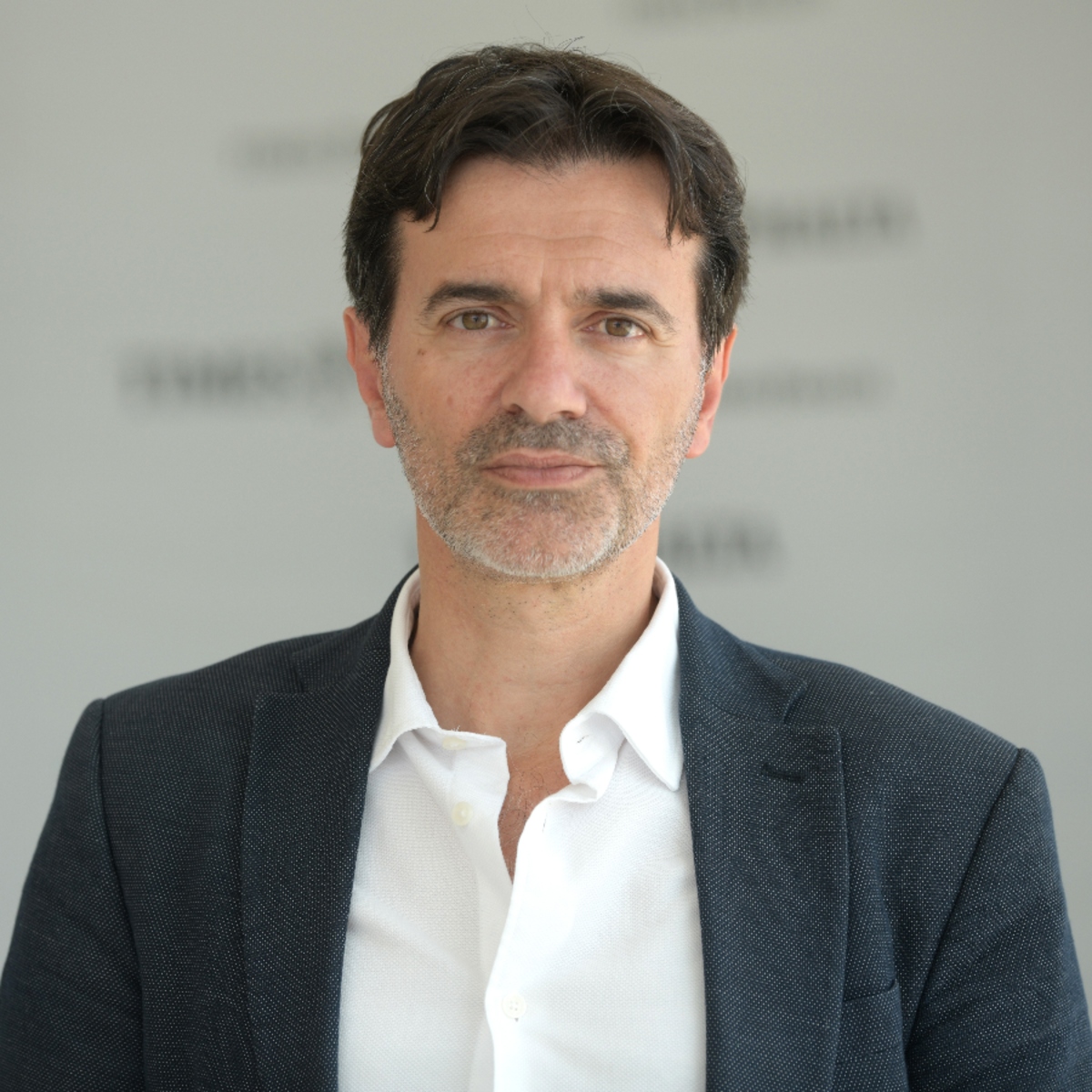
James Debono, chief environmental reporter at MaltaToday, was among those who addressed the demonstrators that night about Malta’s longstanding weaknesses in its system of checks and balances. Speaking to iMEdD after the verdict, he pointed to a further flaw in the justice system: juries are not required to explain the reasoning behind their decisions, leaving the public with a verdict but no account of how it was reached.
They have signaled to the world, to Europe in particular, that it is okay to kill a journalist.
Corinne Vella, Daphne Caruana Galizia’s sister
“To go further up the chain of command is very, very rare,” Vella said, who now works for the Daphne Caruana Galizia Foundation. She was also troubled by what the verdict might mean for how the murder was understood by the jury and the wider public.
“They have signaled to the world, to Europe in particular, that it is okay to kill a journalist.”
The Attorney General filed an appeal of almost 80 pages on September 22, arguing that significant legal errors during the proceedings may have influenced the jury’s decision to acquit him. The appeal came amid a police inquiry into several jurors, who were detained over suspected breaches of their oath and alleged public remarks before being released on bail.
“Unfiltered” Daphne
Daphne Caruana Galizia, one of Malta’s most prominent investigative journalists, died on 16 October 2017, when a bomb planted in her car was detonated remotely as she drove near her home in Bidnija, a small village in northern Malta.
When she began writing a column for The Sunday Times of Malta in 1990, she became Malta’s first female political columnist and one of the first journalists in the country to publish under her own name, at a time when anonymity was common in the press. Through her blog, Running Commentary, she investigated corruption, political figures, business interests and revelations linked to the Panama Papers.
Running Commentary had proven incredibly popular, eventually surpassing the circulation of any Maltese newspaper. Herman Grech, editor-in-chief of Times of Malta, attributes part of her appeal to her writing, which he describes as exceptional and unrestrained. Unlike journalists working in newsrooms where stories pass through editors and are shaped to fit editorial policy, she operated largely on her own. “There were no filters,” he said. “Whatever she had on her mind, she used to say it.”
Caruana Galizia’s sons have described, in numerous interviews on the podcast “Who Killed Daphne?”, as well as in the book by journalist Paul Caruana Galizia, “A Death in Malta”, how the hostility toward their mother extended far beyond her work and affected their family life as early as the 1990s: unknown individuals followed her and photographed her; someone set fire to the front door of their home; and the family’s dogs were killed.
“There are crooks everywhere you look now. The situation is desperate,” she wrote in her last blog post. It was published at 2:35 p.m. from her kitchen table. Minutes later, her Peugeot 108 exploded.
The verdict and the questions that remain
In December 2017, three men were arrested on suspicion of planting the bomb. Two of them later pleaded guilty to murder, and they were sentenced to life in prison. The third was sentenced to fifteen years in prison in exchange for testifying against them. Caruana Galizia’s reporting, and the political crisis that followed her assassination in October 2017, helped bring down then Prime Minister Joseph Muscat. Muscat resigned in December 2019 and left office the following month.
Yorgen Fenech was arrested on 20 November 2019, after Melvin Theuma, a taxi driver and the alleged intermediary in the assassination plot, provided investigators with information implicating him. Police intercepted Fenech’s yacht as it was leaving Malta. His arrest brought renewed focus to the question of who had commissioned and financed the murder, beyond the men who carried out the assassination.
After his arrest, Fenech made several attempts to secure a presidential pardon, offering to provide information about the murder. None was granted.
Nine years later, a jury of six women and three men found Fenech not guilty on all counts. Eight of the nine jurors voted to acquit him of the charges connected to Daphne Caruana Galizia’s murder.
“We were all in shock,” recalls Clara Farrugia, court reporter for newspaper The Times of Malta. For over a month, she had followed the same routine: arrive at court, take her seat on the balcony, listen to the proceedings, file her story and return the next day. “We were literally stunned,” she told iMEdD.
I think we are all still waiting for justice to be served, all of us. They killed one of us.
Clara Farrugia, court reporter for The Times of Malta and secretary-general of the Institute of Maltese Journalists (IĠM).
Earlier in the trial, the prosecution had introduced audio recordings that Theuma had secretly made. In them, according to Maltese media, Fenech recalled giving Theuma €150,000, the amount Theuma says he received to arrange the murder. But the recordings did not reveal what the money was for. The jury also watched video of Fenech’s police interrogation after his arrest in 2019. In the same video, which was published by the Times of Malta after the trial, Fenech told the police officers that he had given the “OK” for the assassination plot, but that he had also withdrawn his consent three days later.
Farrugia believes the defense succeeded in raising reasonable doubt by suggesting that Keith Schembri, then Prime Minister’s Joseph Muscat’s former chief of staff, was behind the murder. Fenech’s acquittal, however, did not establish who else, if anyone, was responsible for commissioning the killing.
“I think we are all still waiting for justice to be served, all of us. They killed one of us,” said Farrugia, who also serves as secretary-general of the Institute of Maltese Journalists (IĠM). In the week after the verdict, the institute recorded four threats against journalists, she said. Most came from members of the public, through online messages or phone calls. One newsroom locked its offices.
The Daphne Project: finishing the unfinished investigation
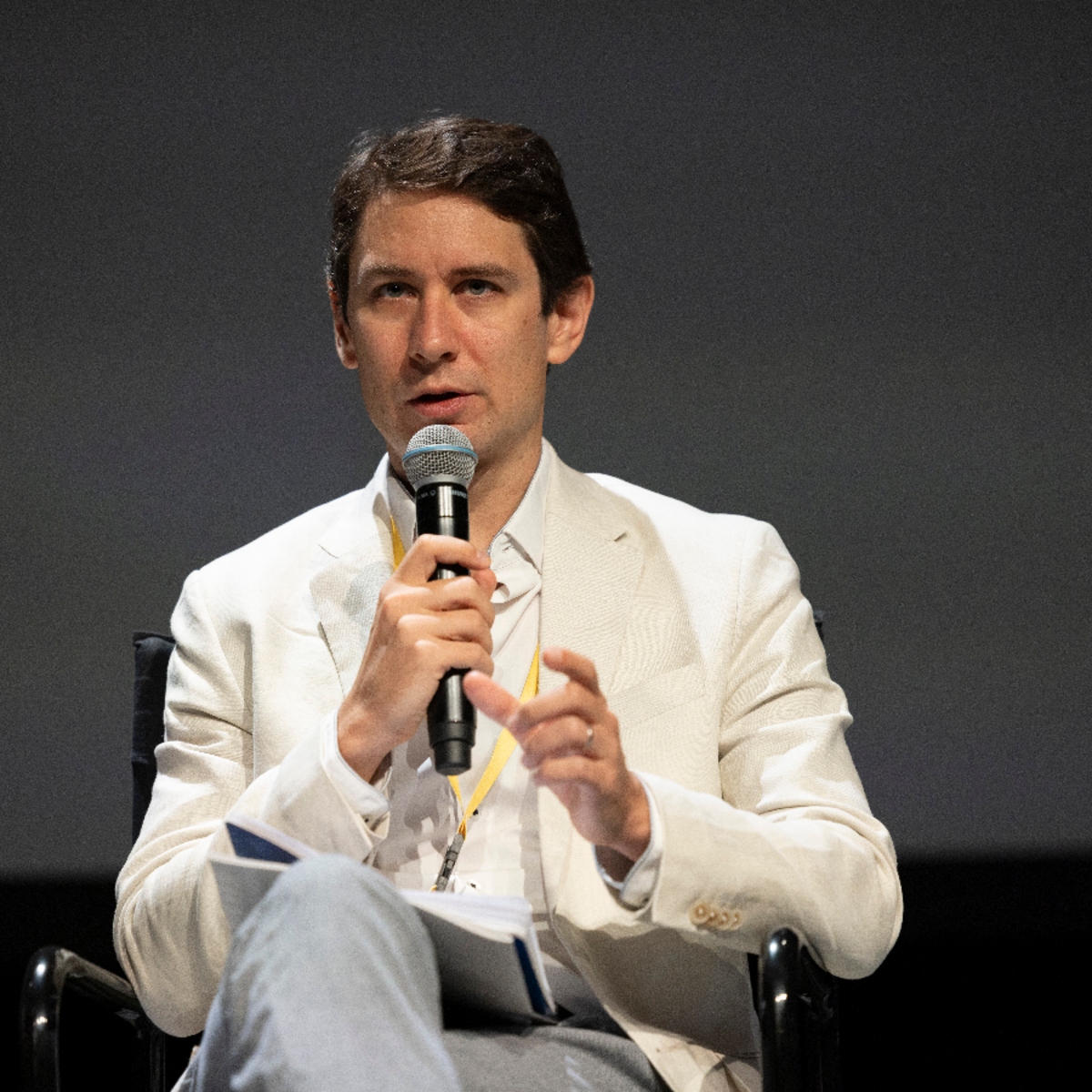
“Daphne was assassinated because she was exposing a very big story which uncovered the links between business and politics,” said James Debono. Her assassination had a “chilling effect,” prompting some journalists to seek other, better-paying, less stressful jobs.
But others took up the work she had left unfinished. A few days after Caruana Galizia’s assassination, the Daphne Project brought together 45 journalists from 18 news organizations across 15 countries to continue her investigations. Coordinated by her family and Forbidden Stories, many members of the team met in person at the 10th Global Investigative Journalism Conference (GIJC17) in Johannesburg, South Africa.
The Daphne Project began publishing its findings in April 2018, with the revelation of emails that identified 17 Black (a Dubai-based company, whose existence had been made public by Caruana Galizia in early 2017) as the “target client” of two offshore companies based in Panama, which belonged to the then-director of the Prime Minister’s Office, Keith Sebri, and to Cornant Mitchi, the then-former Minister of Energy. A few months later, a joint investigation by Reuters and the Times of Malta, as part of the Daphne Project, revealed that Fenek was the owner of 17 Black. At the same time, the project brought to light abusive practices linked to Malta’s citizenship-by-investment program (citizenship-by-investment program), as well as cross-border financial transactions involving Azerbaijan—and later China.
If we don’t do anything after the killings of journalists, we will have more and more journalists killed. And if more journalists are killed, the other victim is society as a whole. We will miss information.
Laurent Richard, founder and executive director of Forbidden Stories
For Laurent Richard, founder and executive director of Forbidden Stories, the project demonstrated how collaborative journalism could help counter impunity after the killing of a journalist. “I really believe that the Daphne Project was a kind of game changer in how to defeat impunity after the killing of journalists, or how to raise the cost of killing a journalist. That is a key question, because we know that if we don’t do anything after the killings of journalists, we will have more and more journalists killed. And if more journalists are killed, the other victim is society as a whole. We will miss information,” he told iMEdD.
The collaboration also extended the reach of Caruana Galizia’s reporting far beyond her own blog. Richard estimated that the stories published as part of the project reached an audience of 74 million people worldwide. “It was hundreds of times larger than the audience Daphne’s blog had reached,” he said. “Through the project, we multiplied that reach hundreds of times.”
For Richard, the award-winning project offered a model for future investigations, one built on sharing resources and reporting across borders. “I believe strongly in the future of collaborative journalism because it brings protection, resources, and impact. We created that model for exactly those reasons. At the end of the day, it’s not that complicated. It requires journalists to adopt an attitude of radical sharing, which isn’t easy to convince them to do. We’re not used to that.”
From Daphne Caruana Galizia’s Murder to the Fenech Trial
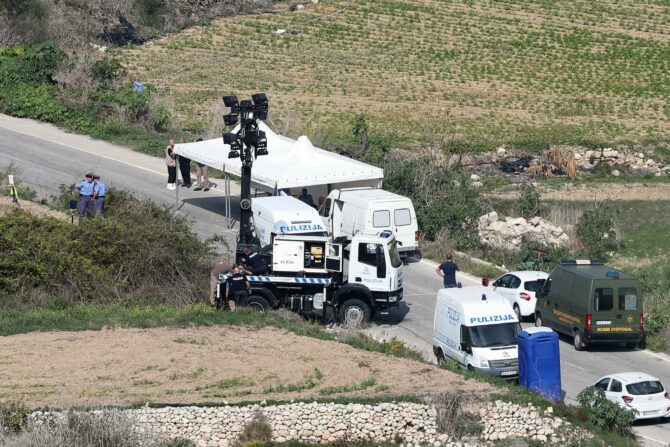
16/10/2017

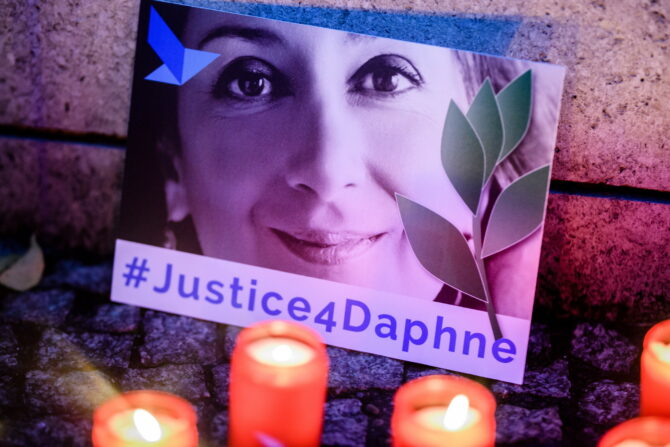
Daphne Caruana Galizia is murdered
A car bomb kills the journalist near her home in Bidnija, Malta.
Photo: EPA/DOMENIC AQUILINA
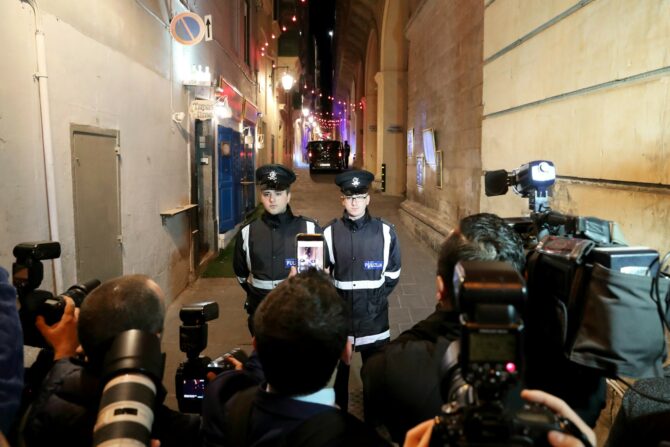
5/12/2017
First charges in the bombing
Brothers George and Alfred Degiorgio and Vincent Muscat are charged with carrying out the attack. Photo: EPA/DOMENIC AQUILINA
17/4/2018
The Daphne Project is launched
Coordinated by Forbidden Stories, 45 journalists from 18 media organisations join forces to continue Daphne’s unfinished investigations. Photo: EPA/DOMENIC AQUILINA
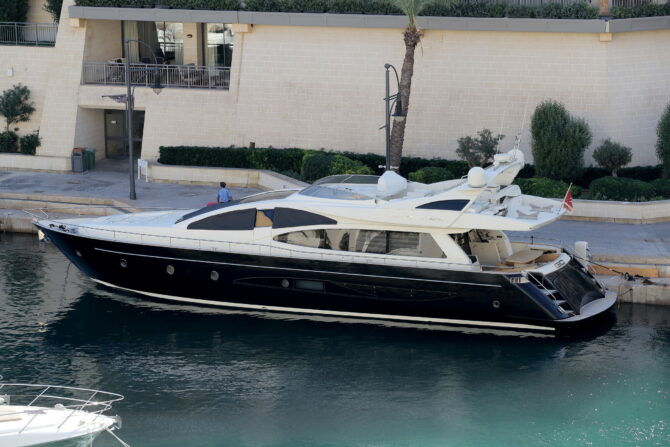
20/11/2019
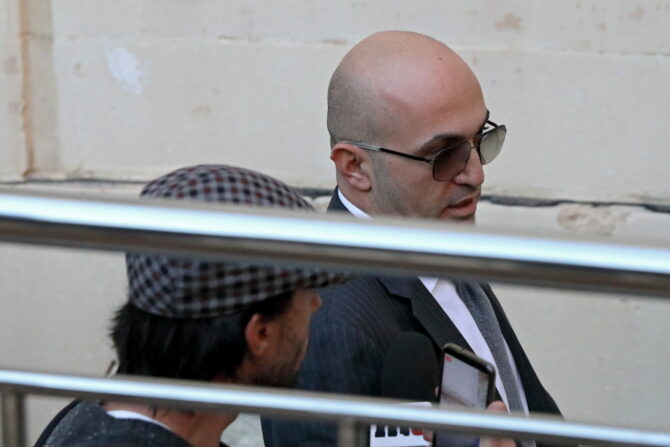
Yorgen Fenech is arrested
The businessman is arrested aboard his yacht as he attempts to leave Malta.
Photo: EPA/DOMENIC AQUILINA
26/11/2019
Keith Schembri resigns
The chief of staff to Prime Minister Joseph Muscat resigns amid mounting questions about his alleged links to Fenech and allegations of corruption. He denies any involvement in the murder. Photo: EPA/DOMENIC AQUILINA
1/12/2019
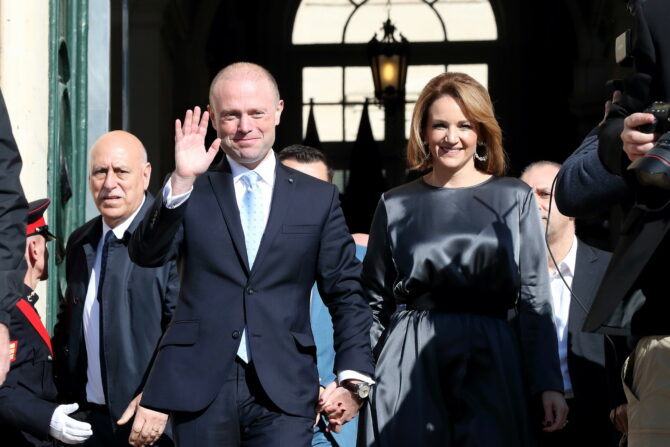
Joseph Muscat announces his resignation
The prime minister announces that he will step down amid mass protests and a political crisis surrounding the murder investigation. He denies any wrongdoing.
Photo: EPA/DOMENIC AQUILINA
4/12/2019
The middleman implicates Fenech
Melvin Theuma, who has admitted to acting as the middleman, claims that Fenech commissioned the murder through him and allegedly provided €150,000 to organise it. Fenech denies the allegation. Photo: EPA/DOMENIC AQUILINA
23/2/2021
First conviction
Vincent Muscat admits his involvement in the bombing and is sentenced to 15 years in prison after agreeing to cooperate with investigators. Photo: EPA/CLEMENS BILAN
29/7/2021
Public inquiry finds the Maltese state responsible
An independent public inquiry, launched in 2019 after two years of pressure from the Galizia family and international organisations, concludes that the state fostered a climate of impunity that paved the way for the journalist’s murder. Photo: EPA/DOMENIC AQUILINA
14/10/2022
Degiorgio brothers sentenced to 40 years
George and Alfred Degiorgio admit their involvement in the murder. Each is sentenced to 40 years in prison. Photo: EPA/HAYOUNG JEON
10/6/2025

Life sentences for the bomb suppliers
Robert Agius and Jamie Vella are sentenced to life imprisonment for supplying the bomb used in the murder. Photo: EPA/DOMENIC AQUILINA
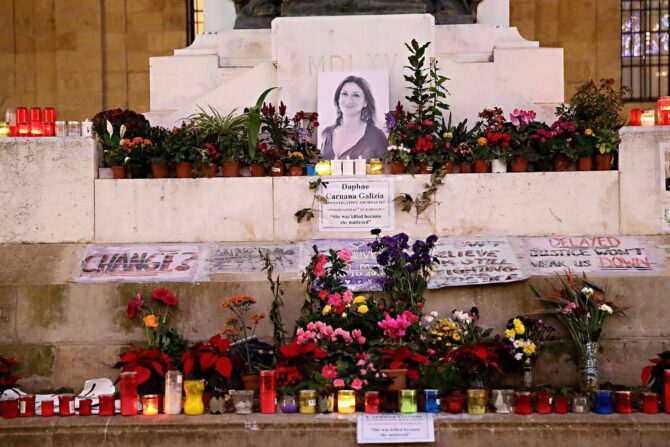
1/7/2026
Fenech’s trial begins
Yorgen Fenech’s jury trial began on July 1, 2026. After 55 days of proceedings, he was acquitted on September 2, 2026, by an 8–1 jury verdict. Photo: EPA/DOMENIC AQUILINA
Disclaimer: Some photos in the timeline are archival images and do not correspond to the dates of the events depicted.
Keeping the lights on: independent journalism under siege in Georgia

As Georgia has dropped to 135th place in the 2026 World Press Freedom Index amid unprecedented hostility towards journalists, iMEdD spoke with representatives of four independent media outlets about the challenges facing journalism in the country: imprisonments, attacks, “foreign agent” laws, and the struggle for survival.
Daphne’s Law: A flimsy ray of light at home
Long before her assassination, Daphne Caruana Galizia had identified one of the ways power could be used to silence the press: through the courts. When she was killed, she was facing 42 libel and defamation suits, many filed by politicians.
She saw these cases as more than a personal burden. Speaking to the International Press Institute (IPI) in February 2017, she said: “You simply cannot have politicians using the police to prosecute the journalists who write about them. The law, which was meant to protect the innocent from slander, is ripe for abuse by the powerful against those who oppose them.”
For years, Caruana Galizia’s family has pursued justice while grieving their loss. In 2018, they established the Daphne Caruana Galizia Foundation, a nonprofit organization dedicated to pursuing justice for her assassination and protecting investigative journalism. The foundation has since taken that fight to European and international institutions, pressing for accountability, stronger protections for journalists and action against corruption and impunity.
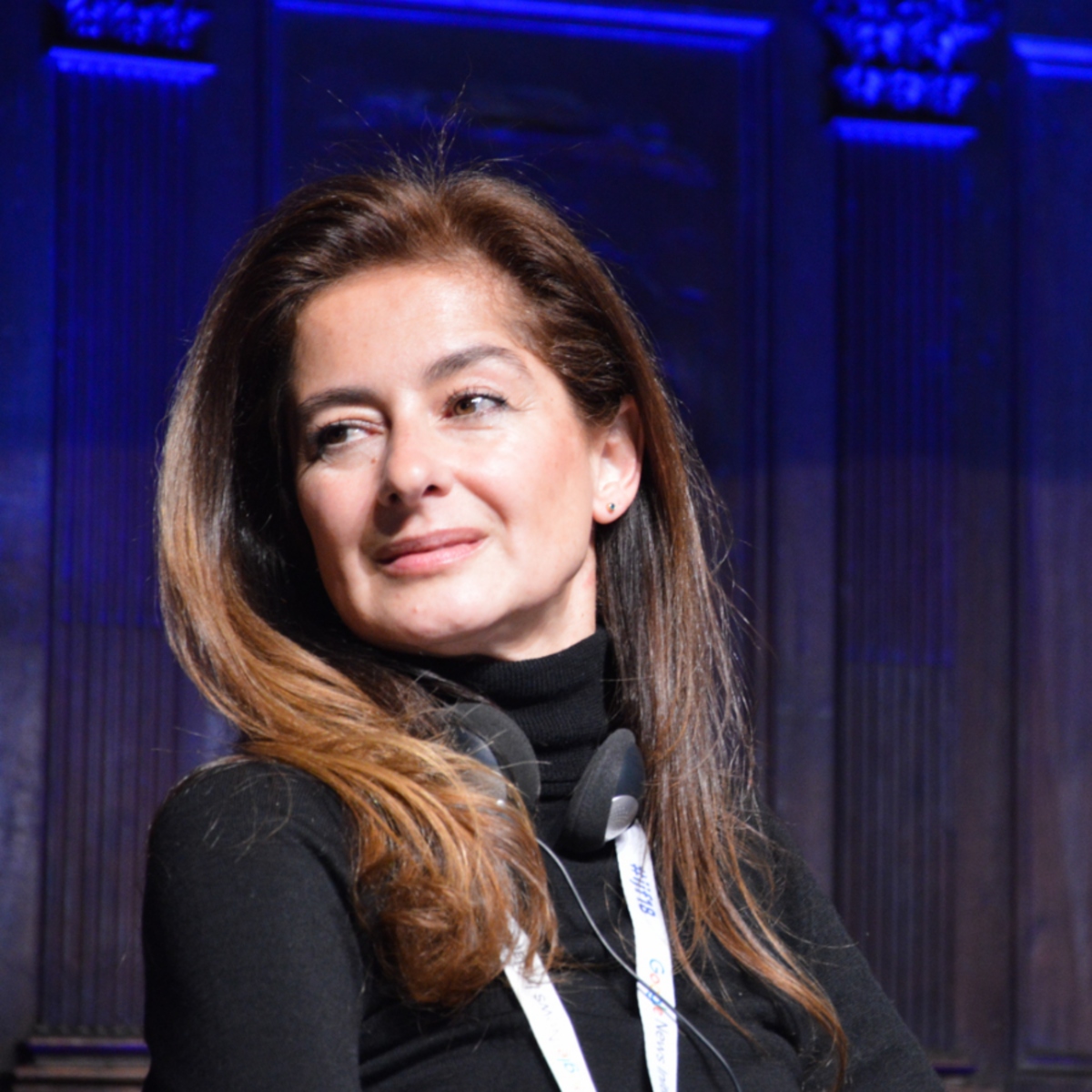
On 6 May 2024, the European Union’s anti-SLAPP directive, informally known as “Daphne’s Law,” entered into force. “The whole point is to prevent abusive lawsuits,” said Corinne Vella. But the directive’s adoption, she added, has been uneven, and its protections depend in part on how individual countries implement it.
Malta was the first EU country to transpose the directive into national law. But, Vella argued, it missed an opportunity to go further, reproducing the European text without adding the safeguards recommended by the Council of Europe. Those recommendations offered a way to strengthen protections for journalists facing abusive lawsuits and to bring national law into closer alignment with human rights standards. Malta, she said, could have used the transposition to build stronger domestic protections. It chose not to.
Malta has also failed to implement most of the press freedom reforms recommended by the 2021 independent public inquiry, an independent investigation into the institutional failures surrounding Caruana Galizia’s murder, Pavol Szalai, Director of the Prague Bureau of Reporters Without Borders (RSF) told iMEdD. The public inquiry, which was the result of years-long joint pressure from Daphne’s family and international organizations towards the Maltese state, concluded that the state was responsible for creating an “atmosphere of impunity,” which facilitated the murder, as noted.
In the 2026 World Press Freedom Index published by Reporters Without Borders, Malta ranked 67th out of 180 countries, unchanged from 2025. Its score fell from 62.96 to 61.44, leaving the country in the “problematic” category for press freedom. “Unfortunately, I have to say that very little has changed in Malta since the killing of Daphne Caruana Galizia. Very little has changed for press freedom in Malta. The impact of her killing has been greater across the European Union than in Malta itself,” said Szalai.
Malta, he added, is one of four EU countries where journalists have been murdered in recent years, alongside Slovakia, Greece and the Netherlands. The cases unfolded in different media environments, but each exposed the risks journalists face when reporting on corruption or organized crime, and the challenges of securing accountability for their murders.
“The current legislation in Malta would not have protected Daphne,” said Flutura Kusari, senior legal adviser at the European Centre for Press and Media Freedom (ECPMF), an organization that works to defend press freedom and support journalists across Europe. “The way it was transposed would not make a difference for Daphne if she were alive today.”
Although Prime Minister Robert Abela has been pressured to extending anti-SLAPP protections to domestic cases, questions remained over how Malta would effectively translate this into law, Kusari added. “For me, if this draft legislation does not go through the proper route of how laws are made, then there might be a risk that this law will also be ineffective in the future.”
For Vella, the proposed cuts to AgoraEU, the EU program supporting civil society, media and culture, also reflect a broader failure to prioritize press freedom at the European level. Under a proposal by the Council Presidency, the program’s budget would be cut by 30%, compared with an 8% reduction in the overall EU budget. The disparity raises questions about the EU’s commitment to supporting independent media and the democratic institutions they help sustain.
The work that remains
For many of Caruana Galizia’s colleagues, this trial and Fenech’s acquittal is not a conclusion. Herman Grech, editor-in-chief of Times of Malta, says Caruana Galizia’s killing prompted him to take a more forceful editorial stance.
“I went on the offensive when Daphne was killed. In the last few years [and especially] in the last few weeks, I have written certain things that possibly my predecessors would never have dreamt of writing.” In the years after the assassination, he added, he assigned a Times of Malta reporter to work full-time on the Daphne Project and during Fenech’s trial this summer, the newspaper also kept its live blog free to access, attracting around 250,000 users a day. Grech is also planning to revise his live journalism play, They Blew Her Up, a fictionalized account of Caruana Galizia’s assassination and its political aftermath, incorporating material from the recent trial.
All eyes in Europe are on the appeal courts. It is up to them to give justice another chance, or this case may end here.
Senior legal adviser at the European Centre for Press and Media Freedom (ECPMF)
The appeal that is currently underway leaves two possible outcomes: the court could order a retrial before a new jury or uphold Fenech’s acquittal. Even if it finds errors in the proceedings, it may leave the verdict unchanged if those errors did not result in a miscarriage of justice. A three-judge panel of the Court of Criminal Appeal will hear the case.
“All eyes in Europe are on the appeal courts. It is up to them to give justice another chance, or this case may end here,” said Flutura Kusari, noting that the case had attracted international attention largely thanks to the efforts of Caruana Galizia’s family to hold those responsible accountable
This effort changed the family’s life. They devoted years to pursuing the investigation and demanding answers, putting their own plans aside. “Looking back, it has been an uphill struggle,” Corinne Vella told iMEdD. “It’s really hard because you have to rely on institutions that have, to some extent, already failed. What I’ve learned over the years is that there are good people even within a bad system, and it’s thanks to them that things move forward.”
She said that the family has reached the point where they feel compelled to remind people that neither they nor Daphne chose what happened.
We are not special people for asking for justice. We are not pretentious for challenging a verdict we believe is wrong. We are not demanding for wanting things to be different and better. In the end, we are, in a sense, the least interested party. Why? Because Daphne has already been killed.
Corinne Vella, Daphne Caruana Galizia’s sister
“We are not special people for asking for justice. We are not pretentious for challenging a verdict we believe is wrong. We are not demanding for wanting things to be different and better. In the end, we are, in a sense, the least interested party. Why? Because Daphne has already been killed.”
An appeal process, she concluded, may result in what the family has been fighting for since day one. “We can have the satisfaction of knowing that justice has been served, that the murderers are in jail, and that, as a result of this and other actions the country needs to take, no other journalist will be killed again.”