
Fact-checking now reaches audiences far beyond the readers who once sought it out. At the same time, fact-checking organizations around the world face budget cuts, political attacks, and an endless stream of false claims online. Speaking to iMEdD, Louis Jacobson of PolitiFact described a field trying to keep pace with a rapidly changing media landscape.
Featured image: Evgenios Kalofolias
Greenland’s KNR: How a tiny newsroom marshals its resources to cover a huge story
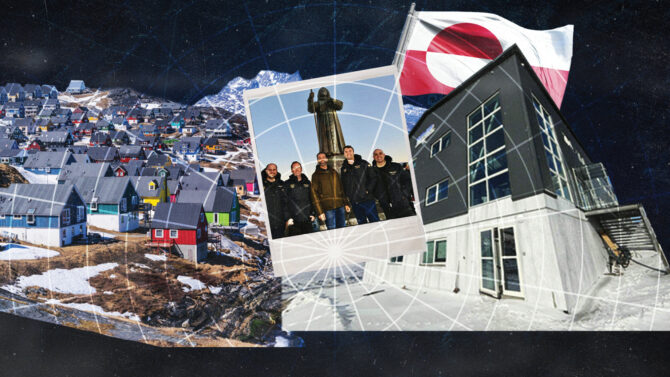
Amid a lull in the news, the news director of Greenland’s public broadcaster speaks with iMEdD about the daily challenges of local journalism, especially when the world is waiting for updates.
When Louis Jacobson joined PolitiFact in 2009, fact-checking was still something of an emerging form in American journalism. Jacobson, who is now Chief Correspondent, was then employee No. 4 at the Pulitzer Prize-winning organization, part of a small nonprofit newsroom helping shape a practice that had moved beyond correcting errors in legacy media. It shifted into the more public work of scrutinizing political claims.
Two decades later, fact-checking has reached far larger audiences around the world, particularly in an era when the boundaries between fact and fiction can seem blurred.
A new report from the International Fact-Checking Network (IFCN), based on a survey of 141 fact-checking organizations across 71 countries, found that 62% of them grew their audiences in 2025. Still, only 22.6% of fact-checking organizations said they considered their operation sustainable.
IFCN report: 62% of fact-checking organizations grew their audiences in 2025; only 22.6% said they considered their operation sustainable
Speaking to iMEdD through video call, Jacobson said that the increase in demand for fact-checked information comes at a time of broad public unease. In the United States, polls show high levels of dissatisfaction with the government, with “[President Donald] Trump at record lows. Many Americans are concerned about tariffs, oil prices, and their household finances.”
“Fact-checking gives them something to rely on, assuming they trust us, and not everybody does, though a large share do. We’re just trying to provide some guidance, some clarity,” he noted.
The state of fact-checking around the world
According to the International Fact-Checking Network (IFCN), after a period of expansion in 2024, the industry saw layoffs across the board last year. Newsrooms got smaller, and fact-checking work, especially around climate science and historical claims, took the hardest hit.
At the same time, collaboration actually increased in 2025. The IFCN report shows 94.9% of organizations worked with at least one partner, and regular collaboration picked up too, rising from 35.3% to 58.4%.
Audiences increasingly turned to visual explainers, with 54% of the 141 organizations surveyed using short-form video. Newsrooms also expanded their reach by publishing in more than one language, a practice adopted by 60.6% of respondents.
But the pressure side of the story is clear. About 20.4% of organizations reported lawsuits, up from 16.4% the year before. Nearly 30% said they faced pressure, restrictions or other forms of government interference.

Adaptation as a survival skill
The U.S. fact-checking landscape is still shaped by a few recognizable names and newsroom outposts: FactCheck.org at the University of Pennsylvania, Glenn Kessler of The Washington Post, The New York Times’ on-demand fact-checking operation, and Snopes.com. Together, Jacobson said, they suggest a field that is established but still evolving around different models of verification.
Launched in 2007 to fact-check the presidential race, PolitiFact expanded in 2009 to cover Congress and the White House, adding a tool that tracked President Obama’s campaign promises. Since then, the team has grown further, though it remains relatively small, with about 20 to 25 journalists and editors, said Jacobson.
Adaptation, he added, has long been central to the organization’s work.
The recent conclusion of Meta’s eight-year partnership with independent American fact-checking organizations, including PolitiFact, which had supported efforts to flag false information and hoaxes across its platforms, did not lead to large layoffs, Jacobson said, unlike at some other organizations. Instead, PolitiFact redirected staff formerly working on the Meta project toward a new vertical focused on fact-checking claims related to health. At the same time, they kept their collaboration with TikTok.
Fact-checking gives [Americans] something to rely on, assuming they trust us, and not everybody does, though a large share do.
Louis Jacobson, chief correspondent, PolitifFact
“It’s a good time for us. There’s a lot of interest in [health] in the U.S., because of Robert F. Kennedy Jr., the questions about vaccines and ‘Make America Healthy Again. This sort of coverage is not as strictly political as the rest of our coverage was, but it’s very, very much adjacent,” he added.
As audiences increasingly encountered PolitiFact’s reporting through social media rather than its website, the newsroom adapted its strategy.
The organization expanded into video, experimenting with formats that ranged from quick, low-production clips to more polished explainers. “I would think probably far more people see us on these platforms than are reading our articles on the website,” Jacobson said, adding that PolitiFact’s philosophy has always been to “reach people where they are”.
As the United States moves toward the midterm elections, they also partner with local news organizations in an effort to extend the reach of their work and bring it to wider audiences.
China’s “double-use” vessels and the journalists that mapped their movements
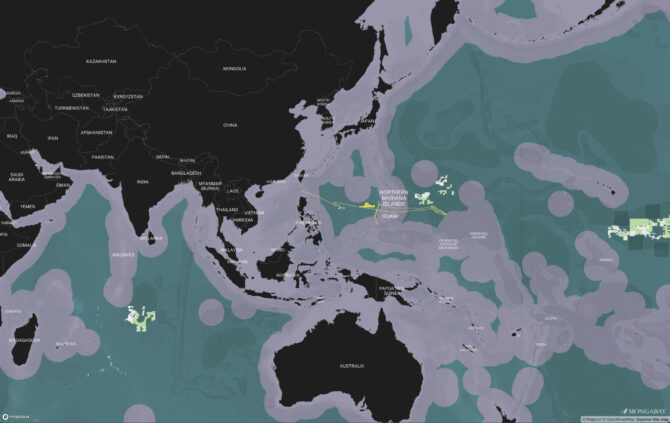
The journalists from Mongabay and CNN behind the recent investigation into the activity of the Chinese deep-sea mining fleet discuss the idea, the data-centric approach, the methodology, and the steps they followed for a collaborative investigation that lasted one year and was carried out with the support of the Pulitzer Center.
From claim to rating
In 2024, PolitiFact reached a notable milestone: 1,000 fact-checks of Donald Trump using its Truth-O-Meter, a rating system that evaluates the accuracy of political statements on a scale from true to false. In 2026, the number of fact checks is 1,300, added Jacobson.
The record goes back to 2011, when Trump, then best known as a real estate developer and television personality, helped circulate the “birther” conspiracy theory questioning Barack Obama’s citizenship.
Since then, his statements have been among the most frequently scrutinized in American politics. “Trump talks a lot. He has a lot of public events. He says a lot of things. Far more attention is given to his comments than to any other politician,” noted Jacobson. According to PolitiFact, about three-quarters of Trump’s claims they’ve checked have landed in categories like “Mostly False,” “False,” or “Pants on Fire,” with a median rating of “False” across the full set of 1,000 checks.
Behind those ratings is a deliberately structured process. “Once a story is reported and written, a first editor edits it. Once those edits are cleared, two more editors read it, and the three editors and the writer set up a time to discuss the story’s rating,” said Jacobson. “The writer is there as an observer; the three editors get a vote, though usually they reach consensus without having to vote.”
Once a story is reported and written, a first editor edits it. Once those edits are cleared, two more editors read it, and the three editors and the writer set up a time to discuss the story’s rating.
Louis Jacobson, chief correspondent, PolitiFact
“Trump is unfiltered,” Jacobson said. “He really—there’s a term in English—shoots from the hip,” he added, contrasting him with other presidents who typically work through layers of staff before making public statements. “He doesn’t seem to be fazed by saying things over and over again that have been debunked by us and by others. He just continues to say them.”
By comparison, he said, Barack Obama was very careful. “That doesn’t necessarily mean everything was always accurate, because under Obama he might emphasize certain things at the exclusion of other things that are less flattering.”
In rating each statement, PolitiFact reporters weigh a range of factors, including how similar claims have been judged in the past, the precision of the language used, and broader context—such as whether the underlying point is accurate even if specific details are off. “We believe that statements can be partially true rather than simply black or white, so that’s why we use the six-point Truth-O-Meter scale,” he added.
PolitiFact has already incorporated artificial intelligence into its workflow, including for transcription and an internal system for rating claims.
Jacobson emphasized the growing importance of media literacy in an AI-driven information environment. “Before AI, there was still a need for literacy, because there are basic research skills that are needed to weed out questionable posts and information online. But AI has added an additional layer of challenge to that,” he told iMEdD.
*On May 5, Louis Jacobson spoke by video call at the “News in Transition” conference, co-organized by the Department of Communication, Media and Culture and the Politikometro.gr Government Commitments Observatory, held at Panteion University of Social and Political Sciences in Athens, Greece.